格物
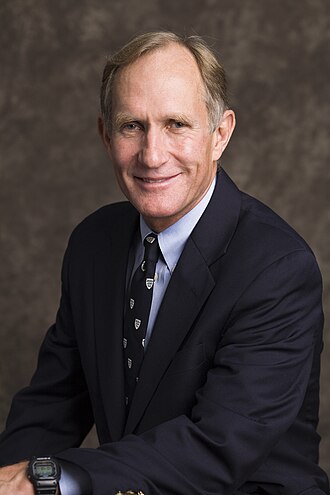
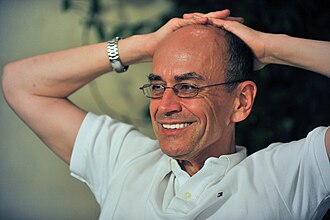
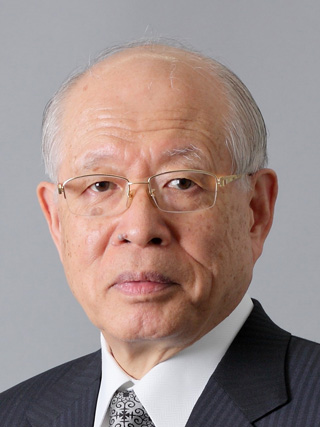
图:Nobel Media · CC BY 3.0 · Wikimedia Commons
彼得·阿格雷1949—
Peter Agre
化学家, 美国
彼得·阿格雷,美国医生和分子生物学家。因对细胞膜中的水通道的发现以及对离子通道的研究,与罗德里克·麦金农一起获得了2003年诺贝尔化学奖。阿格雷早年毕业于奥格斯堡学院,后进入约翰·霍普金斯大学并获得医学博士学位。阿格雷现任约翰·霍普金斯大学布隆伯格学院讲席教授及约翰·霍普金斯疟疾研究所(JHMRI)所长。
摘自维基百科「彼得·阿格雷」,CC BY-SA 4.0
- 出生
- 1949 年 1 月 30 日,诺斯菲尔德市
- 国籍
- 美国
- 学科
- 化学、生物学、医学
- 职业
- 化学家、分子生物学家、大学教师、医生
- 母语 / 工作语言
- 英语
- 母校
- 奥格斯堡学院、约翰·霍普金斯大学医学院、Roosevelt High School、约翰·霍普金斯大学
- 工作单位
- 约翰·霍普金斯大学、杜克大学、约翰·霍普金斯大学医学院
研究领域
师承
博士生1
来自 Wikidata 的「博士导师」「师从」「博士生」「学生」记录,可能不全。
所获奖项(10)
- 2003诺贝尔化学奖
- 2005卡尔·兰德斯泰纳纪念奖
- 2005美国科学促进会会士
- 2009honorary doctorate from University of Bordeaux-II
- 2016George M. Kober Medal
- —Fellow of the Pakistan Academy of Sciences
- —doctor honoris causa of Keiō University
- —honorary doctorate of the National University of San Marcos
- —美国文理科学院院士
- —卓越鹰级童军奖
学会与院士
百科正文
英文维基百科补充中文条目比较短,下面是英文条目「Peter Agre」的原文
Peter Courtland Agre (; born January 30, 1949) is a Nobel Laureate American physician, molecular biologist, Bloomberg Distinguished Professor at the Johns Hopkins Bloomberg School of Public Health and Johns Hopkins School of Medicine, and director emeritus of the Johns Hopkins Malaria Research Institute. In 2003, Agre and Roderick MacKinnon shared the 2003 Nobel Prize in Chemistry for "discoveries concerning channels in cell membranes." Agre was recognized for his discovery of aquaporin water channels. Aquaporins are water-channel proteins that move water molecules through the cell membrane. In 2009, Agre was elected president of the American Association for the Advancement of Science (AAAS) and became active in science diplomacy.
Biography
Agre was born in Northfield, Minnesota and is the second of six children to parents of Norwegian and Swedish descent. Agre is a Lutheran. Fascinated by international travel after a high school camping trip through the Soviet Union, Agre was an inconsistent student until he developed an interest in science from his father who was a college chemistry professor.
Agre graduated from Roosevelt High School (Minnesota) before he received his B.A. in Chemistry from Augsburg University in Minneapolis and his M.D. in 1974 from the Johns Hopkins School of Medicine in Baltimore, Maryland. From 1975 to 1978, he completed his clinical training in Internal Medicine at Case Western Reserve University's Case Medical Center under Charles C.J. Carpenter.
Awards and recognition
In addition to the 2003 Nobel Prize in Chemistry, Agre was elected to membership in the National Academy of Sciences in 2000, the American Academy of Arts and Sciences in 2003, the American Philosophical Society in 2004, the National Academy of Medicine in 2005, and the American Society for Microbiology in 2011. Agre has received 19 honorary doctorates from universities around the world, including Japan, Norway, Greece, Mexico, Hungary, and the United States.
Biomedical research
As a Johns Hopkins medical student in the early 1970s, Agre worked in the labs of Brad Sack and Pedro Cuatrecasas where he investigated the enterotoxin-induced diarrhea that caused dehydration and death of small children in developing countries. After clinical training, Agre joined Vann Bennett's lab in the Cell Biology Department at Johns Hopkins where he studied red cell membranes and identified spectrin deficiency as a common cause of hereditary spherocytosis, a hemolytic anemia with fragile, spherically shaped red cells. In 1984, Agre joined the Department of Medicine, where he built his own research program and first isolated the 32 kilodalton core subunit of the Rhesus blood group antigen, RhD.
Science diplomacy
While serving from 2009 to 2011 as president and chair of the board of advisors of the American Association for the Advancement of Science, Agre became very active in the AAAS Center for Science Diplomacy. Working with AAAS Chief International Officer, Vaughan Turekian, and former Scientific Advisor to the U.S. Secretary of State, Norman P. Neureiter, Agre led a series of science diplomacy visits to countries with adversarial relationships to the U.S. The objective of each trip was to foster exchanges and collaborations on peaceful scientific projects and thereby reduce tensions.
Cuba
The governments of Cuba and the US have maintained a hostile relationship made worse by the embargo that prevented the import of essential goods, equipment and even medicines.
Political activism
Thomas Butler Case
As Chairman of the Committee on Human Rights of the National Academies of Sciences, Engineering, and Medicine, Agre led a group of prominent scientists that defended Thomas C. Butler, an infectious disease researcher from Texas Tech University who in January 2003 voluntarily reported to the university safety office that 30 vials of plague bacteria were missing and had probably been autoclaved or incinerated. Although Butler cooperated with FBI agents, he was accused of lying and was arrested. When he refused to plead guilty, federal prosecutors charged Butler with many confusing charges concerning grant accounting and sample shipping. Despite support from Agre and other scientists, Butler was convicted in a jury trial, lost his medical license, and served 2 years in prison.
以上节选摘自英文维基百科「Peter Agre」,按 CC BY-SA 4.0 使用,去掉了参考文献、外部链接等尾部小节,公式改写成了纯文本。篇幅所限,较长的小节只摘了开头一部分,有的小节没有收;全文、配图和出处见原文。
同年获同一奖项
同一学科、同时代的科学家






同一学科的科学家
更多 ›