格物
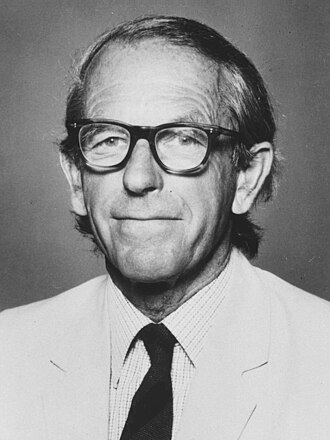
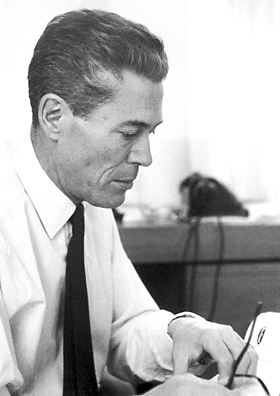
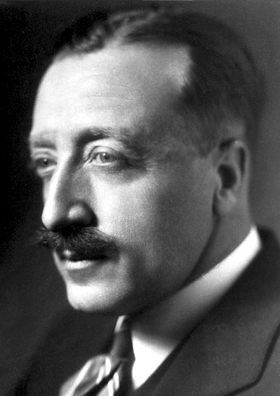
埃德温·克雷布斯1918—2009
Edwin G. Krebs
生物化学家, 美国
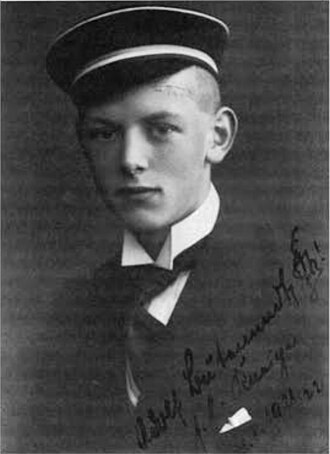
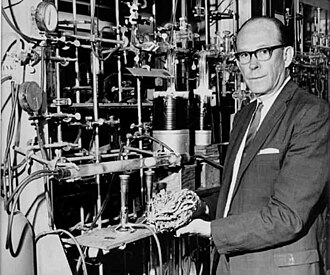
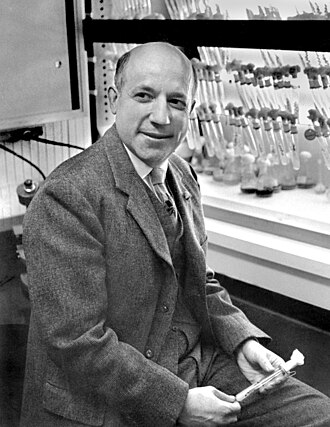
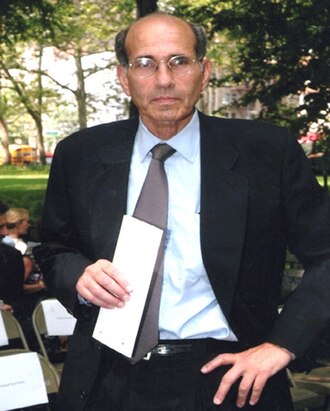
埃德温·克雷布斯,美国生物化学家,1918年6月6日出生于爱荷华州。1936年起就读于伊利诺伊大学。1943年毕业于圣路易斯华盛顿大学医学院。后在西雅图华盛顿大学做蛋白质磷酸化的研究。克雷布斯对教学和管理的兴趣使他之后离开华盛顿大学成为加州大学戴维斯分校生物化学系的创始主席。1989年获拉斯克奖。1992年与他的合作者埃德蒙·费希尔被授予诺贝尔生理学或医学奖,以表彰他们关于蛋白质可逆磷酸化作为一种生物调节机制的研究。
摘自维基百科「埃德温·克雷布斯」,CC BY-SA 4.0
- 出生
- 1918 年 6 月 6 日,兰辛
- 逝世
- 2009 年 12 月 21 日,西雅图
- 国籍
- 美国
- 学科
- 化学、生物学、医学
- 职业
- 生物化学家、化学家、大学教师、医生
- 母语 / 工作语言
- 英语
- 母校
- 伊利诺伊大学厄巴纳-香槟分校(理学士,1940 年)、华盛顿大学医学院(医学士,1943 年)、圣路易斯华盛顿大学(1948 年)、Urbana High School
- 工作单位
- 华盛顿大学
研究领域
师承
师从1
来自 Wikidata 的「博士导师」「师从」「博士生」「学生」记录,可能不全。
所获奖项(7)
- 1966古根海姆学者奖
- 1978盖尔德纳国际奖
- 1989拉斯克基础医学研究奖
- 1989路易莎·格罗斯·霍维茨奖
- 1991韦尔奇化学奖
- 1992诺贝尔生理学或医学奖
- 1998honorary doctor of the University of Miami
学会与院士
百科正文
英文维基百科补充中文条目比较短,下面是英文条目「Edwin G. Krebs」的原文
Edwin Gerhard Krebs (June 6, 1918 – December 21, 2009) was an American biochemist. He received the Albert Lasker Award for Basic Medical Research and the Louisa Gross Horwitz Prize of Columbia University in 1989 together with Alfred Gilman and, together with his collaborator Edmond H. Fischer, was awarded the Nobel Prize in Physiology or Medicine in 1992 for describing how reversible phosphorylation works as a switch to activate proteins and regulate various cellular processes.
Early life and education
Krebs was born in Lansing, Iowa, the third child of William Carl Krebs, a Presbyterian minister, and Louise Helen (Stegeman) Krebs. The family moved frequently due to the nature of his father's work, though they settled in Greenville, Illinois when Krebs was six and remained there until his father's unexpected death in 1933. Louise Krebs decided to move her family to Urbana, Illinois, where Krebs's elder brothers were attending the University of Illinois Urbana–Champaign. Krebs attended Urbana High School, and enrolled at the University of Illinois Urbana–Champaign in 1936. In his fourth year of study Krebs had decided to either pursue a higher degree in organic chemistry or study medicine. Receiving a scholarship to attend Washington University School of Medicine in St. Louis, he chose the latter.
The School of Medicine afforded Krebs the opportunity to train as a physician as well as to gain experience in medical research. Following graduation in 1943, he undertook an 18-month residency at Barnes Hospital in St. Louis and then went on active duty as a medical officer in the Navy. Krebs was discharged from the Navy in 1946 and was unable to immediately return to hospital work; he was advised to study basic science instead. He chose to study biochemistry and was postdoctoral fellow to Carl and Gerty Cori, working on the interaction of protamine with rabbit muscle phosphorylase. At the completion of his two years' study, Krebs decided to continue his career as a biochemist.
Research work
In 1948 Krebs accepted a position as assistant professor of biochemistry at the University of Washington, Seattle. When Edmond H. Fischer arrived at the department in 1953, the pair decided to work on the enzymology of phosphorylase. During the course of their study they were able to observe the mechanism by which interconversion of the two forms of phosphorylase takes place: reversible protein phosphorylation.
Explained simply, in reversible protein phosphorylation a protein kinase takes a phosphate group from adenosine triphosphate (ATP) and attaches it to a specific site on a protein, introducing both extra mass and negative charge at that site. This can alter the protein's shape and turn its function in a biological process up or down, either by changing its activity or its ability to bind to another protein. The protein can be converted back to its original state by a protein phosphatase that removes the phosphate. This cycle controls numerous metabolic processes, and plays a central role in the regulation of cell division, shape, and motility. Derangement of specific protein phosphorylation pathways is important in human disease, including cancer and diabetes. Fischer and Krebs were awarded the Nobel Prize for Physiology or Medicine in 1992 for the discovery of reversible protein phosphorylation.
Later life and death
Krebs's interest in teaching and administration led him to leave the University of Washington to become the founding chairman of the department of biochemistry at the University of California, Davis. In 1977 he returned to the University of Washington as chairman of the department of pharmacology.
Krebs was hearing impaired.
Krebs died on December 21, 2009. His wife, Virginia, died in 2018. He is survived by three children.
以上内容摘自英文维基百科「Edwin G. Krebs」,按 CC BY-SA 4.0 使用,去掉了参考文献、外部链接等尾部小节,公式改写成了纯文本。全文、配图和出处见原文。