格物
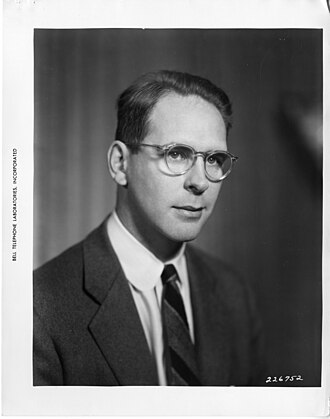
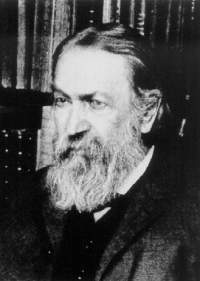
图:Herring, Conyers · Public domain · Wikimedia Commons
康耶斯·赫林1914—2009
Conyers Herring
American physicist (1914–2009)
康耶斯·赫林,美国物理学家,斯坦福大学应用物理学教授,因对于固体的基础理论,特别是金属中的电子行为作出了重大贡献而获得了1985年的沃尔夫物理学奖。他在能带结构固态系统下首先预测魏尔费米子的存在。他的博士导师为尤金·维格纳。
摘自维基百科「康耶斯·赫林」,CC BY-SA 4.0
- 出生
- 1914 年 11 月 15 日,斯科细亚
- 逝世
- 2009 年 7 月 23 日,帕洛阿尔托
- 国籍
- 美国
- 学科
- 物理学、博物与综合
- 职业
- 物理学家、大学教师
- 母语 / 工作语言
- 英语
- 母校
- 普林斯顿大学
- 工作单位
- 斯坦福大学、得克萨斯大学奥斯汀分校、贝尔实验室、哥伦比亚大学
师承
博士导师1
来自 Wikidata 的「博士导师」「师从」「博士生」「学生」记录,可能不全。
所获奖项(5)
- 1959奥利弗·巴克利奖
- 1980科学评论奖
- 1980Von Hippel Award
- 1985沃尔夫物理学奖
- —美国物理学会会士
学会与院士
百科正文
英文维基百科补充中文条目比较短,下面是英文条目「Conyers Herring」的原文
William Conyers Herring (November 15, 1914 – July 23, 2009) was an American physicist. He was a professor of applied physics at Stanford University and the Wolf Prize in Physics recipient in 1984/5.
Academic career
Conyers Herring completed his Ph.D. in physics from Princeton University in 1937, submitting a dissertation entitled On Energy Coincidences in the Theory of Brillouin Zones under the direction of Eugene Wigner. In 1946, he joined the technical staff of Bell Laboratories in Murray Hill, New Jersey, where he remained until 1978. Then, he joined the faculty at Stanford University.
Contributions
Conyers Herring played a major role in the development of solid state physics.
He laid the foundations of band structure calculations of metals and semiconductors, culminating in the discovery of the Orthogonalized Plane Wave Method (O.P.W.) in 1940. He was years ahead of his time in this contribution. A great deal of modern solid state physics as produced today stems from this original and early paper.
In 1937, he predicted the existence of Weyl semimetal, materials that display Weyl quasiparticles, which were experimentally demonstrated in 2015.
His influence on the development of solid state physics extends to a deep understanding of many facets such as surface physics, of thermionic emission, of transport phenomena in semiconductors and of collective excitations in solids such as spin waves.
He created the theoretical physics division at Bell Telephone Laboratory. Because of this, the total research effort at this institution and brought about much of the most original research in condensed matter physics during the latter half of the 20th century.
He has also been influential in promoting international cooperation among scientists and through his character and his personal example, he has exemplified an unattainable ideal of how a research scholar in any field should operate.
He has contributed to religion and science discussions. He has stated about God that "Things such as truth, goodness, even happiness, are achievable by virtue of a force that is always present, in the here and now and available to me personally".
Brain box
Herring was famously well-read in the physics literature, and summarized references he found valuable on 3-by-5-inch (76 by 127 mm) index cards. He stored these cards, cataloged by topic, in a black suitcase that he referred to as his "brain box". Started in his student days, the brain box grew throughout his career, eventually containing 15,000 index cards with over 100,000 references. A project to digitize the brain box was undertaken by Robert B. Laughlin after Herring's death.
Awards and honors
In June 1954 he was one of twenty scientists under the age of forty identified by Fortune Magazine as "top young scientists in U. S. universities and industry". In 1984/85 Conyers Herring was awarded the Wolf Prize in Physics along with Philippe Nozieres for "their major contributions to the fundamental theory of solids, especially of the behaviour of electrons in metals". In 1980 he was awarded the NAS Award for Scientific Reviewing from the National Academy of Sciences.
以上内容摘自英文维基百科「Conyers Herring」,按 CC BY-SA 4.0 使用,去掉了参考文献、外部链接等尾部小节,公式改写成了纯文本。全文、配图和出处见原文。
同年获同一奖项
同一学科、同时代的科学家

同一学科的科学家
更多 ›