格物
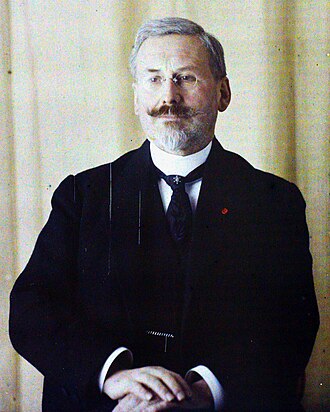
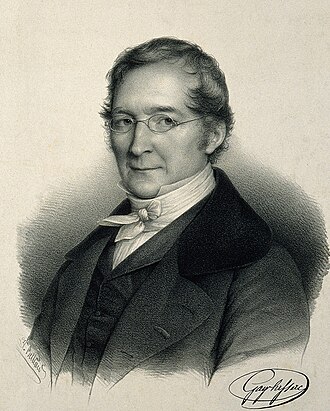
图:Auguste Léon · Public domain · Wikimedia Commons
夏尔·爱德华·纪尧姆1861—1938
Charles Édouard Guillaume
物理学家, 瑞士
夏尔·纪尧姆,瑞士物理学家。1920年,于国际度量衡组织瑞士办事处任职的他,因发现镍钢合金于精密物理中的重要性,而获得了该年度的诺贝尔物理学奖殊荣。
摘自维基百科「夏尔·纪尧姆」,CC BY-SA 4.0
- 出生
- 1861 年 2 月 15 日,Fleurier
- 逝世
- 1938 年 6 月 13 日,塞夫尔
- 国籍
- 瑞士、法国
- 学科
- 物理学、博物与综合
- 职业
- 物理学家、研究者
- 母语 / 工作语言
- 法语
- 母校
- 苏黎世联邦理工学院、苏黎世大学
- 工作单位
- 国际计量局
研究领域
所获奖项(7)
- 1908法国荣誉军团军官勋章
- 1914约翰·斯科特奖
- 1920诺贝尔物理学奖
- 1920Guthrie Lecture
- 1928嘉宝勋章和奖金
- 1934doctor honoris causa from the University of Paris
- 1937荣誉军团大军官勋章
学会与院士
百科正文
英文维基百科补充中文条目比较短,下面是英文条目「Charles-Édouard Guillaume」的原文
Charles-Édouard Guillaume (French: [ʃaʁl edwaʁ gijom]; 15 February 1861 – 13 June 1938) was a Swiss physicist who received the Nobel Prize in Physics in 1920 "for the service he had rendered to precision measurements in physics by his discovery of anomalies in nickel steel alloys." In 1919, he gave the fifth Guthrie Lecture at the Institute of Physics in London with the title "The Anomaly of the Nickel-Steels."
Personal life
Charles-Edouard Guillaume was born on 15 February 1861 in Fleurier, Switzerland, into a family of French descent. Guillaume received his early education in Neuchâtel, and obtained his Ph.D. in Physics from the Federal Polytechnic School in Zurich (now ETH Zurich) in 1883.
In 1888, Guillaume married A. M. Taufflieb, with whom he had three children.
Guillaume died on 13 June 1938 in Sèvres, Paris, at the age of 77. He was a Christian.
Scientific career
Guillaume was head of the International Bureau of Weights and Measures. He also worked with Kristian Birkeland, serving at the Observatoire de Paris – Section de Meudon. He conducted several experiments with thermostatic measurements at the observatory.
Nickel–steel alloy
Guillaume is known for his discovery of nickel–steel alloys he named invar, elinvar and platinite, also known as red platinum. Invar has a near-zero coefficient of thermal expansion, making it useful in constructing precision instruments whose dimensions need to remain constant in spite of varying temperature. Elinvar has a near-zero thermal coefficient of the modulus of elasticity, making it useful in constructing instruments with springs that need to be unaffected by varying temperature, such as the marine chronometer. Elinvar is also non-magnetic, which is a secondary useful property for antimagnetic watches.
Space radiation
Guillaume is also known for the earliest estimation of the "radiation of the stars” in his 1896 article "La Température de L'Espace" ("The Temperature of Space"). This publication made him a pioneer in plasma cosmology, the study of conditions far from any particular star. The concept was later known as the Cosmic microwave background. He was one of the first people in history to estimate the temperature of space, as 5–6 K.
Horology
As the son of a Swiss horologist, Guillaume took an interest in marine chronometers. For use as the compensation balance he developed a slight variation of the invar alloy which had a negative quadratic coefficient of expansion. The purpose of doing this was to eliminate the "middle-temperature" error of the balance wheel. The Guillaume balance (a type of balance wheel) in horology is named after him.
以上内容摘自英文维基百科「Charles-Édouard Guillaume」,按 CC BY-SA 4.0 使用,去掉了参考文献、外部链接等尾部小节,公式改写成了纯文本。全文、配图和出处见原文。
同一学科、同时代的科学家
同一学科的科学家
更多 ›