格物
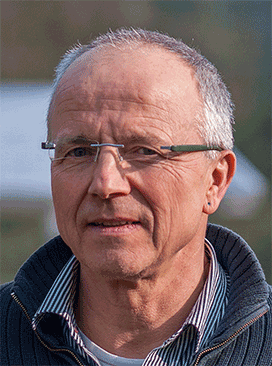
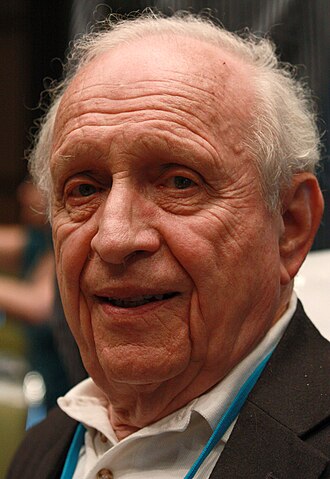
图:Millencolin · CC0 · Wikimedia Commons
格奥尔格·纳格尔1953—
Georg Nagel
德国植物学家,诺贝尔奖得主
格奥尔格·纳格尔,德国维尔茨堡大学教授、生物物理学家,2026年诺贝尔生理学或医学奖共同得主。
摘自维基百科「格奥尔格·纳格尔」,CC BY-SA 4.0
- 出生
- 1953 年 8 月 24 日,魏恩加滕
- 国籍
- 德国
- 学科
- 物理学、生物学、博物与综合
- 职业
- 植物学家、大学教师、生物物理学家、生物学家
- 母语 / 工作语言
- 德语
- 母校
- 康斯坦茨大学(1979 年)、Albert-Einstein-Gymnasium Ravensburg(1973 年)、约翰-沃尔夫冈-歌德法兰克福大学(1988 年)
- 工作单位
- 维尔茨堡大学(2004—)、耶鲁大学、洛克菲勒大学、Max Planck Institute for Biophysics(1992—)
研究领域
师承
来自 Wikidata 的「博士导师」「师从」「博士生」「学生」记录,可能不全。
所获奖项(6)
- 2010Karl Heinz Beckurts Award
- 2013大脑奖
- 2013路易·让泰化学奖
- 2020邵逸夫生命科学与医学奖
- 2026诺贝尔生理学或医学奖
- —欧洲分子生物学组织成员
百科正文
生平
格奥尔格·纳格尔生于西德魏恩加滕。
纳格尔的研究成果包括与彼得·黑格曼共同发现的光敏感通道蛋白,开创了光遗传学的新领域,也因而获得2020年邵逸夫奖。
2026年,他与黑格曼、卡尔·戴塞罗思共同获得诺贝尔生理学或医学奖。
以上内容摘自维基百科「格奥尔格·纳格尔」,按 CC BY-SA 4.0 使用,去掉了参考文献、外部链接等尾部小节,公式改写成了纯文本。全文、配图和出处见原文。
英文维基百科补充中文条目比较短,下面是英文条目「Georg Nagel」的原文
Georg Nagel (born 24 August 1953) is a German biophysicist and professor at the Department for Neurophysiology at the University of Würzburg in Germany. His research is focused on microbial photoreceptors and the development of optogenetic tools. In 2026, he was jointly awarded the Nobel Prize in Physiology or Medicine with Karl Deisseroth andPeter Hegemann "for their discoveries concerning light-gated ion channels and optogenetics."
Early life and education
Georg Nagel studied biology and biophysics at the University of Konstanz, Germany. He received his PhD from the University of Frankfurt in 1988, working at the Max Planck Institute of Biophysics in Frankfurt. As a postdoc, he worked at Yale University and Rockefeller University, US.
Career
From 1992 to 2004, Nagel headed an independent research group in the Department of Biophysical Chemistry at the Max Planck Institute of Biophysics in Frankfurt. Since 2004, he is a professor at the University of Würzburg, Germany, first at the Department for Molecular Plant Physiology and Biophysics, since 2019 at the Department for Neurophysiology.
Research
Georg Nagel, together with Peter Hegemann, is credited with the discovery of channelrhodopsins, which opened the new field of optogenetics. Early in 1995, Georg Nagel and Ernst Bamberg demonstrated that a microbial rhodopsin (Bacteriorhodopsin), when expressed in animal cells (Xenopus oocytes), is fully functional and makes the cells light-sensitive. In 2003, Nagel showed the functionality of channelrhodopsin-2 (ChR2) in a mammalian cell line, where illumination with blue light caused a strong depolarization of the membrane potential. Following this proof-of-principle publication, ChR2 was expressed in hippocampal neurons in collaboration with Karl Deisseroth, where light pulses caused action potentials with high temporal precision. The first application of optogenetics in an intact animal, the round worm Caenorhabditis elegans, published 2005 by Georg Nagel and Alexander Gottschalk, was based on a ChR2 mutant (H134R) Nagel had created to improve photocurrents. The first successful optogenetic inhibition of neuronal spiking (2007) was based on Nagel's earlier experiments with halorhodopsin from Natronomonas pharaonis. In 2007, in another collaboration with Peter Hegemann, Georg Nagel started the optogenetic manipulation of cAMP. In 2015, Georg Nagel and Shiqiang Gao, together with Alexander Gottschalk's group, characterized the first 8 TM enzyme rhodopsin, Cyclop, which raises the concentration of cGMP when activated with light. Through the development of genetically encoded tools, Georg Nagel's group has pushed the boundaries of optical control from ion channels and pumps to second messenger systems, and has applied them to many different types of organisms, including plants.
Honours and awards
- 2010 Wiley Prize in Biomedical Sciences, together with Peter Hegemann and Ernst Bamberg
- 2010 Karl Heinz Beckurts Prize, together with Peter Hegemann und Ernst Bamberg
- 2012 Zülch Prize
- 2013 Louis-Jeantet Prize for Medicine, together with Peter Hegemann
- 2013 The Brain Prize, awarded by the Grete Lundbeck European Brain Research Foundation
- 2015 selected as Member of the European Molecular Biology Organization (EMBO)
2019 Rumford Prize for "extraordinary contributions related to the invention and refinement of optogenetics," with Ernst Bamberg, Ed Boyden, Karl Deisseroth, Peter Hegemann, and Gero Miesenböck.
2020 Shaw Prize in Life Sciences.
2026 Nobel Prize in Physiology or Medicine
Nagel's 2026 Nobel award recognised discoveries made at the Max Planck Institute for Biophysics in Frankfurt. The Nobel Assembly highlighted his work with Peter Hegemann in identifying the algal protein channelrhodopsin, which made cells sensitive to blue light. The prize was shared equally with Hegemann and Karl Deisseroth, who developed its use in controlling nerve cells.
以上内容摘自英文维基百科「Georg Nagel」,按 CC BY-SA 4.0 使用,去掉了参考文献、外部链接等尾部小节,公式改写成了纯文本。全文、配图和出处见原文。
同年获同一奖项
同一学科、同时代的科学家







同一学科的科学家
更多 ›