格物
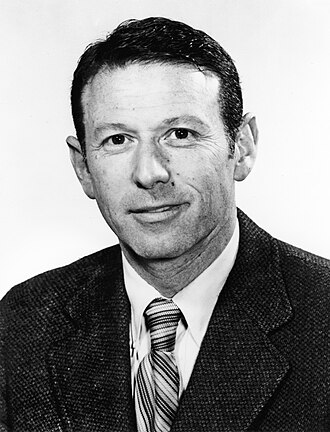
杰克·施特罗明格1925—
Jack L. Strominger
英文简介American biochemist
杰克·莱昂纳德·施特罗明格,美国免疫学家,哈佛大学教授。施特罗明格的主要工作是阐明人体免疫反应的分子免疫学基础。主要的研究领域的主要组织相容性复合体的蛋白质结构和功能。1995年获拉斯克基础医学研究奖,1999年获日本国际奖。
摘自维基百科「杰克·施特罗明格」,CC BY-SA 4.0
- 出生
- 1925 年 8 月 7 日,纽约
- 国籍
- 美国
- 学科
- 化学、生物学
- 职业
- 生物化学家、大学教师、免疫学家
- 母校
- 哈佛大学(1944 年)、耶鲁大学医学院(医学士,1948 年)
- 工作单位
- 哈佛大学(1968—)、威斯康星大学麦迪逊分校(1964—1968)、圣路易斯华盛顿大学(1956—1964)
研究领域
师承
博士生1
来自 Wikidata 的「博士导师」「师从」「博士生」「学生」记录,可能不全。
所获奖项(10)
- 1960John J. Abel Award
- 1962辉瑞酶化学奖
- 1968微生物学的塞尔曼A.瓦克斯曼奖
- 1992Novartis Prize for Basic Immunology
- 1993威廉·布拉德利·科利奖
- 1995拉斯克基础医学研究奖
- 1996保罗·埃尔利希和路德维希‧达姆施泰特奖
- 1999日本国际奖
- 2020汤森路透引文桂冠奖
- —古根海姆学者奖
学会与院士
百科正文
简历
施特罗明格出生在纽约市。他曾就读于哈佛大学,1944年获得心理学学位。1948年获得耶鲁医学院医学博士学位,并在华盛顿大学医学院任教。他于1964-68年在威斯康星大学麦迪逊分校任教。1968年入职哈佛大学,并于1974 年成为Dana-Farber癌症研究所研究员。
施特罗明格1968年获得首届微生物学奖。1969年获美国成就学院金盘奖。1970年入选美国国家科学院院士。1999年获得日本奖。
杰克是物理学家安德鲁·施特罗明格和伊桑·施特罗明格的父亲。
以上内容摘自维基百科「杰克·施特罗明格」,按 CC BY-SA 4.0 使用,去掉了参考文献、外部链接等尾部小节,公式改写成了纯文本。全文、配图和出处见原文。
英文维基百科补充中文条目比较短,下面是英文条目「Jack L. Strominger」的原文
Jack Leonard Strominger (born August 7, 1925) is the Higgins Professor of Biochemistry at Harvard University, specializing in the structure and function of human histocompatibility proteins and their role in disease. He won the Albert Lasker Award for Basic Medical Research in 1995.
Early life and education
Strominger was born in New York City. He was born one of three brothers to a dentist father. He graduated from Bayside High School. He studied at Harvard University and completed his degree in psychology in 1944. During World War II, he entered the Navy V-12 program as part of Harvard College. In March 1946, he was discharged from the Navy. He received his MD degree in 1948 from Yale Medical School.
Career
After graduation he joined the faculty at the Washington University School of Medicine. There he obtained a fellowship in the Department of Pharmacology with Oliver H. Lowry. Afterwards, he completed his residency in medicine at the University of Chicago, where he met his wife Ann, who was a student. In 1951, during the Korean War the United States Navy called him back into service to be stationed at a hospital in Bangkok, Thailand. Strominger married, and together, the newlyweds went to Bangkok. But, after only two or three months, he was ordered by the United States Navy to leave Bangkok. The remainder of his appointment as a commissioned officer was at the National Institutes of Health (NIH) in Bethesda, Maryland under Sanford Rosenthal, chief of the Laboratory of Pharmacology in the National Institute of Arthritis and Metabolic Diseases. From work he had done in the Lowry laboratory and using work begun by James T. Park, Strominger began new work into the recently-purified-compound penicillin's antibiotic mechanism of action. Strominger left the NIH, and, after brief study at Carlsberg Laboratory and Cambridge University, returned to Washington University in St. Louis as an assistant professor of pharmacology. At Washington University in St. Louis, he discovered that uridine nucleotide that accumulated in the penicillin-treated bacterium staphylococcus aureus was a precursor of the bacterial cell wall.
Strominger joined the University of Wisconsin, Madison, as chairman of the department of pharmacology from 1964 to 1968. There, with Donald J. Tipper in 1965, he demonstrated the mechanism of action by which antibiotic penicillins kill bacteria by inhibiting the completion of the synthesis of structural components of bacterial cell walls known as peptidoglycans. Penicillins specifically inhibit the activity of enzymes that are needed for the cross-linking of peptidoglycans during the final step in cell wall biosynthesis. These antibiotics do this by binding to the group of enzymes known as Penicillin-binding proteins using a chemical structure found on penicillin molecules known as a β-lactam ring. β-lactam imitates the naturally occurring acyl-D-alanyl-D-alanine substrate for the enzymes.
He joined the Harvard faculty in 1968 to work in the biochemistry and molecular biology department specializing in microbial biochemistry, with a small portion of his time being devoted to organ transplantation biology. Knowledge was scarce with respect to the mechanisms of allograft rejection. There was none for the transplantation antigens. Graft acceptance or rejection was only hinted at through previous knowledge of Blood type erythrocyte transfusion. In the mid-1960's, Allan Davies from the United Kingdom had discovered a number of the 3,6-dideoxyhexoses that could be utilized to distinguish bacterial surfaces. Davies speculated that the specificity of transplantation antigen might also be determined by cell surface arrangements of sugars. Later, Stan Nathenson worked with Davies to characterize transplantation antigens and discovered that they could be solubilized from the surfaces of cells by the protease papain.
Awards
Strominger was the first recipient of the Selman A. Waksman Award in Microbiology in 1968. In 1969, Strominger received the Golden Plate Award of the American Academy of Achievement. Strominger was elected to the American Academy of Arts and Sciences in 1967. He was elected to the National Academy of Sciences in 1970, and the National Institute of Medicine in 1975. He was elected to the American Philosophical Society in 1994. In 1999, he received the Japan Prize.
Personal life
Strominger married Ann in 1951. She died in 2017. Their children are physicist Andrew Strominger, Ethan Strominger and Paul Strominger.
以上节选摘自英文维基百科「Jack L. Strominger」,按 CC BY-SA 4.0 使用,去掉了参考文献、外部链接等尾部小节,公式改写成了纯文本。篇幅所限,较长的小节只摘了开头一部分,有的小节没有收;全文、配图和出处见原文。