格物
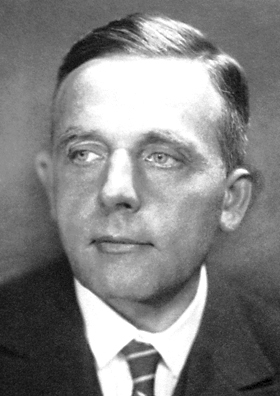
威廉·霍华德·斯坦1911—1980
William Howard Stein
生物学家, 美国
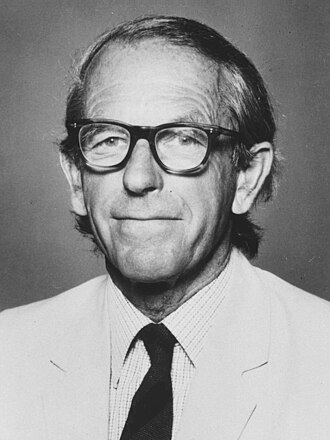
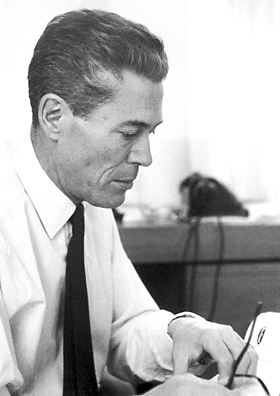
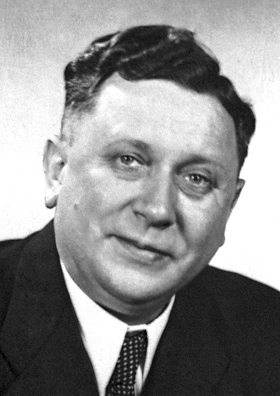
威廉·霍华德·斯坦,美国生物化学家,1972年获诺贝尔化学奖。
摘自维基百科「威廉·霍华德·斯坦」,CC BY-SA 4.0
- 出生
- 1911 年 6 月 25 日,纽约
- 逝世
- 1980 年 2 月 2 日,纽约
- 国籍
- 美国
- 学科
- 化学、生物学
- 职业
- 化学家、生物化学家、大学教师
- 母语 / 工作语言
- 英语
- 母校
- 哈佛大学、哥伦比亚大学
- 工作单位
- 洛克菲勒大学
研究领域
师承
师从1
来自 Wikidata 的「博士导师」「师从」「博士生」「学生」记录,可能不全。
所获奖项(1)
- 1972诺贝尔化学奖
学会与院士
百科正文
英文维基百科补充中文条目比较短,下面是英文条目「William Howard Stein」的原文
William Howard Stein (June 25, 1911 – February 2, 1980) was an American biochemist who collaborated in the determination of the ribonuclease sequence, as well as how its structure relates to catalytic activity, earning a Nobel Prize in Chemistry in 1972 for his work. Stein was also involved in the invention of the automatic amino acid analyzer, an advancement in chromatography that opened the door to modern methods of chromatography, such as liquid chromatography and gas chromatography.
Life and education
Early life and education
William H. Stein was born on June 25, 1911 in New York City into a Jewish family. His father, Fred M. Stein, was a businessman who retired early to support local New York health organizations. His mother, Beatrice Borg Stein, was a children's rights activist who developed afterschool activities. Staunch advocates for the welfare of society, Stein's parents fostered his interests in the life sciences from a young age. As a child, Stein attended the recently established "progressive" Lincoln School which was sponsored by the Teachers College of Columbia University; there, he was able to explore the natural sciences through field trips and science projects. At the age of sixteen, Stein was transferred to the Phillips Exeter Academy in New England to prepare for higher education.
In 1936, during his graduate studies at Columbia University, William H. Stein married Phoebe Hockstader. They had three sons together: William H. Stein, Jr., David F. Stein, and Robert J. Stein. Stein lived with his family in New York the rest of his life—mainly in Manhattan and briefly in Scarsdale, New York.
Academic career
William H. Stein began his higher education as a chemistry major at Harvard University in 1929.
Scientific career
Early work
Following the completion of his formal education, Stein became a researcher under Bergmann at Rockefeller Institute, where much of his most important work was done. Stanford Moore joined Bergmann's lab in 1939, where he and Stein began research focusing on amino acids. According to Moore, "During the early years of our cooperation, Stein and I worked out a system of collaboration that lasted for a lifetime." Their work in this area was disrupted with the beginning of World War II, and they temporarily parted ways to aid the war efforts, Stein staying with Bergmann to research the molecular scale effect of blister agents on the human body. They began collaborating again, however, after Bergmann died in 1944 and they were given an opportunity by the Director of the Rockefeller Institute, Herbert S. Gasser, to continue Bergmann's work in amino acids.
Chromatography
Stein and Moore developed a method to quantify and separate amino acids with column chromatography, using potato starch as the stationary phase. The fractions, originally collected manually, were collected in their newly developed automated fraction collector, and the amount of each amino acid was determined by an adjusted color reaction with ninhydrin. They began testing other methods of separation, such as ion exchange chromatography, to reduce the analysis time, as it took two weeks to analyze one protein using the starch columns.
Awards and honors
Awards
William H. Stein received a number of awards for his contributions to the biochemical field, including:
American Chemical Society Award in Chromatography and Electrophoresis (1964) with Stanford Moore
- Richards Medal of the American Chemical Society (1972) with Stanford Moore
- Kaj Linderstrøm-Lang Award, Copenhagen (1972) with Stanford Moore
- The Nobel Prize in Chemistry (1972) with Stanford Moore and Christian B. Anfinsen
Honors
William H. Stein received numerous honors from Columbia University and the Albert Einstein College of Medicine of Yeshiva University, including: D.Sc. honoris causa, Columbia University (1973), D.Sc. honoris causa, Albert Einstein College of Medicine of Yeshiva University (1973), and the Award of Excellence Medal, Columbia University Graduate Faculty and Alumni Association (1973).
Scientific societies
William H. Stein was a member of several scientific societies, including the: National Academy of Sciences (elected to membership in 1960), American Academy of Arts and Sciences (elected to membership in 1960), American Society of Biological Chemists, Biochemical Society of London, American Chemical Society, American Association for the Advancement of Science, and Harvey Society of New York.
以上节选摘自英文维基百科「William Howard Stein」,按 CC BY-SA 4.0 使用,去掉了参考文献、外部链接等尾部小节,公式改写成了纯文本。篇幅所限,较长的小节只摘了开头一部分,有的小节没有收;全文、配图和出处见原文。