格物
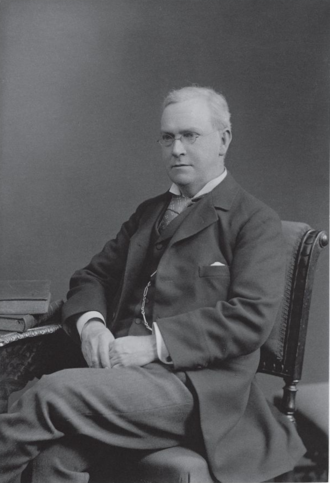
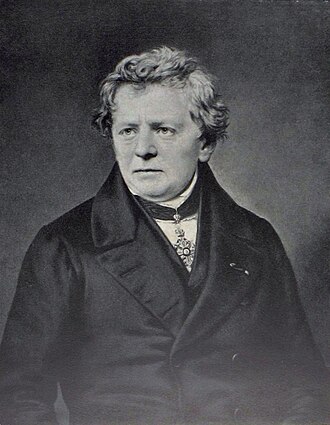
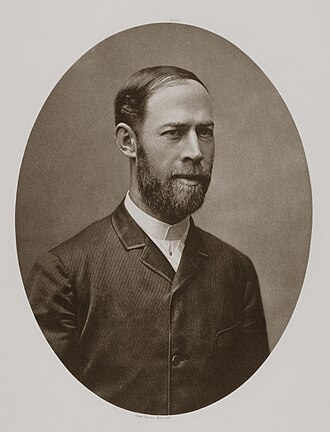
图:The Royal Society · Public domain · Wikimedia Commons
贺拉斯·兰姆1849—1934
Horace Lamb
English mathematician (*1849 – †1934)
贺拉斯·兰姆爵士,英国应用数学家,皇家学会院士,以多部有影响的经典物理学著作而知名,其中包括《Hydrodynamics》和《Dynamical Theory of Sound》。这两部著作至今仍在印行。
摘自维基百科「贺拉斯·兰姆」,CC BY-SA 4.0
- 出生
- 1849 年 11 月 29 日,斯托克波特
- 逝世
- 1934 年 12 月 4 日,剑桥
- 国籍
- 英国
- 学科
- 物理学、数学、博物与综合
- 职业
- 数学家、物理学家、大学教师
- 母语 / 工作语言
- 英语
- 母校
- 剑桥大学三一学院(1872 年)、Stockport Grammar School(1866 年)、剑桥大学(博士,1872 年)、曼彻斯特维多利亚大学(1867 年)
- 工作单位
- 曼彻斯特维多利亚大学(1885—1920)、剑桥大学(1920—1932)、阿德莱德大学(1875—1885)、剑桥大学三一学院(1872—1875)
研究领域
主要贡献
代表成就
师承
师从2
学生1
来自 Wikidata 的「博士导师」「师从」「博士生」「学生」记录,可能不全。
所获奖项(5)
- 1872史密斯奖
- 1884英国皇家学会院士
- 1902皇家奖章
- 1911德摩根奖章
- 1923科普利奖章
学会与院士
百科正文
生平
兰姆出生于英格兰柴郡斯托克波特,父亲约翰·兰姆。他就读于曼彻斯特维多利亚大学和剑桥大学三一学院。他的老师包括詹姆斯·克拉克·麦克斯韦和乔治·加布里埃尔·斯托克斯。
以上内容摘自维基百科「贺拉斯·兰姆」,按 CC BY-SA 4.0 使用,去掉了参考文献、外部链接等尾部小节,公式改写成了纯文本。全文、配图和出处见原文。
英文维基百科补充中文条目比较短,下面是英文条目「Horace Lamb」的原文
Sir Horace Lamb (27 November 1849 – 4 December 1934) was a British applied mathematician and author of several influential texts on classical physics, among them Hydrodynamics (1895) and Dynamical Theory of Sound (1910). Both of these books remain in print. The word vorticity was not coined by Lamb—it appears in English scientific literature as early as the 1880s (for example, in the Philosophical Magazine), and the underlying mathematical concept was introduced by Hermann von Helmholtz in 1858—though Lamb's influential work helped to popularise the term in the English-speaking world.
Early life and education
Lamb was born in Stockport, Cheshire, the son of John Lamb and his wife Elizabeth, née Rangeley. John Lamb was a foreman in a cotton mill who had gained some distinction by the invention of an improvement to spinning machines, he died when his son was a child. Lamb's mother married again, and soon afterwards Horace went to live with his strict maternal aunt, Mrs. Holland. He studied at Stockport Grammar School, where he made the acquaintance of a wise and kindly headmaster in the Rev. Charles Hamilton, and a graduate of classics, Frederic Slaney Poole, who in his final year became a good friend. It was from these two tutors that Lamb acquired his interest in mathematics and, to a somewhat lesser extent, classical literature.
In 1867, he gained a classical scholarship at Queens' College, Cambridge. Since Lamb's inclination, however, was to pursue a career in engineering, he chose to decline the offer, and instead worked for a year at the Owens College in nearby Manchester, as a means of developing his mathematical proficiency further.
At that time, the Chair of Pure Mathematics at Owens College was held by Thomas Barker, an eminent Scottish mathematician, who graduated as Senior Wrangler and first Smith's prizeman from the Cambridge Mathematical Tripos in 1862.
Career
University of Cambridge, 1872–75
By 1874, Lamb had become thoroughly invested in his work at Trinity, preparing there an innovative and original series of lectures on the subject of hydrodynamics for third-year students. Richard Glazebrook, a final-year student at the time, wrote of them that they were 'a revelation', and praised Lamb for his lucid presentation of the properties of liquids in rotational motion. However, Lamb soon became romantically involved with Elizabeth Foot, sister-in-law to his former headmaster, and, since the conditions of his position at Trinity stipulated that he should hold it only so long as he was unmarried, he was compelled, in 1875, to resign and continue his work elsewhere.
University of Adelaide, 1876–1885
Lamb's acquaintance from Stockport, Frederic Slaney Poole, had by now for some years lived in South Australia; hearing of his engagement, Poole suggested in a letter that he should apply for the chair at the recently founded University of Adelaide. In 1875, he was appointed the first (Sir Thomas) Elder Professor of Mathematics there, and took up the chair in March, 1876. Lamb was instrumental in the establishment of the academic and administrative structure of the university, and lectured in pure and applied mathematics, also giving practical demonstrations in physics.
Family
Lamb married Elizabeth Foot (1845−1930), his former headmaster's sister-in-law, in 1875 and had seven children, including the classicist Walter Lamb, the painter Henry Lamb and the archaeologist Dorothy Lamb. His son Ernest, a professor of engineering at Queen Mary College in London, was the father of the climatologist Hubert Lamb and the grandfather of the Liberal Democrat politician Norman Lamb.
Lamb died in 1934 and was buried at the Ascension Parish Burial Ground in Cambridge, with his wife.
Honours and awards
Lamb was elected a Fellow of the Royal Society in 1884, was twice vice-president, received its Royal Medal in 1902 and, its highest honour, the Copley Medal in 1924. He was president of the London Mathematical Society 1902–1904, president of the Manchester Literary and Philosophical Society, and president of the British Association in 1925. He was knighted in 1931. A room in the Alan Turing Building at the University of Manchester is named in his honour and in 2013 the Sir Horace Lamb Chair was created at Manchester. A building at the University of Adelaide also bears his name.
以上节选摘自英文维基百科「Horace Lamb」,按 CC BY-SA 4.0 使用,去掉了参考文献、外部链接等尾部小节,公式改写成了纯文本。篇幅所限,较长的小节只摘了开头一部分,有的小节没有收;全文、配图和出处见原文。
同一学科、同时代的科学家

同一学科的科学家
更多 ›