 格物
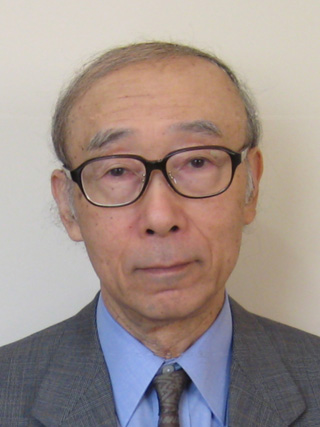
图:日本学士院 · CC BY 4.0 · Wikimedia Commons
科学家 ›
久城育夫1934—
Ikuo Kushiro
Japanese earth scientist
Ikuo Kushiro MJA is a Japanese petrologist, known for his research in experimental petrology. His experiments on peridotites contributed significantly to the understanding of the formation of magma under mid-ocean ridges and island arcs.
摘自英文维基百科「Ikuo Kushiro」(英文维基百科,暂无中文条目),CC BY-SA 4.0
- 出生
- 1934 年 3 月 30 日,大阪市
- 国籍
- 日本
- 职业
- 大学教师
- 母语 / 工作语言
- 英语
- 母校
- 东京大学
- 工作单位
- 东京大学、冈山大学
所获奖项(5)
- 1999罗勃林奖
- 1999Harry H. Hess Medal
- 1999Arthur Holmes Medal
- 2001V·M·戈耳斯密特奖
- 2003沃拉斯顿奖章
学会与院士
百科正文
本条目暂无中文维基百科条目,下面是英文维基百科原文。
Education and career
Between 1953 and 1957 Kushiro studied geology at the University of Tokyo. After graduation with a bachelor of science degree, he was a PhD student under Hisashi Kuno and studied the petrology of igneous rocks. After graduating with a doctorate in 1962, he worked for three years at the Carnegie Institution Geophysical Laboratory in Washington, D.C., specializing under the direction of J. Frank Schairer and Hatten Schuyler Yoder on experimental petrology. The central subject of his work was the formation of basaltic magmas with special consideration of the role of water. He and his colleagues identified phlogopite and potassium richterite (in which potassium is substituted for sodium in richterite) as two of the most important minerals involving in recycling water into the Earth's interior. In 1967, after two years at the University of Tokyo, he returned to the Geophysical Laboratory as a postdoc and was employed there from 1971 to 1981 as a scientist. In 1969 he was involved in examining rock samples brought from the Moon by Apollo 11 as part of the Apollo program. In 1974 he became a professor of petrology at the University of Tokyo while remaining an employee of the Carnegie Institution.
From 1990 to 1994, Kushiro was academic dean of the University of Tokyo, after which he was appointed vice president of the university. After retiring from the University of Tokyo, Kushiro became head of Okayama University's Institute for Study of the Earth's Interior (ISEI), where he remained until 1999. Since then he has worked as a director at the Institute for Frontier Research on Earth Evolution (IFREE) near Tokyo.
Awards and honors
Kushiro was elected in 1976 a Fellow of the American Geophysical Union. In 1982, he received the Japan Academy Prize. He was elected in 1983 to the National Academy of Sciences and in 1993 to the Japan Academy. In 1997 he became an honorary member of the Geochemical Society and the European Association of Geochemistry. In 1999 he received the Harry H. Hess Medal from the American Geophysical Union, and in the same year the Roebling Medal of the Mineralogical Society of America and the Arthur Holmes Medal of the European Union of Geosciences. He won the V. M. Goldschmidt Award in 2001. In 2003 the Geological Society of London awarded him the Wollaston Medal. In 2009 he was awarded the Japanese Order of the Sacred Treasure, 2nd Class. The same year, from a meteorite collected in Antarctica, a newly discovered mineral from the pyroxene group was named kushiroite in his honor.
以上内容摘自英文维基百科「Ikuo Kushiro」,按 CC BY-SA 4.0 使用,去掉了参考文献、外部链接等尾部小节,公式改写成了纯文本。全文、配图和出处见原文。