格物
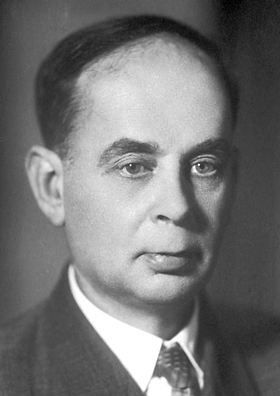
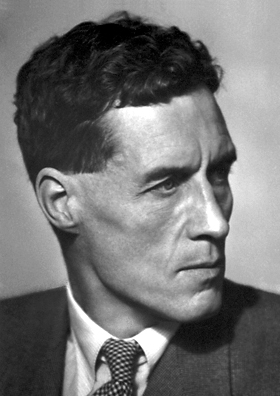
图:Nobel foundation · Public domain · Wikimedia Commons
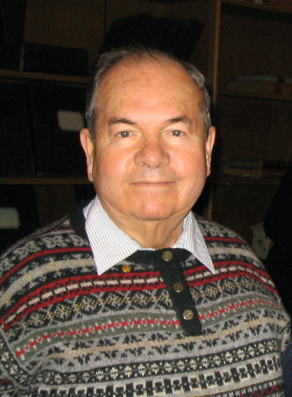
伊利亚·弗兰克1908—1990
Ilya Frank
物理学家, 苏联
伊利亚·米哈伊洛维奇·弗兰克,苏联物理学家,1958年获诺贝尔物理学奖。
摘自维基百科「伊利亚·弗兰克」,CC BY-SA 4.0
- 出生
- 1908 年 10 月 10 日,圣彼得堡
- 逝世
- 1990 年 6 月 22 日,莫斯科
- 国籍
- 苏联、俄罗斯帝国
- 学科
- 物理学、博物与综合
- 职业
- 物理学家、大学教师
- 母语 / 工作语言
- 俄语
- 母校
- 莫斯科国立大学(1930 年)、俄罗斯科学院
- 工作单位
- 列别捷夫物理研究所(1934—1970)、杜布纳联合原子核研究所、原子核研究所
研究领域
师承
博士生2
来自 Wikidata 的「博士导师」「师从」「博士生」「学生」记录,可能不全。
所获奖项(16)
- 1946State Stalin Prize, 1st degree
- 1958诺贝尔物理学奖
- 1975honorary doctor of the University of Łódź
- —苏联国家奖
- —列宁勋章
- —十月革命勋章
- —红旗劳动勋章
- —荣誉徽章勋章
- —1941-1945年大卫国战争中忘我劳动奖章
- —纪念列宁诞辰一百周年奖章
- —莫斯科建城八百周年纪念奖章
- —Order of Cyril and Methodius
- —友谊勋章
- —北极星勋章
- —State Stalin Prize, 1st degree
- —Stalin Prize, 2nd degree
学会与院士
百科正文
英文维基百科补充中文条目比较短,下面是英文条目「Ilya Frank」的原文
Ilya Mikhailovich Frank (Russian: Илья Михайлович Франк; 23 October 1908 – 22 June 1990) was a Soviet physicist who received the 1958 Nobel Prize in Physics, jointly with Pavel Cherenkov and Igor Tamm, also of the Soviet Union. He received the award for his work in explaining the phenomenon of Cherenkov radiation. He received the Stalin prize in 1946 and 1953 and the USSR state prize in 1971.
Life and career
Ilya Frank was born on 23 October 1908 in St. Petersburg. His father, Mikhail Lyudvigovich Frank, was a talented mathematician descended from a Jewish family, while his mother, Yelizaveta Mikhailovna Gratsianova, was a Russian Orthodox physician. His father participated in the student revolutionary movement, and as a result was expelled from Moscow University. After the October Revolution, he was reinstated and appointed professor. Ilya's uncle, Semyon Frank, a philosopher, was expelled from Soviet Russia in 1922 together with 160 other intellectuals. Ilya had one elder brother, Gleb Mikhailovich Frank, who became an eminent biophysicist and member of the Academy of Sciences of the USSR.
Ilya Frank studied mathematics and theoretical physics at Moscow State University. From his second year he worked in the laboratory of Sergey Ivanovich Vavilov, whom he regarded as his mentor. After graduating in 1930, on recommendation of Vavilov, he started working at the State Optical Institute in Leningrad. There he wrote his first publication—about luminescence— with Vavilov. The work he did there would form the basis of his doctoral dissertation in 1935.
In 1934, Frank moved to the Institute of Physics and Mathematics of the USSR Academy of Sciences (which shortly would be moved to Moscow, where it was transformed into the Institute of Physics). Here he started working on nuclear physics, a new field for him. He became interested in the effect discovered by Pavel Cherenkov, that charged particles moving through water at high speeds emit light. Together with Igor Tamm, he developed a theoretical explanation: the effect occurs when charged particles travel through an optically transparent medium at speeds greater than the speed of light in that medium, causing a shock wave in the electromagnetic field. The amount of energy radiated in this process is given by the Frank–Tamm formula.
The discovery and explanation of the effect resulted in the development of new methods for detecting and measuring the velocity of high-speed nuclear particles and became of great importance for research in nuclear physics. Cherenkov radiation is also widely used in biomedical research for detection of radioactive isotopes. In 1946, Cherenkov, Vavilov, Tamm, and Frank were awarded a Stalin Prize for their discovery, and 1958 Cherenkov, Tamm, and Frank received the Nobel Prize in Physics.
In 1944, Frank was appointed professor and became head of a department at the Institute of Physics and of the Nuclear Physics Laboratory (which was later transferred to the Institute of Nuclear Research). Frank's laboratory was involved in the (then secret) study of nuclear reactors. In particular, they studied the diffusion and thermalization of neutrons.
In 1957, Frank also become director of the Laboratory of Neutron Physics at the Joint Institute for Nuclear Research. The laboratory was based on the neutron fast-pulse reactor (IBR) then under construction at the site. Under Frank's supervision the reactor was used in the development of neutron spectroscopy techniques.
Personal life and death
Frank married the noted historian, Ella Abramovna Beilikhis, in 1937. Their son, Alexander, was born in the same year, and would continue much of the studies of his father as a physicist.
Frank died on 22 June 1990 in Moscow at the age 81.
以上内容摘自英文维基百科「Ilya Frank」,按 CC BY-SA 4.0 使用,去掉了参考文献、外部链接等尾部小节,公式改写成了纯文本。全文、配图和出处见原文。
同年获同一奖项
同一学科、同时代的科学家


同一学科的科学家
更多 ›