格物
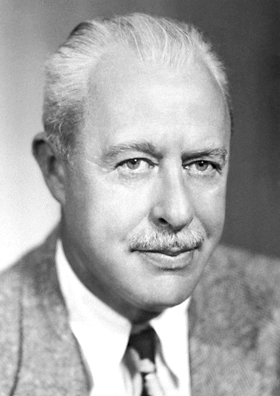
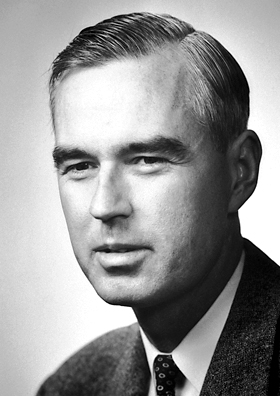
图:ENERGY.GOV · Public domain · Wikimedia Commons
瓦尔·菲奇1923—2015
Val Logsdon Fitch
核物理学家, 美国
瓦尔·洛格斯登·菲奇,美国物理学家,1980年,因为发现中性K介子衰变时存在对称破坏,与詹姆斯·克罗宁共同荣获诺贝尔物理学奖。
摘自维基百科「瓦尔·菲奇」,CC BY-SA 4.0
- 出生
- 1923 年 3 月 10 日,梅里曼
- 逝世
- 2015 年 2 月 5 日,普林斯顿
- 国籍
- 美国
- 学科
- 物理学、博物与综合
- 职业
- 核物理学家、大学教师、物理学家
- 母语 / 工作语言
- 英语
- 母校
- 麦吉尔大学、哥伦比亚大学、西北大学、雪准州立学院
- 工作单位
- 普林斯顿大学
研究领域
师承
博士导师1
博士生1
来自 Wikidata 的「博士导师」「师从」「博士生」「学生」记录,可能不全。
所获奖项(5)
- 1968欧内斯特·奥兰多·劳伦斯奖
- 1976约翰·普赖斯·韦瑟里尔奖章
- 1980诺贝尔物理学奖
- 1993美国国家科学奖章
- —美国物理学会会士
学会与院士
百科正文
英文维基百科补充中文条目比较短,下面是英文条目「Val Logsdon Fitch」的原文
Val Logsdon Fitch (March 10, 1923 – February 5, 2015) was an American nuclear physicist who, with co-researcher James Cronin, was awarded the 1980 Nobel Prize in Physics for a 1964 experiment using the Alternating Gradient Synchrotron at Brookhaven National Laboratory that proved that certain subatomic reactions do not adhere to fundamental symmetry principles. Specifically, they proved, by examining the decay of K-mesons, that a reaction run in reverse does not retrace the path of the original reaction, which showed that the reactions of subatomic particles are not indifferent to time. Thus the phenomenon of CP violation was discovered. This demolished the faith that physicists had that natural laws were governed by symmetry.
Born on a cattle ranch near Merriman, Nebraska, Fitch was drafted into the U.S. Army during World War II, and worked on the Manhattan Project at the Los Alamos Laboratory in New Mexico. He later graduated from McGill University, and completed his PhD in physics in 1954 at Columbia University. He was a member of the faculty at Princeton University from 1954 until his retirement in 2005.
Early life
Val Logsdon Fitch was born on a cattle ranch near Merriman, Nebraska, on March 10, 1923, the youngest of three children of Fred Fitch, a cattle rancher, and his wife Frances née Logsdon, a school teacher. He had an older brother and sister. The family farm was about 4 square miles (10 km2) in size. The ranch was small; his father specialized in raising breeding stock. Soon after his birth, his father was badly injured in a horse riding accident and could no longer work on his ranch, so the family moved to the nearby town of Gordon, Nebraska, where his father entered the insurance business. Here he attended school, graduating from Gordon High School in 1940 as valedictorian.
Manhattan Project
Fitch attended Chadron State College for three years, then transferred to Northwestern University. This was during WWII; his studies were interrupted by being drafted into the US Army in 1943. After completing basic training, he was sent to Carnegie Institute of Technology for training under the Army Specialized Training Program. Under this program, some 200,000 soldiers attended colleges for intensive courses. Fitch was in the program for less than a year before the manpower requirements of the war became too great, and the Army terminated the program. Most of the soldiers in the ASTP were posted to combat units, but Fitch was one of a hundred or so ASTP soldiers who joined the Special Engineer Detachment (SED), which provided much-needed technicians to the Manhattan Project.
The Army sent Fitch to the Manhattan Project's Los Alamos Laboratory in New Mexico. By mid-1944, about a third of the technicians at Los Alamos were from the SED. There he met many of the greats of physics including Niels Bohr, James Chadwick, Enrico Fermi, Isidor Isaac Rabi, Bruno Rossi, Emilio Segrè, Edward Teller and Richard C. Tolman, in some cases attending physics courses taught by them. He worked in the group headed by Ernest Titterton, a member of the British Mission, and became well-acquainted with the techniques of experimental physics.
Academic career
His wartime experiences led Fitch to decide to become a physicist. Robert Bacher, the head of the physics division at Los Alamos, offered him a graduate assistantship at Cornell University, but first he needed to complete his undergraduate degree. Rather than return to Northwestern or Carnegie Mellon, he elected to enter McGill University, which Titterton had recommended. Fitch graduated from McGill with a bachelor's degree in electrical engineering in 1948. On the advice of Jerry Kellogg, who had been a student of Rabi's at Columbia University, and was a division head at the Los Alamos, Fitch decided to pursue his doctoral studies at Columbia. Kellogg wrote him a letter of introduction to Rabi. James Rainwater became his academic supervisor. Rainwater gave him a paper by John Wheeler concerning mu-mesic atoms, atoms in which an electron is replaced by a muon. These had never been observed; they were completely theoretical and there was no evidence that they existed, but it made a good thesis topic.
Fitch designed and built an experiment to measure the gamma rays emitted from mu-mesic atoms. As it turned out, this was a good time to search for them.
以上节选摘自英文维基百科「Val Logsdon Fitch」,按 CC BY-SA 4.0 使用,去掉了参考文献、外部链接等尾部小节,公式改写成了纯文本。篇幅所限,较长的小节只摘了开头一部分,有的小节没有收;全文、配图和出处见原文。
同年获同一奖项
同一学科、同时代的科学家




同一学科的科学家
更多 ›