格物

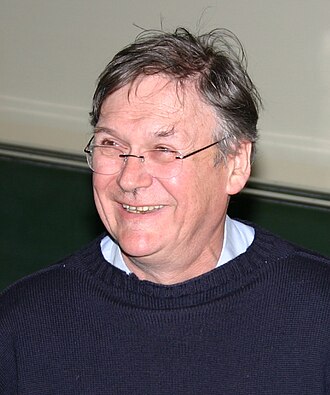
图:No machine-readable author provided. Xvlun~commonswiki assum… · CC BY-SA 2.5 · Wikimedia Commons
鲁道夫·阿瑟·马库斯1923—2026
Rudolph A. Marcus
加拿大化学家
鲁道夫·“鲁迪”·阿瑟·马库斯,加拿大化学家,1992年诺贝尔化学奖获得者。
摘自维基百科「鲁道夫·马库斯」,CC BY-SA 4.0
- 出生
- 1923 年 7 月 21 日,蒙特利尔
- 逝世
- 2026 年 7 月 16 日,帕萨迪纳
- 国籍
- 美国、加拿大
- 学科
- 化学
- 职业
- 化学家、大学教师
- 母语 / 工作语言
- 英语
- 母校
- 麦吉尔大学(哲学博士)、Baron Byng High School
- 工作单位
- 伊利诺伊大学厄巴纳-香槟分校、加州理工学院(1978—)、纽约大学坦登工程学院、北卡罗来纳大学查珀尔希尔校区(1949—1951)
研究领域
主要贡献
代表成就
师承
博士导师1
博士生3
来自 Wikidata 的「博士导师」「师从」「博士生」「学生」记录,可能不全。
所获奖项(16)
学会与院士
百科正文
生平
生于加拿大蒙特利尔。1943年取得麦吉尔大学理学学士学位。1946年取得麦吉尔大学博士学位。1958年成为归化美国公民。目前是加州理工学院的教授。
贡献
马库斯理论
外层单电子转移
以上内容摘自维基百科「鲁道夫·马库斯」,按 CC BY-SA 4.0 使用,去掉了参考文献、外部链接等尾部小节,公式改写成了纯文本。全文、配图和出处见原文。
英文维基百科补充中文条目比较短,下面是英文条目「Rudolph A. Marcus」的原文
Rudolph Arthur Marcus (July 21, 1923 – July 16, 2026) was a Canadian-born American chemist who received the 1992 Nobel Prize in Chemistry "for his contributions to the theory of electron transfer reactions in chemical systems". Marcus theory, named after him, provides a thermodynamic and kinetic framework for describing one electron outer-sphere electron transfer. He was a professor at Caltech, Nanyang Technological University, Singapore and a member of the International Academy of Quantum Molecular Science.
Education and early life
Rudolph Arthur Marcus was born in Montreal, Quebec, on July 21, 1923, the son of Esther (born Cohen) and Myer Marcus. His father was born in New York and his mother was born in England. His family originated in Ukmergė, Lithuania, then part of Russia. He was Jewish and grew up mostly in a Jewish neighbourhood in Montreal but also spent some of his childhood in Detroit, United States. His interest in the sciences began at a young age. He excelled at mathematics at Baron Byng High School. He then studied at McGill University under Carl A. Winkler, who had studied under Cyril Hinshelwood at the University of Oxford. At McGill, Marcus took more math courses than an average chemistry student, which would later aid him in creating his theory on electron transfer.
Marcus earned a B.Sc. in 1943 and a Ph.D. in 1946, both from McGill University. In 1958, he became a naturalized citizen of the United States.
Career and research
After graduating, in 1946, he took postdoctoral positions first at the National Research Council (Canada), followed by the University of North Carolina. He received his first faculty appointment at the Polytechnic Institute of Brooklyn. In 1952, at the University of North Carolina, he developed Rice–Ramsperger–Kassel–Marcus (RRKM) theory by combining the former RRK theory with the transition state theory. In 1964, he taught at the University of Illinois. Marcus moved to the California Institute of Technology in 1978. His approach to solving a problem was to "go full tilt" – he said echoing his interviewer in Veery Journal – pursuing the problem until he either reached an answer or decided it was time to put the problem aside for a while.
Marcus theory of electron transfer
Electron transfer is one of the simplest forms of a chemical reaction. It consists of one outer-sphere electron transfer between substances of the same atomic structure likewise to Marcus's studies between divalent and trivalent iron ions. Electron transfer may be one of the most basic forms of chemical reaction but without it life cannot exist. Electron transfer is used in all respiratory functions as well as photosynthesis. In the process of oxidizing food molecules, two hydrogen ions, two electrons, and half an oxygen molecule react to make an exothermic reaction as well as a water molecule:
2 H+ + 2 e− + ½ O2 → H2O + heat
Later life and death
As of his 100th birthday, he was still actively conducting research. He died at his home in Pasadena, California, on July 16, 2026, five days shy of his 103rd birthday.
Honours and awards
Marcus was awarded honorary degrees from the University of Chicago in 1983, the University of Gothenburg in 1987, the Polytechnic Institute of Brooklyn in 1987, McGill University in 1988, Queen's University in 1993, the University of New Brunswick in 1993, the University of Oxford in 1995, the University of North Carolina at Chapel Hill in 1996, the Yokohama National University in 1996, the University of Illinois at Urbana–Champaign in 1997, the Technion – Israel Institute of Technology in 1998, the Technical University of Valencia in 1999, Northwestern University in 2000, the University of Waterloo in 2002, the Nanyang Technological University in 2010, the Tumkur University in 2012, the University of Hyderabad in 2012, and the University of Calgary in 2013. In addition, he was awarded an honorary doctorate from the University of Santiago, Chile, in 2018.
以上节选摘自英文维基百科「Rudolph A. Marcus」,按 CC BY-SA 4.0 使用,去掉了参考文献、外部链接等尾部小节,公式改写成了纯文本。篇幅所限,较长的小节只摘了开头一部分,有的小节没有收;全文、配图和出处见原文。