格物

图:Conlan Houston · CC BY-SA 4.0 · Wikimedia Commons
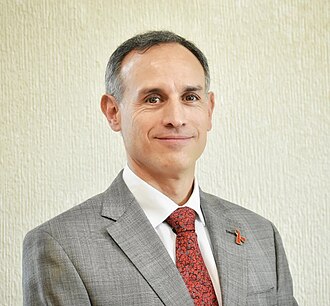
Abdul El-Sayed1984—
American politician and epidemiologist (born 1984)
Abdul El-Sayed is an American epidemiologist, public health administrator, academic and politician who is the Democratic nominee in the 2026 United States Senate election in Michigan.
摘自英文维基百科「Abdul El-Sayed」(英文维基百科,暂无中文条目),CC BY-SA 4.0
- 出生
- 1984 年 10 月 31 日,罗彻斯特山
- 国籍
- 美国
- 学科
- 医学
- 职业
- 流行病学家、政治人物、作家
- 母语 / 工作语言
- 英语
- 母校
- 密歇根大学文学科学和艺术学院(理学士,2007 年)、哥伦比亚大学医学院(医学士,2014 年)、牛津大学奥里尔学院(哲学博士,2011 年)、Andover High School
- 工作单位
- 哥伦比亚大学梅尔曼公共卫生学院(2014—2015)、Detroit Health Department(2015—2017)
所获奖项(1)
- 2009罗德奖学金
学会与院士
百科正文
本条目暂无中文维基百科条目,下面是英文维基百科原文。
Abdulrahman "Abdul" Mohamed El-Sayed ( ahb-DOOL el-SAY-id; born October 31, 1984) is an American epidemiologist, public health administrator, academic and politician who is the Democratic nominee in the 2026 United States Senate election in Michigan.
Born and raised in southeast Michigan, El-Sayed graduated from the University of Michigan and was a Rhodes Scholar at the University of Oxford, where he earned a doctorate in public health. He then earned his medical degree from Columbia University and became an assistant professor of epidemiology at the Columbia University Mailman School of Public Health. He was the executive director of the Detroit Health Department from 2015 to 2017, and from 2023 to 2025 he served as director of the Wayne County Department of Health, Human & Veterans Services.
A progressive Democrat, El-Sayed defeated U.S. representative Haley Stevens in the 2026 Michigan Democratic Senate primary. He faces Republican nominee Mike Rogers in the general election. If elected, El-Sayed would be the first Muslim member of the U.S. Senate.
Early life, family, and education
El-Sayed was born on October 31, 1984, in Rochester Hills, Michigan, a suburb of Detroit, to Egyptian immigrant parents. His father, Mohamed El-Sayed, was raised in Alexandria, Egypt, and immigrated to the United States to pursue graduate studies at Wayne State University. His mother, Fatten El-Komy, is a nurse practitioner in Missouri. His parents divorced when he was three years old. He was subsequently raised in the Detroit area by his father and stepmother, Jacqueline El-Sayed (née Johnson), a native of Gratiot County, Michigan. Both his father and stepmother are mechanical engineers, and his father is also an imam.
In 2003, El-Sayed graduated from Bloomfield Hills Andover High School, where he was a three-sport athlete and captain of the wrestling, football, and lacrosse teams. He then attended the University of Michigan, majoring in biology and political science and playing on the men's club lacrosse team. He graduated Phi Beta Kappa with highest distinction in 2007 with a bachelor's degree and gave that year's student commencement speech. According to El-Sayed, after the ceremony, former U.S. president Bill Clinton (who gave the keynote speech) encouraged him to consider public service.
Career in public health
Public health professor
In 2014, El-Sayed joined the faculty at the Columbia University Mailman School of Public Health as an assistant professor in the epidemiology department. He served as director of Columbia's Systems Science Program and Global Research Analytics for Population Health. He created and taught the Mailman School's first course on systems science and population health. El-Sayed and Sandro Galea co-edited a textbook on the topic, Systems Science and Population Health, published in 2017 by Oxford University Press.
Health director of Detroit
In August 2015, Mayor Mike Duggan appointed El-Sayed Health Officer and Executive Director of the Detroit Health Department, making him, at 30 years old, the youngest health officer in a major U.S. city at the time. In that role, he was charged with rebuilding the Detroit Health Department after government public health activities were provided by a nonprofit when the city went bankrupt in 2013.
In his first year as director, he led efforts to oppose increases in sulfur dioxide emissions by Marathon Petroleum's Southwest Refinery, which resulted in reductions in overall emissions. He also led efforts to test Detroit schools for lead in the wake of the Flint water crisis and to increase funding for the city's Animal Control department.
Political career
2018 gubernatorial campaign
On February 9, 2017, the Detroit News reported that El-Sayed would resign as health director to run for governor of Michigan in the 2018 Democratic Party primary. He officially announced his candidacy on February 25, 2017, saying he was inspired to run for governor after the Flint water crisis.
El-Sayed pledged to accept no campaign donations from corporations, and raised over $5 million from individual donations.
In early 2018, El-Sayed's eligibility to run was questioned because he had been registered to vote in New York as recently as 2015; the Michigan Constitution requires a candidate for governor to have been a qualified elector of the state for four years before the election. At the request of the Michigan Democratic Party, he asked a court to rule on the question. In May 2018, the Michigan Bureau of Elections rejected the challenges to his candidacy, noting that he had been registered to vote in Michigan for 15 consecutive years.
During the campaign, El-Sayed said that Detroit's housing demolition program had been "poisoning kids with lead" and that Duggan had ignored his warnings while he was health director. Duggan's office responded, "Dr. El-Sayed's story about his time at the city has changed, and irresponsibly so", and released emails that it said showed El-Sayed praising the city's demolition team.
Political positions
El-Sayed is a progressive economic populist. He supports Medicare for All and co-authored a book on the topic.
He has vowed not to accept PAC donations, accepting donations from individuals only. He served as a national campaign surrogate for Bernie Sanders's 2020 presidential campaign, speaking on Sanders's behalf at events and in the media.
Healthcare
Medicare for All is one of the main parts of El-Sayed's political platform. The goal is to create a government-run health insurance system that gives all Americans health insurance. El-Sayed also supports replacing private insurance with government-funded health coverage. Mike Rogers, El-Sayed's Republican opponent, opposes the plan, emphasizing the multi-trillion dollar cost of implementing it. He also claimed that millions of Michigan residents with private insurance would lose their current coverage.
First Amendment
El-Sayed has expressed support for constitutional protections for religious freedom under the First Amendment. During an October 2026 town hall exchange, he responded affirmatively when asked whether he would disavow the Muslim Brotherhood before challenging the implications of the question and defending freedom of religion for all Americans under the Constitution.
Artificial intelligence
In June 2026, El-Sayed released a plan calling for more regulation of artificial intelligence.
Personal life
El-Sayed was born and raised in southeast Michigan, and lives in Ann Arbor with his wife, Sarah Jukaku, whom he married in 2006, and their two daughters. He is Muslim. His father-in-law, Tayeb Jukaku, is a nephrologist, and is tied for the top individual donor to the main PAC supporting El-Sayed's Senate campaign, having given $300,000; according to the Washington Report on Middle East Affairs, Tayeb Jukaku served as president of Michigan's chapter of the Council on American–Islamic Relations (CAIR) and he remains on its board of directors as of 2026.
以上节选摘自英文维基百科「Abdul El-Sayed」,按 CC BY-SA 4.0 使用,去掉了参考文献、外部链接等尾部小节,公式改写成了纯文本。篇幅所限,较长的小节只摘了开头一部分,有的小节没有收;全文、配图和出处见原文。