格物
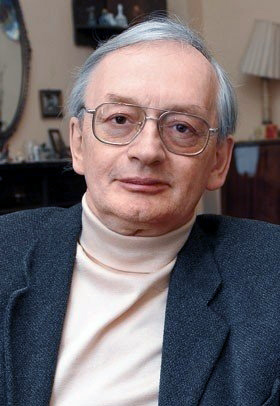
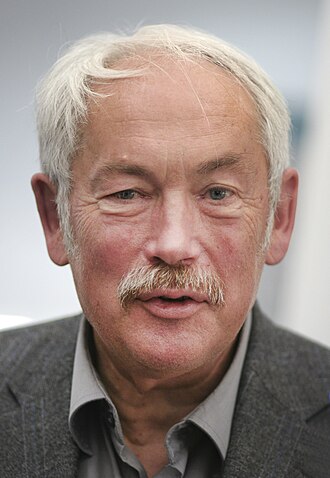
图:Gruber Foundation · CC BY 4.0 · Wikimedia Commons
阿列克谢·斯塔罗宾斯基1948—2023
Alexei Starobinski
苏联/俄罗斯天体物理学家、宇宙学家(1948—2023)
阿列克谢·亚历山德罗维奇·斯塔罗宾斯基,苏联/俄罗斯天体物理学家和宇宙学家。2014年,他与阿兰·古斯、安德烈·林德共同获得了科维理天体物理学奖,为他们“开创了宇宙暴胀理论”。
摘自维基百科「阿列克谢·斯塔罗宾斯基」,CC BY-SA 4.0
- 出生
- 1948 年 4 月 19 日,莫斯科
- 逝世
- 2023 年 12 月 21 日,莫斯科
- 国籍
- 苏联、俄罗斯
- 学科
- 物理学、天文学、博物与综合
- 职业
- 物理学家、天体物理学家、天文学家
- 母语 / 工作语言
- 俄语
- 母校
- MSU Faculty of Physics
- 工作单位
- 郎道理论物理研究所
研究领域
主要贡献
本站收录的发现与发明
师承
博士导师1
博士生1
来自 Wikidata 的「博士导师」「师从」「博士生」「学生」记录,可能不全。
所获奖项(10)
- 2009Dr. Tomalla Prize
- 2010奥斯卡·克莱因纪念讲座
- 2012Amaldi Medal
- 2013格鲁贝尔宇宙学奖
- 2014Kavli Prize in Astrophysics
- 2019狄拉克奖章(ICTP)
- 2021波梅兰丘克奖
- —劳动英勇奖章
- —Sakharov Gold Medal
- —Medal of the Order "For Merit to the Fatherland", 2nd class without swords
学会与院士
百科正文
斯塔罗宾斯基于2023年12月21日逝世,终年75岁。
以上内容摘自维基百科「阿列克谢·斯塔罗宾斯基」,按 CC BY-SA 4.0 使用,去掉了参考文献、外部链接等尾部小节,公式改写成了纯文本。全文、配图和出处见原文。
英文维基百科补充中文条目比较短,下面是英文条目「Alexei Starobinsky」的原文
Alexei Alexandrovich Starobinsky (Russian: Алексе́й Алекса́ндрович Староби́нский; 19 April 1948 – 21 December 2023) was a Soviet and Russian theoretical physicist and cosmologist. He was a pioneer of the theory of cosmic inflation, for which he received the 2014 Kavli Prize in Astrophysics together with Alan Guth and Andrei Linde.
Born in Moscow, Starobinsky obtained a degree in physics from Moscow State University in 1972 and a doctorate in theoretical and mathematical physics from the Landau Institute for Theoretical Physics in 1975, the latter under the supervision of Yakov Zeldovich. Starobinsky remained at the Landau Institute, becoming its principal research scientist in 1997 and holding this position until his death.
While still a doctoral student, in 1973 he showed that, according to the uncertainty principle, rotating black holes must emit particles. This work led to Stephen Hawking conjecturing Hawking radiation. In 1979, he became the first to propose a model of cosmic inflation, postulating what is now known as Starobinsky inflation.
Early life and education
Alexei Alexandrovich Starobinsky was born on 19 April 1948 in Moscow, in the former Soviet Union, to two radio physicists. He went to a physics and technology high school where he graduated in 1966. He attended Moscow State University, earning an MSc degree in physics in 1972. In 1975, he obtained a PhD in theoretical and mathematical physics from the Landau Institute for Theoretical Physics of the Russian Academy of Sciences under the supervision of Yakov Zeldovich with a thesis titled Quantum Effects and the Amplification of Waves in Strong Gravitational Forces.
Career
After finishing his doctorate, he remained at the Landau Institute working as a research scientist. In 1997, he became the institute's principal research scientist, a position he held until his death. From 1990 to 1997, he headed the institute's department of gravitation and cosmology and, from 1999 to 2003, he was also the institute's deputy director.
Starobinsky was a visiting professor at the École Normale Supérieure in 1991, the Research Center for the Early Universe at the University of Tokyo from 2000 to 2001, the Institut Henri Poincaré in 2006, the Yukawa Institute for Theoretical Physics of Kyoto University in 1994 and 2007, and Utrecht University from 2014 to 2015. In 2017, he was also appointed as a part-time professor at the National Research University Higher School of Economics
Research
Starobinsky's research commenced while he was still a student in the early 1970s with the study of particle creation in the early universe alongside Zeldovich. In 1973, building on Zeldovich's prior research, he showed that, according to the uncertainty principle, rotating black holes must emit particles. They were visited in Moscow by Stephen Hawking, who was spurred to find a precise mathematical treatment for this phenomenon. He would later conjecture that all black holes (not just rotating ones) emit energetic particles, a theoretical effect known today as Hawking radiation.
Subsequently, Starobinsky shifted his focus to cosmology. He began investigating the early universe and the Big Bang, attempting to use quantum mechanics and general relativity to understand how an expanding universe may have formed.
Personal life and politics
Starobinsky's father died when he was two years old. In February 2022, he signed an open letter by Russian scientists condemning the Russian invasion of Ukraine. Starobinsky died on 21 December 2023 at the age of 75. He is buried in the Novodevichy Cemetery in Moscow.
Honors and awards
Starobinsky received the Medal For Labour Valour of the Soviet Union in 1986 and the second class Order For Merit to the Fatherland in 2009.
Starobinsky was awarded the 1996 Friedmann Prize for his work on the inflationary stage of the universe and its observational manifestations. He and Mukhanov were joint recipients of the 2009 Tomalla Prize for their contributions to cosmological inflation, with Starobinsky specifically recognised for his calculations of the gravitational radiation emitted during the inflationary epoch of the universe. He received the Oskar Klein Medal in 2010. Starobinsky and Mukhanov were also co-recipients of the Amaldi Medal from the Italian Society for General Relativity and Gravitation in 2012 and the Gruber Prize in Cosmology in 2013.
以上节选摘自英文维基百科「Alexei Starobinsky」,按 CC BY-SA 4.0 使用,去掉了参考文献、外部链接等尾部小节,公式改写成了纯文本。篇幅所限,较长的小节只摘了开头一部分,有的小节没有收;全文、配图和出处见原文。
同年获同一奖项
同一学科、同时代的科学家





同一学科的科学家
更多 ›