格物
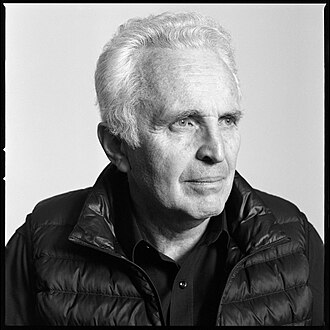
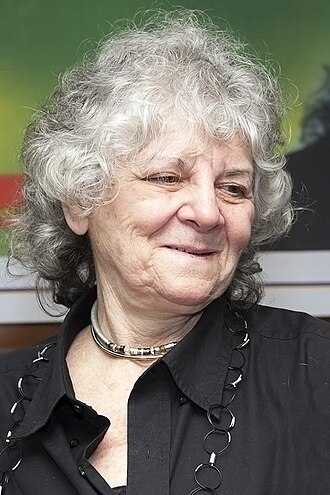
图:Ne(-ve)rmind47 · CC BY-SA 4.0 · Wikimedia Commons
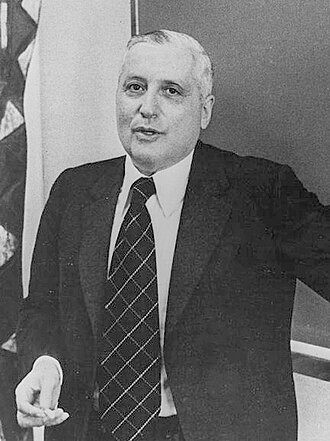
亚历山大·波利亚科夫1945—
Aleksandr Polyakov
物理学家
狄拉克奖章(ICTP) 1986马克斯·普朗克奖章 2021
亚历山大·马尔科维奇·波利亚科夫,其姓氏也常译作泊里雅科夫,是苏联犹太裔理论物理学家,曾长期任职于莫斯科的郎道理论物理研究所。他对物理问题具有无以伦比的洞察力,在非阿贝耳规范场论中的经典解(磁单极解和瞬子解),二维共形场论,弦理论(泊里雅科夫作用量),AdS/CFT对偶等方面都做出了开创性的工作。他是1986年狄拉克奖章的获得者。现在任教于普林斯顿大学物理系。
摘自维基百科「亚历山大·马尔科维奇·波利亚科夫」,CC BY-SA 4.0
- 出生
- 1945 年 9 月 27 日,莫斯科
- 国籍
- 俄罗斯、美国、苏联
- 学科
- 物理学、博物与综合
- 职业
- 物理学家、教授、理论物理学家
- 母语 / 工作语言
- 俄语
- 母校
- MIPT Department of General and Applied Physics、郎道理论物理研究所
- 工作单位
- 普林斯顿大学(1990—)、郎道理论物理研究所
研究领域
师承
博士导师1
博士生1
学生1
来自 Wikidata 的「博士导师」「师从」「博士生」「学生」记录,可能不全。
所获奖项(9)
- 1986希纳曼数学物理奖
- 1986狄拉克奖章(ICTP)
- 1994洛仑兹奖章
- 1996奥斯卡·克莱因纪念讲座
- 2004波梅兰丘克奖
- 2010哈维奖
- 2011拉斯·昂萨格奖
- 2013Physics Frontiers Prize
- 2021马克斯·普朗克奖章
学会与院士
百科正文
2012年,因“对于场理论与弦理论给出众多发现”,波利亚科夫荣获2013年基础物理学突破奖。
以上内容摘自维基百科「亚历山大·马尔科维奇·波利亚科夫」,按 CC BY-SA 4.0 使用,去掉了参考文献、外部链接等尾部小节,公式改写成了纯文本。全文、配图和出处见原文。
英文维基百科补充中文条目比较短,下面是英文条目「Alexander Polyakov (physicist)」的原文
Alexander Markovich Polyakov (Russian: Алекса́ндр Ма́ркович Поляко́в; born 27 September 1945) is a Russian-American theoretical physicist, formerly at the Landau Institute in Moscow and, since 1989, at Princeton University, where he is the Joseph Henry Professor of Physics Emeritus.
Important discoveries
Polyakov is known for a number of fundamental contributions to quantum field theory, including work on what is now called the 't Hooft–Polyakov monopole in non-Abelian gauge theory, independent from Gerard 't Hooft. Polyakov and coauthors discovered the so-called BPST instanton which, in turn, led to the discovery of the vacuum angle in QCD. His path integral formulation of string theory had profound and lasting impacts on the conceptual and mathematical understanding of the theory. His paper "Infinite conformal symmetry in two-dimensional quantum field theory" written with Alexander Belavin and Alexander Zamolodchikov laid down the foundations of two-dimensional conformal field theory and has classic status. Polyakov also played an important role in elucidating the conceptual framework behind renormalization independent of Kenneth G. Wilson's Nobel Prize-winning work. He formulated pioneering ideas in gauge/string duality long before the breakthrough of AdS/CFT using D-branes. Other insightful conjectures that came years or even decades before active work by others include integrability of gauge and string theories and certain ideas about turbulence.
Very early in his career, in a 1965 student work, Polyakov suggested (with Alexander Migdal) a dynamical Higgs mechanism, slightly after but independently from the publications of Peter Higgs and others. The paper was delayed by the Editorial Office of JETP, and was published only in 1966.
Honors and awards
Alexander Polyakov was awarded the Dirac Medal of the ICTP and the Dannie Heineman Prize for Mathematical Physics in 1986, the Lorentz Medal in 1994, the Oskar Klein Medal in 1996, the Harvey Prize in 2010, the Lars Onsager Prize (together with A. Belavin and A. Zamolodchikov) in 2011 and the Breakthrough Prize in Fundamental Physics in 2013. On 19 November 2020 the German Physical Society announced it would award Alexander Polyakov the 2021 Max Planck Medal.
Polyakov was elected to the Soviet Academy of Sciences in 1984, to the French Academy of Sciences in 1998 and the U.S. National Academy of Sciences (NAS) in 2005.
Political positions
In February-March 2022, he signed an open letter by Russian scientists condemning the 2022 Russian invasion of Ukraine, and another open letter by Breakthrough Prize laureates with the same message.
Famous quotes
“The garbage of the past often becomes the treasure of the present (and vice versa).”
“There are no tables for path integrals.” (quoted in)
“I wanted to learn about elementary particles by studying boiling water.” (paraphrased in)
以上内容摘自英文维基百科「Alexander Polyakov (physicist)」,按 CC BY-SA 4.0 使用,去掉了参考文献、外部链接等尾部小节,公式改写成了纯文本。全文、配图和出处见原文。
同年获同一奖项
同一学科、同时代的科学家





同一学科的科学家
更多 ›