格物

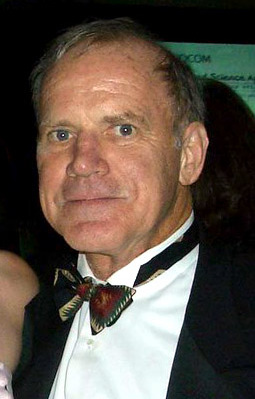
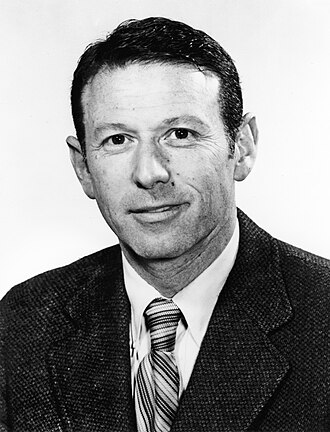
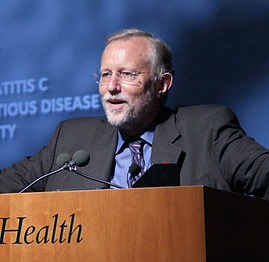
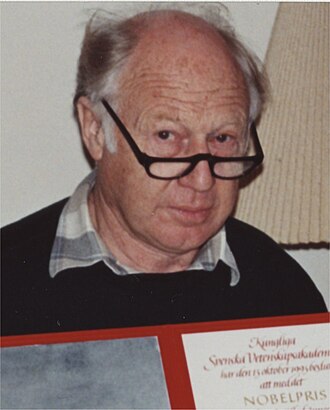
图:Stanford Energy · CC BY 3.0 · Wikimedia Commons
斯坦利·惠廷厄姆1941—
M. Stanley Whittingham
化学家, 美国
迈克尔·斯坦利·惠廷厄姆爵士,英国化学家,锂离子电池发明者。纽约州立大学旗下宾汉顿大学材料研究所和材料科学与工程项目研究所主管。2019年诺贝尔化学奖得主之一。
摘自维基百科「斯坦利·惠廷厄姆」,CC BY-SA 4.0
- 出生
- 1941 年 12 月 22 日,诺丁汉
- 国籍
- 美国、英国
- 学科
- 化学、工程与发明
- 职业
- 化学家、工程师、大学教师
- 母语 / 工作语言
- 英语
- 母校
- 牛津大学新学院、斯坦福大学、Stamford School
- 工作单位
- 宾汉顿大学、斯伦贝谢、Exxon Research & Engineering Company
研究领域
主要贡献
代表成就
所获奖项(6)
- 1971Norman Hackerman Young Author Award
- 2015汤森路透引文桂冠奖
- 2019诺贝尔化学奖
- 2021英国皇家学会院士
- 2024下级勋位爵士
- 2025美国科学促进会会士
学会与院士
百科正文
英文维基百科补充中文条目比较短,下面是英文条目「M. Stanley Whittingham」的原文
Sir Michael Stanley Whittingham (born 22 December 1941) is a British-American chemist. He is a professor of chemistry and past founding director of both the Institute for Materials Research and the Materials Science and Engineering program at Binghamton University, State University of New York. He also served as director of the Northeastern Center for Chemical Energy Storage (NECCES) of the U.S. Department of Energy at Binghamton. He was awarded the Nobel Prize in Chemistry in 2019 alongside Akira Yoshino and John B. Goodenough.
Whittingham is a key figure in the history of lithium-ion batteries, which are used in everything from mobile phones to electric vehicles. He discovered intercalation electrodes and thoroughly described intercalation reactions in rechargeable batteries in the 1970s. He holds the patents on the concept of using intercalation chemistry in high power-density, highly reversible lithium-ion batteries. He also invented the first rechargeable lithium metal battery (LMB), patented in 1977 and assigned to Exxon for commercialization in small devices and electric vehicles. Whittingham's rechargeable lithium metal battery is based on a LiAl anode and an intercalation-type TiS2 cathode. His work on lithium batteries laid the foundation for others' developments, so he is called the founding father of lithium-ion batteries.
Education and career
Whittingham was born in the Carlton suburb of Nottingham, England, on 22 December 1941. His father was a civil engineer, the first in the family to go to college. His mother Dorothy Mary (née Findley) was a chemist before marriage. He was educated at Stamford School from 1951 to 1960, before going up to New College, Oxford to read chemistry. At the University of Oxford, he took his BA (1964), MA (1967), and DPhil (1968). After completing his graduate studies, Whittingham became a postdoctoral fellow at Stanford University. He worked 16 years for Exxon Research & Engineering Company and four years working for Schlumberger prior to becoming a professor at Binghamton University.
Research
Whittingham, in a multidisciplinary group led by Fred Gamble, PhD, conceived the intercalation electrode. Exxon manufactured Whittingham's lithium-ion battery in the 1970s, based on a titanium disulfide cathode and a lithium-aluminum anode. The battery had high energy density and the diffusion of lithium ions into the titanium disulfide cathode was reversible, making the battery rechargeable. In addition, titanium disulfide has a particularly fast rate of lithium ion diffusion into the crystal lattice. Exxon threw its resources behind the commercialization of a Li/LiBX/ TiS2 battery. However, The small market size led Exxon to end the project, and license the technology to 3 companies, one in each of the USA, Japan and Germany.
Personal life
Stanley is married to Dr. Georgina Whittingham, a professor of Spanish at the State University of New York at Oswego. He has two children, Michael Whittingham and Jenniffer Whittingham-Bras.
Recognition
2007 Chancellor's Award for Excellence in Scholarship and Creative Activities, and Outstanding Research Award, State University of New York
- 2010 Award for Lifetime Contributions from the American Chemical Society
- 2015 Thomson Reuters Citation Laureate
- 2017 Senior Scientist Award from the International Society for Solid State Ionics
- 2018 Turnbull Award from the Materials Research Society
- 2018 Member National Academy of Engineering
- 2019 Nobel Prize in Chemistry with John B. Goodenough and Akira Yoshino
- 2020 Great Immigrants Award by the Carnegie Corporation of New York
- 2023 VinFuture Grand Prize with Martin Green, Rachid Yazami and Akira Yoshino
2024 Knighted in the 2024 King's Birthday Honours "for services to chemistry".
Most-cited papers
(As of 2019:)
Whittingham, M. S. (1976). "Electrical energy storage and intercalation chemistry". Science. 192 (4244): 1126–1127. Bibcode:1976Sci...192.1126W. doi:10.1126/science.192.4244.1126. PMID 17748676. S2CID 36607505.
Whittingham, M. Stanley (1976). "The role of ternary phases in cathode reactions". Journal of the Electrochemical Society. 123 (3): 315–320. Bibcode:1976JElS..123..315W. doi:10.1149/1.2132817.
Whittingham, M.Stanley (1978). "Chemistry of intercalation compounds: metal guests in chalcogenide hosts". Progress in Solid State Chemistry. 12 (1): 41–99. doi:10.1016/0079-6786(78)90003-1.
Whittingham, M. Stanley (October 2004). "Lithium batteries and cathode materials" (PDF). Chemical Reviews. 104 (10): 4271–4301.
以上节选摘自英文维基百科「M. Stanley Whittingham」,按 CC BY-SA 4.0 使用,去掉了参考文献、外部链接等尾部小节,公式改写成了纯文本。篇幅所限,较长的小节只摘了开头一部分,有的小节没有收;全文、配图和出处见原文。