格物
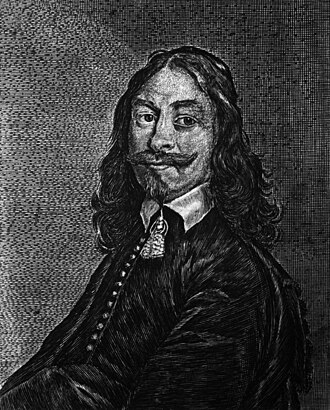
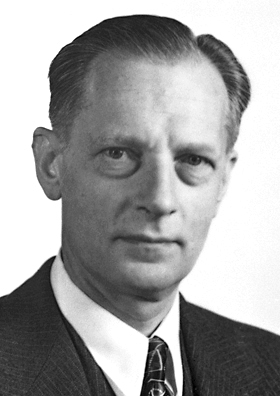
图:https://wellcomeimages.org/indexplus/obf_images/c0/be/55111c… · CC BY 4.0 · Wikimedia Commons
威廉·布朗里格1711—1800
William Brownrigg
英国科学家
威廉·布朗里格 是一位爱尔兰裔英国科学家,1766年因其对碳酸的研究而获得科普利奖章,1742年当选英国皇家学会会士。
摘自维基百科「威廉·布朗里格」,CC BY-SA 4.0
- 出生
- 1712 年 3 月 24 日,菲力斯陶
- 逝世
- 1800 年 1 月 6 日,凯西克
- 国籍
- 大不列颠王国
- 学科
- 化学、医学
- 职业
- 化学家、医生
- 母语 / 工作语言
- 英语
- 母校
- 莱顿大学
师承
博士导师1
来自 Wikidata 的「博士导师」「师从」「博士生」「学生」记录,可能不全。
所获奖项(2)
- 1766科普利奖章
- —英国皇家学会院士
学会与院士
百科正文
英文维基百科补充中文条目比较短,下面是英文条目「William Brownrigg」的原文
William Brownrigg (24 March 1712 [O.S. 13 March 1711] – 6 January 1800) was an English physician and scientist who practised at Whitehaven in Cumberland. While there, Brownrigg carried out experiments that earned him the Copley Medal in 1766 for his work on carbonic acid gas. He was the first person to recognise platinum as a new element.
He was created a Fellow of the Royal Society.
Early life and education
He was born at High Close Hall near Plumbland, England the son of local gentry, George Brownrigg. William's mother, Mary Brownrigg, was from Ireland.
William was educated in Latin and Greek by a local clergyman from the age of 13 and by the age of 15 was an apprentice to an apothecary in Carlisle. Then followed two years studying under a surgeon in London before going to Leiden where he studied under Boerhaave, 's Gravesande, van Royen and Albinus. He graduated in 1737 with his thesis "De Praxi Medica Ineunda" – about the environment where the clinician practises medicine. He gained the degree of Doctor of Medicine (MD).
Medical career
Brownrigg returned to Britain and took up medicine with an established doctor called Richard Senhouse in Whitehaven. Senhouse died soon after, making Brownrigg the principal doctor in the area for many years to come. His casebook for 1737-1742 survives and was recently transcribed. It contains descriptions of his patients and remedies and some of the earliest English references to puerperal fever.
In 1741, Brownrigg married Mary Spedding. Mary's father and uncle ran the collieries for James Lowther, whose family had developed Whitehaven into a major seaport. This increased William's local influence and also promoted his interest in the health and welfare of the miners.
Later in 1771, with the threat of an epidemic from Europe, Brownrigg who had studied the subject from outbreaks of typhus at Whitehaven, published a paper "Considerations on the means of pestilential contagion, and of Eradicating it in Infected Places."
Scientist
His medical interest led him to investigate the gases the miners breathed – fire damp (methane) and choke damp (oxygen depleted air). Carlisle Spedding helped to build a laboratory for Brownrigg and fed it with gases from a nearby coal mine through lead pipes. Brownrigg developed methods of collecting and transferring the gases and supplied James Lowther with gas filled bladders to show to The Royal Society which then elected Brownrigg as a Fellow.
His experiments on gases continued and after visiting a spa resort in Germany he became interested in gases to be found in mineral waters. A paper he published entitled "Experimental inquiry concerning the nature of the mineral elastic spirit or air contained in the Pouhon water, and other acidulae" earned him the prestigious Copley Medal in 1766.
Discovery of platinum
In 1741, Brownrigg's relative, Charles Wood, a British metallurgist, found various samples of Colombian platinum in Jamaica, which he sent to Brownrigg for further investigation. In 1750, after studying the platinum sent to him by Wood, Brownrigg presented a detailed account of the metal to the Royal Society, stating that he had seen no mention of it in any previous accounts of known minerals. Brownrigg wrote up Wood's experiments and did some of his own. He was the first to recognise it as a new element and by bringing the new metal to the attention of The Royal Society encouraged other scientists to start investigating it.
Other interests
Brownrigg was a businessman as well as a doctor and scientist. He went into partnership with Anthony Bacon from Whitehaven in 1765 to develop the iron industry in Wales which led to the expansion of Merthyr Tydfil, particularly the Cyfarthfa Ironworks. He also inherited a share of John Speddings ropery and invested in the Keswick Turnpike Trust.
With his retirement to Ormathwaite, he became interested in improving the local agriculture, made a study of minerals, and encouraged Thomas West to write A Guide to the Lakes, the first guide book to the Lake District. He had several society positions including magistrate, Patent searcher at Port Carlisle and Receiver General of Government Taxes for Cumberland and Westmorland.
Brownrigg died in 1800 and was buried at Crosthwaite church where his coffin was carried by three baronets and other local gentry. His friend and biographer Joshua Dixon felt that his importance and abilities had been overlooked due to his modesty and reluctance to leave his home county of Cumberland in later life.
以上节选摘自英文维基百科「William Brownrigg」,按 CC BY-SA 4.0 使用,去掉了参考文献、外部链接等尾部小节,公式改写成了纯文本。篇幅所限,较长的小节只摘了开头一部分,有的小节没有收;全文、配图和出处见原文。