格物
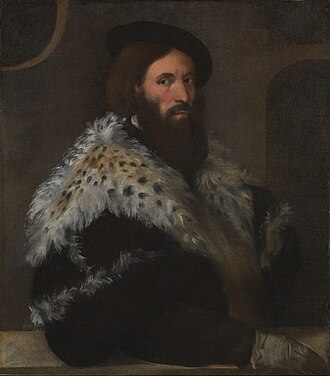
图:Attributed to Titian · Public domain · Wikimedia Commons
- 出生
- 1478 年,维罗纳
- 逝世
- 1553 年 8 月 6 日,阿菲
- 国籍
- 威尼斯共和国
- 学科
- 数学、天文学、医学、博物与综合
- 职业
- 医师作家、诗人、流行病学家、数学家
- 母语 / 工作语言
- 拉丁语、意大利语
- 母校
- 博洛尼亚大学、帕多瓦大学
- 工作单位
- 帕多瓦大学
师承
师从1
来自 Wikidata 的「博士导师」「师从」「博士生」「学生」记录,可能不全。
百科正文
弗拉卡斯托罗亦是微生物学和对传染病的认识上的重要人物。他提出了传染病理论,认为传染病可以通过微小粒子或 "种子"(他称之为 "seminaria")在空气中传播。这一理论为人们了解疾病(包括由细菌引起的疾病)的传播奠定了基础。虽然他的研究早于细菌的发现,但他的观点为后来疾病细菌理论的发展做出了贡献。
以上内容摘自维基百科「吉罗拉莫·弗拉卡斯托罗」,按 CC BY-SA 4.0 使用,去掉了参考文献、外部链接等尾部小节,公式改写成了纯文本。全文、配图和出处见原文。
英文维基百科补充中文条目比较短,下面是英文条目「Girolamo Fracastoro」的原文
Girolamo Fracastoro (Latin: Hieronymus Fracastorius; c. 1476/8 – 6 August 1553) was an Italian physician, poet, and scholar in mathematics, geography and astronomy. Fracastoro subscribed to the philosophy of atomism, and rejected appeals to hidden causes in scientific investigation. His studies of the mode of syphilis transmission are an early example of epidemiology.
Life and medical career
Fracastoro was born in Verona, Republic of Venice, and educated at Padua where at the age of 19 he was appointed professor at the university. On account of his eminence in the practice of medicine, he was elected physician of the Council of Trent. A bronze statue was erected in his honor by the citizens of Padua, while his native city commemorated their great compatriot with a marble statue. He lived and practised in his hometown. In 1546 he proposed that epidemic diseases are caused by transferable tiny particles or "spores" that could transmit infection by direct contact, indirect contact, or even without contact over long distances. In his writing, the "spores" of diseases may refer to chemicals rather than to any living entities.
He appears to have first used the Latin word fomes, meaning tinder, in the sense of infectious agent, in his essay on contagion De Contagione et Contagiosis Morbis (On Contagion and Contagious Diseases), published in 1546: "I call fomites [from the Latin fomes, meaning "tinder"] such things as clothes, linen, etc., which although not themselves corrupt, can nevertheless foster the essential seeds of the contagion and thus cause infection." His theory remained influential for nearly three centuries. 19th century bacteriologists studied Fracastoro’s works, and his "seeds of disease" theory is considered as a predecessor to germ theory.
In the same work he also wrote extensively on rabies, speculating that it might be transmitted by rabid dog saliva penetrating the skin.
Other pursuits
Geology and fossils
The following is a discussion of the role of Fracastoro in contemporaneous debates about the origin and nature of marine fossils discovered in excavations in Verona during 1517, as quoted from Charles Lyell's Principles of Geology:
It was not till the earlier part of the sixteenth century that geological phenomena began to attract the attention of the Christian nations. At that period a very animated controversy sprung up in Italy, concerning the true nature and origin of marine shells, and other organized fossils found abundantly in the strata of the peninsula. The excavations made in 1517, for repairing the city of Verona, brought to light a multitude of curious petrifactions, and furnished matter for speculation to different authors, and among the rest to Fracastoro, who declared his opinion, that fossil shells had all belonged to living animals, which had formerly lived and multiplied, where their exuviæ are now found. He exposed the absurdity of having recourse to a certain 'plastic force,' which it was said had the power to fashion stones into organic forms; and, with no less cogent arguments, demonstrated the futility of attributing the situation of the shells in question to the Mosaic deluge, a theory obstinately defended by some. That inundation, he observed, was too transient, it consisted principally of fluviatile waters; and if it had transported shells to great distances, must have strewed them over the surface, not buried them at vast depths in the interior of mountains.
Legacy
A marble portrait statue of Girolamo Fracastoro by the Carrarese sculptor Danese Cattaneo (completed 1559) stands on an arch in the central Piazza dei Signori of Verona, near the monument to Dante Alighieri. On its base is the inscription: "HIER FRACASTORIO \ PAULLI PHILIPPI F \ EX PUBLICA AUCTORITATE \ DICATA \ AN SAL MDLIX". According to a popular legend the stone ball Fracastoro holds in his right hand, symbolizing the world, will fall on the first honorable person to walk under the arch. Over the centuries many people have passed every day under the arch, but the ball remains in place.
A portrait of Fracastoro that has been in the collection of the National Gallery since 1924 has been attributed to the renowned Italian painter Titian.
The re-attribution has led scholars to speculate that Titian may have painted the portrait in exchange for syphilis treatment.
The lunar crater Fracastorius is named after him.
以上节选摘自英文维基百科「Girolamo Fracastoro」,按 CC BY-SA 4.0 使用,去掉了参考文献、外部链接等尾部小节,公式改写成了纯文本。篇幅所限,较长的小节只摘了开头一部分,有的小节没有收;全文、配图和出处见原文。
同一学科、同时代的科学家
同一学科的科学家
更多 ›