格物
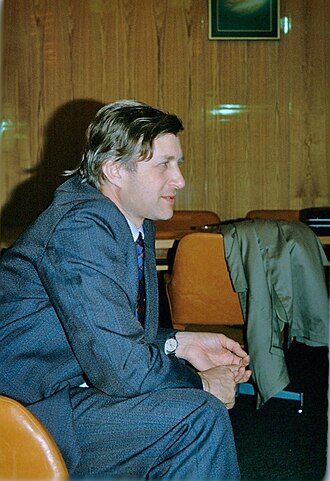
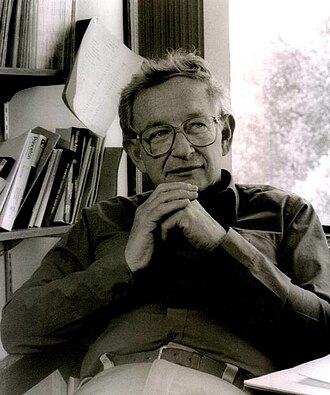
图:Rights NRAO/AUI/NSF Photographer Woodruff T. Sullivan III Ph… · CC BY 4.0 · Wikimedia Commons
- 出生
- 1932 年 4 月 25 日,莫斯科
- 逝世
- 2019 年 8 月 3 日,莫斯科
- 国籍
- 苏联、俄罗斯
- 学科
- 物理学、天文学、博物与综合
- 职业
- 天文学家、天体物理学家
- 母语 / 工作语言
- 俄语
- 母校
- 莫斯科国立大学数学力学系(1955 年)、莫斯科国立大学
- 工作单位
- 列别捷夫物理研究所天文中心、斯腾伯格天文学院
研究领域
主要贡献
代表成就
师承
博士导师1
博士生1
来自 Wikidata 的「博士导师」「师从」「博士生」「学生」记录,可能不全。
所获奖项(4)
- 1980苏联国家奖
- 1988苏联国家奖
- 2011荣誉勋章
- 2014杰米多夫奖
学会与院士
百科正文
生平
卡尔达肖夫于1955年从莫斯科国立大学毕业,到斯腾伯格天文学院进修。他拜在约瑟夫·什克罗夫斯基门下,并在1962年获得了他的博士学位。
1963年,卡尔达肖夫去调查苏联搜寻地外智慧生物的第一个成果——类星体CTA-102。做这个工作的同时,他猜想有些银河文明有可能比我们先进几百万甚至几十亿年,为了给这些文明分等级,他创造了卡尔达肖夫分类法。俄罗斯人在SETI上所严肃付出的努力要比美国的相似计划提早几年。其他有名的苏联专家有弗塞沃洛德·特洛伊斯基和约瑟夫·什克罗夫斯基(卡尔达肖夫的前导师)。
1976年12月23日,卡尔达肖夫成为苏联科学院下普通物理学和天文学部的通讯院士。1994年3月31日,他成为俄罗斯科学院院士。
2019年8月3日,卡尔达肖夫在莫斯科逝世,享年87岁。
以上内容摘自维基百科「尼古拉·卡尔达肖夫」,按 CC BY-SA 4.0 使用,去掉了参考文献、外部链接等尾部小节,公式改写成了纯文本。全文、配图和出处见原文。
英文维基百科补充中文条目比较短,下面是英文条目「Nikolai Kardashev」的原文
Nikolai Semyonovich Kardashev (25 April 1932 – 3 August 2019) was a Soviet and Russian astrophysicist best known for the Kardashev scale, which measures a civilization's status in technological evolution based on the amount of energy it is capable of harnessing and using. He was also the deputy director of the Astro Space Center of the Lebedev Physical Institute of the Russian Academy of Sciences.
Early life
He was born in Moscow to a family of professional revolutionaries involved with the Bolshevik Party. His parents were Semyon Karlovich Brike and Nina Nikolaevna Kardasheva; his father was an important member of the party, and his mother joined as well before the October Revolution in 1917. Both of his parents were arrested during the Great Purge of 1937 and 1938. His father was ultimately shot and his mother was assigned to labor camps and would not be released for many years. Due to his parents’ absence, he was sent to an orphanage from which he was then taken by his mother's sister after a great deal of effort. His aunt then died during World War II when he was 16 years old and he then had to live on his own in a large communal flat. His mother was released in 1956, by which time Nikolai had completed university.
Education
He attended Moscow State University in the astronomy division of the Faculty of Mechanics and Mathematics. He concentrated his studies based on his interest in radio astronomy, a topic that was new and developing at the time. After graduating in 1955, he worked at the Sternberg Astronomical Institute and received his doctorate in physical and mathematical sciences in 1962.
Career
He joined the Space Research Institute (IKI) of the USSR Academy of Sciences in 1967. He became deputy director of IKI in 1977. During the dissolution of the USSR, Nikolai became the director of the Astro Space Center of the Lebedev Physical Institute. In 1978, Nikolai started a space satellite project known as RadioAstron. The program endured for more than 30 years and a space satellite named Spektr-R was finally launched in 2011. The mission RadioAstron has become important for modern observational astrophysics.
In 1964, at a conference in Soviet Armenia, he presented a paper titled "Передача информации внеземными цивилизациями" ("Transmission of Information by Extraterrestrial Civilizations").
Organizations
He was an active participant of the International Astronomical Union, for which he was: Vice-president of Executive Committee (1997–2003), vice-president of Commission 51 Bio-Astronomy (1982–1991), Organizing Committee Member of Commission 40 Radio Astronomy (1967–1985), Member of Division B Facilities, Technologies and Data Science (2019), Member of Division F Planetary Systems and Astrobiology (2019), Member of Commission 40 Radio Astronomy (2015), Member of Commission 51 Bio-Astronomy (2015), Member of Division III Planetary Systems Sciences (2012), Member of Division X Radio Astronomy (2012), and Member of Special Nominating Committee (2000–2003).
He was a member of the USSR Academy of Sciences, Division of General Physics and Astronomy: first as a corresponding (associate) member (12 December 1976), then as a Full Member (21 March 1994), and served as director of the Russian Academy of Sciences Council on Astronomy from 1999 until his death.
Awards and honors
In 1980 he shared the USSR's State Prize for the development and experiments with the orbital radio telescope KRT-10, and in 1988 he shared the USSR's State Prize for the discovery of Radio Recombination Lines. In 2012, Nikolai received the Grote Reber Gold Medal for innovative lifetime contributions to radio astronomy.
Movie career
His first association with the movie industry was in 1981. He was asked to be a consultant on the set of Petlya Oriona, a Russian television series documentary. He played himself in a TV show episode on the documentary series Space's Deepest Secrets in 2018 as well as playing himself in a TV show episode on the documentary series Horizon in 2018.
Philosophy
Kardeshev said "The concepts of morality and goodness are universal, like the Pythagorean theorem. Civilizations do not survive if they do not follow these concepts.”
Personal life
His wife Tamara Valentinovna was also a scientist.
Death
Kardashev died on 3 August 2019, at the age of 87.
以上节选摘自英文维基百科「Nikolai Kardashev」,按 CC BY-SA 4.0 使用,去掉了参考文献、外部链接等尾部小节,公式改写成了纯文本。篇幅所限,较长的小节只摘了开头一部分,有的小节没有收;全文、配图和出处见原文。
同一学科、同时代的科学家




同一学科的科学家
更多 ›