格物
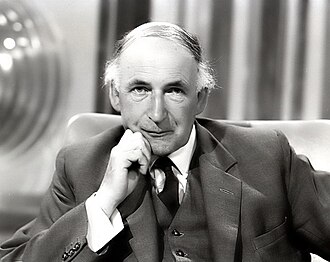
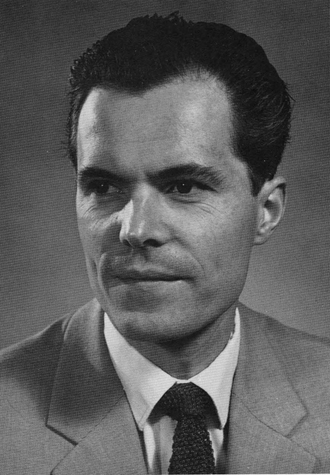
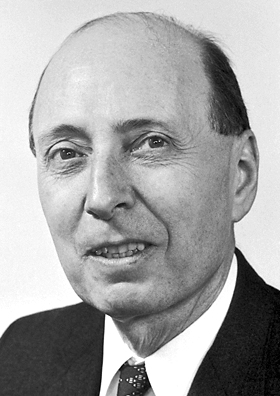
图:作者不详 · Attribution · Wikimedia Commons
伯纳德·洛维尔1913—2012
Bernard Lovell
English physicist and radio astronomer
Sir Alfred Charles Bernard Lovell was a British physicist and radio astronomer. He was the first director of Jodrell Bank Observatory, from 1945 to 1980.
摘自英文维基百科「Bernard Lovell」(英文维基百科,暂无中文条目),CC BY-SA 4.0
- 出生
- 1913 年 8 月 31 日,Oldland Common
- 逝世
- 2012 年 8 月 6 日,Swettenham
- 国籍
- 英国、大不列颠及爱尔兰联合王国
- 学科
- 物理学、天文学、博物与综合
- 职业
- 天文学家、物理学家、大学教师
- 母语 / 工作语言
- 英语
- 母校
- King's Oak Academy, à l'époque Kingswood Grammar School、布里斯托尔大学
- 工作单位
- 曼彻斯特大学
研究领域
主要贡献
代表成就
师承
博士生3
来自 Wikidata 的「博士导师」「师从」「博士生」「学生」记录,可能不全。
所获奖项(9)
- 1954嘉宝勋章和奖金
- 1960皇家奖章
- 1961下级勋位爵士
- 1962Guthrie Lecture
- 1980Benjamin Franklin Medal
- 1981英国皇家天文学会金质奖章
- 2009Dalton Medal
- —英国皇家学会院士
- —大英帝国官佐
学会与院士
百科正文
本条目暂无中文维基百科条目,下面是英文维基百科原文。
Early life and education
Lovell was born at Oldland Common, Bristol, in 1913, the son of local tradesman and Methodist preacher Gilbert Lovell (1881–1956) and Emily Laura, née Adams. Gilbert Lovell was an "authority on the Bible" and, having "studied English literature and grammar", was still "bombarding his son with complaints on points of grammar, punctuation and method of speaking" when Lovell was in his forties. Lovell's childhood hobbies and interests included cricket and music, mainly the piano. He had a Methodist upbringing and attended Kingswood Grammar School.
Career and research
Lovell studied physics at the University of Bristol obtaining a Bachelor of Science degree in 1934, and a PhD in 1936 for his work on the electrical conductivity of thin films. At this time, he also received lessons in music from Raymond Jones, a teacher at Bath Technical School and later an organist at Bath Abbey. The church organ was one of the main loves of his life, apart from science.
Lovell worked in the cosmic ray research team at the University of Manchester until the outbreak of the Second World War. At the beginning of the war, Lovell published his first book, Science and Civilization. During the war he worked for the Telecommunications Research Establishment (TRE) developing radar systems to be installed in aircraft, among them H2S.
In June 1942, following the crash in England of a Halifax bomber on a flight to demonstrate the H2S, Lovell aided in the recovery of the H2S's highly secret (and nearly indestructible) cavity magnetron from the plane's wreckage. All 11 on board were killed, including a number of his colleagues, notably EMI engineer Alan Blumlein. Despite the tragedy, Lovell resumed his work as the government considered the H2S radar critical to the war effort.
At the end of the Second World War, Lovell attempted to continue his studies of cosmic rays with an ex-military radar detector unit, but suffered much background interference from the electric trams on Manchester's Oxford Road. He moved his equipment to a more remote location, one which was free from such electrical interference, and where he established the Jodrell Bank Observatory, near Goostrey in Cheshire. It was an outpost of the university's botany department and had been a searchlight station during the war. In the course of his experiments, he was able to show that radar echoes could be obtained from daytime meteor showers as they entered the Earth's atmosphere and ionised the surrounding air. He was later able to determine the orbits of meteors in annual meteor showers to show they were in solar orbit and not of interstellar origin. With university funding, he constructed the then-largest steerable radio telescope in the world, which now bears his name: the Lovell Telescope. Over 50 years later, it remains a productive radio telescope, now operated mostly as part of the MERLIN and European VLBI Network interferometric arrays of radio telescopes.
In 2009, Lovell claimed he had been the subject of a Cold War assassination attempt during a 1963 visit to the Soviet Deep-Space Communication Centre (Eupatoria). He alleged that his hosts tried to kill him with a lethal radiation dose because he was head of the Jodrell Bank space telescope when it was also being used as part of an early warning system for Soviet nuclear attacks. Having fallen ill shortly after the visit and taken a long time to recover, he wrote a full account of the incident which, at his determination, was only published after his death.
Lectures
In 1958, Lovell was invited by the BBC to deliver the annual Reith Lectures, a series of six radio broadcasts called The Individual and the Universe, in which he examined the history of enquiry into the Solar System and the origin of the universe.
In 1959, he was invited to deliver the MacMillan Memorial Lecture to the Institution of Engineers and Shipbuilders in Scotland. He chose the subject "Radio Astronomy and the Structure of the Universe".
In 1965 he was invited to co-deliver the Royal Institution Christmas Lecture on Exploration of the Universe.
In 1975 he gave the presidential address (In the Centre of Immensities) to the British Association meeting in Guildford.
Awards and honours
Lovell won numerous awards including:
Lovell was a member of the Royal Swedish Academy of Sciences.
Lovell has a secondary school named after him in Oldland Common, Bristol, which he officially opened. A building on the QinetiQ site in Malvern is also named after him, as was the fictional scientist Bernard Quatermass, the hero of several BBC Television science-fiction serials of the 1950s, whose first name was chosen in honour of Lovell.
Personal life
In 1937, Lovell married Mary Joyce Chesterman (d. 1993) and they had two sons and three daughters.
Lovell played the organ at St Peter's Parish church in his home village of Swettenham, close to Jodrell Bank, and commissioned a Mander organ for the church.
In later life Lovell was physically very frail; he lived in quiet retirement in the countryside, surrounded by music, his books and a vast garden filled with trees he planted many decades before. Lovell died at home in Swettenham, Cheshire on 6 August 2012.
Read also
Lovell, Bernard (1967). Our Present Knowledge of the Universe. Manchester, UK: Manchester University Press. Bibcode:1967opku.book.....L.
Lovell, Bernard (1990). Astronomer by Chance. New York, USA: Basic Books.
以上内容摘自英文维基百科「Bernard Lovell」,按 CC BY-SA 4.0 使用,去掉了参考文献、外部链接等尾部小节,公式改写成了纯文本。全文、配图和出处见原文。
同年获同一奖项
同一学科、同时代的科学家


同一学科的科学家
更多 ›