格物

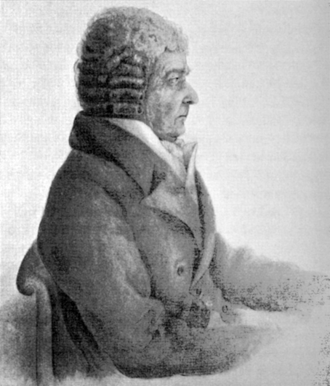
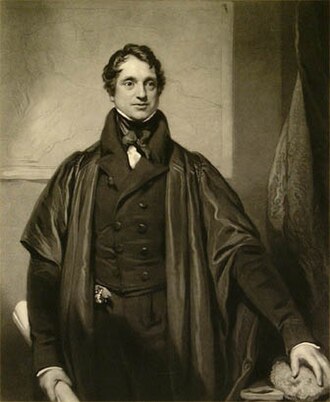
图:Louis van Houtte · Public domain · Wikimedia Commons
- 出生
- 1799 年 2 月 5 日,旧卡顿
- 逝世
- 1865 年 11 月 1 日,Turnham Green
- 国籍
- 大不列颠及爱尔兰联合王国
- 学科
- 生物学、医学
- 职业
- 植物学家、蕨类植物学家、苔藓学家、大学教师
- 母语 / 工作语言
- 拉丁语、英语
- 母校
- 诺维奇学校
- 工作单位
- 伦敦大学学院
研究领域
主要贡献
代表成就
所获奖项(4)
- 1857皇家奖章
- —英国皇家学会院士
- —Fellow of the Linnean Society of London
- —美国文理科学院院士
学会与院士
百科正文
生平
林德利在诺维奇接受教育,1820年时写出第一本专著《Monographia Rosarum》,不久以后赴伦敦参与植物大百科全书的撰写。1829年全书完成后,林德利成为安东尼·劳伦·德·朱西厄的追随者之一,认为他的分类法显然要比林奈的分类法更为自然。同年,林德利被任命为伦敦大学学院植物学系的主席,此后他一直把持这一职位直到1860年。
以上内容摘自维基百科「约翰·林德利」,按 CC BY-SA 4.0 使用,去掉了参考文献、外部链接等尾部小节,公式改写成了纯文本。全文、配图和出处见原文。
英文维基百科补充中文条目比较短,下面是英文条目「John Lindley」的原文
John Lindley FRS (5 February 1799 – 1 November 1865) was an English botanist, gardener and orchidologist.
Early years
Born in Catton, near Norwich, England, John Lindley was one of four children of George and Mary Lindley. George Lindley was a nurseryman and pomologist and ran a commercial nursery garden. Although he had great horticultural knowledge, the undertaking was not profitable and George lived in a state of indebtedness. As a boy, John would assist in the garden and also collected wild flowers he found growing in the Norfolk countryside. Lindley was educated at Norwich School. He would have liked to go to university or to buy a commission in the army but the family could not afford either. He became the Belgian agent for a London seed merchant in 1815.
At this time Lindley became acquainted with the botanist William Jackson Hooker who allowed him to use his botanical library and who introduced him to Sir Joseph Banks who offered him employment as an assistant in his herbarium.
Career
Lindley went to work at Banks' house in London. He concentrated on the genera Rosa and Digitalis and published the monograph "A Botanical History of Roses" which distinguished seventy-six species, describes thirteen new ones and was illustrated by nineteen coloured plates painted by himself. He became acquainted with Joseph Sabine who grew a large assortment of roses and was the Secretary of the Horticultural Society of London. His employment came to an abrupt end with the death of Banks a few months later. One of Banks' friends, a wealthy merchant called William Cattley, paid Lindley to draw and describe new plants in his garden at Barnet. He also paid for the publication of "Digitalia Monographia". (Later Lindley honoured him by naming the orchid genus Cattleya after him.) In 1820, at the age of twenty-one, Lindley was elected a fellow of the Linnean Society of London.
From 1821 to 1826, he published a folio work with coloured illustrations that he had painted himself, "Collectanea botanica or Figures and botanic Illustrations of rare and curious exotic Plants".
Middle years
An eminent botanist of the time, John Claudius Loudon, sought Lindley's collaboration on his "Encyclopedia of Plants". This covered nearly fifteen thousand species of flowering plants and ferns. It was a massive undertaking and Lindley was responsible for most of it.
During his labour on this undertaking, which was completed in 1829, and through arduous study of character patterns, he became convinced of the superiority of the "natural" classification system devised by Antoine Laurent de Jussieu – a system that he believed reflected the great plan of nature as distinct from the "artificial" system of Linnaeus followed in the Encyclopaedia of Plants. This conviction found expression in A Synopsis of British Flora, arranged according to the Natural Order (1829) and in An Introduction to the Natural System of Botany (1830).
In 1828, Lindley was elected a fellow of the Royal Society of London and in 1833 was awarded the honorary degree of Doctor of Philosophy from the Ludwig-Maximilians-Universität München. Other honours came from France, the United States and Switzerland.
Later years
In 1861, Lindley took charge of organising the exhibits from the British colonies for the International Exhibition at South Kensington. This was exhausting work and seems to have taken a toll on his health. His memory also began deteriorating. He resigned his university professorship that year and his position as Secretary to the Royal Horticultural Society two years later.
In 1863, he travelled to Vichy, a spa in the center of France, but his health continued to decline. He died at his home at Acton Green, near London, aged 66. He was survived by his wife, two daughters including Barbara (1830–1927; later Barbara Thompson), who assisted in the illustration of some of his later works, and Sarah Lindley Crease and a son. The daughters were accomplished artists themselves and the son, Nathaniel, became a distinguished lawyer, the Master of the Rolls and a life peer.
以上节选摘自英文维基百科「John Lindley」,按 CC BY-SA 4.0 使用,去掉了参考文献、外部链接等尾部小节,公式改写成了纯文本。篇幅所限,较长的小节只摘了开头一部分,有的小节没有收;全文、配图和出处见原文。
同一学科、同时代的科学家




同一学科的科学家
更多 ›