格物

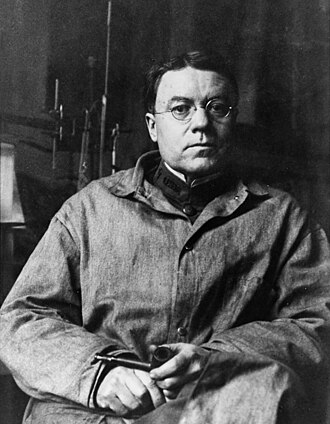
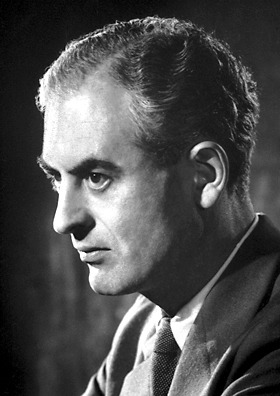
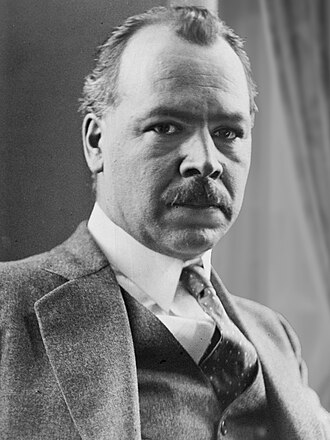
图:Smithsonian Institution Archives · Public domain · Wikimedia Commons
- 出生
- 1893 年 2 月 4 日,图旺
- 逝世
- 1988 年 11 月 22 日,约翰内斯堡
- 国籍
- 澳大利亚
- 学科
- 生物学、地球科学、医学、博物与综合
- 职业
- 人类学家、考古学家、史前史学家、古人类学家
- 母语 / 工作语言
- 英语
- 母校
- 伦敦大学学院、悉尼大学、昆士兰大学
- 工作单位
- 金山大学
研究领域
主要贡献
本站收录的发现与发明

百科正文
英文维基百科补充中文条目比较短,下面是英文条目「Raymond Dart」的原文
Raymond Arthur Dart (4 February 1893 – 22 November 1988) was an Australian anatomist and anthropologist, best known for his involvement in the 1924 discovery of the first fossil found of Australopithecus africanus, an extinct hominin closely related to humans, at Taung in the North of South Africa in the Northwest province. He also did extensive work on physical anthropology in the tradition of scientific racism.
Early life
Raymond Dart was born in Toowong, a suburb of Brisbane, Queensland, Australia, the fifth of nine children and son of a farmer and tradesman. His birth occurred during the 1893 flood, which filled his parents' home and shop in Toowong. The family moved alternately between their country property near Laidley and their shop in Toowong. The young Dart attended Toowong State School, Blenheim State School and earned a scholarship to Ipswich Grammar School from 1906 to 1909. Dart considered becoming a medical missionary to China and wished to study medicine at the University of Sydney, but his father argued that he should accept the scholarship he won to the newly established University of Queensland and study science. He was a member of the first intake of students to the university in 1911 and studied geology under H.C. Richards and zoology, taking his BSc in 1913. Dart became the first student to graduate with honours from the University of Queensland in 1914 and took his MSc with honours from UQ in 1916.
Career
Paleoanthropology and the discovery of Australopithecus
Dart is commonly credited with discovering the first Australopithecus africanus fossil in 1924, an extinct hominin closely related to humans. In reality, there have been diverging narratives about the discovery of the fossilised skull, and Dart's memoir states clearly that he did not actually discover it. His colleague, Professor Robert Burns Young from the Buxton Limeworks, had sent Dart two crates of fossils from the small town of Taung in the North West Province of South Africa. Upon seeing the fossils, Dart immediately recognised one as being an early human because its brain dimensions were too large for a baboon or chimpanzee. Blasting had exposed a breccia-filled cave and the child's skull had come to light together with several fossilised monkeys and hyraxes. M. de Bruyn had noticed their unusual nature in November 1924 and informed the Limeworks manager, Mr. A.E. Spiers.
Later, in his 1959 memoirs, Dart acknowledged the crucial role played by his first female student and demonstrator, Josephine Salmons, in identifying the importance of the fossil which was to become known as the Taung Child.
Personal life
Dart married Dora Tyree, a medical student from Virginia, U.S., in 1921 in Woods Hole, Massachusetts, U.S., and they divorced in 1934. He married Marjorie Frew, head librarian at the University of Witwatersrand in Johannesburg, South Africa in 1936 and they had two children.
At the age of 73, Dart began dividing his time between South Africa and The Institutes for the Achievement of Human Potential (IAHP), an organisation founded by Glenn Doman that treats brain injured children. Dart's son, Galen, had suffered motor damage during birth in 1941. Dart spent much of the next twenty years working with the IAHP.
Dart died in Johannesburg in 1988.
Legacy and critical engagement with Dart's work
The Institute for the Study of Man in Africa was established in 1956 at Witwatersrand in his honour by Phillip Tobias. In 1964 the Raymond Dart Memorial Lecture was inaugurated at the Institute.
In 1959, an autobiographical account of Dart's discoveries, Adventures with the Missing Link, was published (with Dennis Craig as co-author).
It is only in the 1990s that critical voices about Dart's legacy started making themselves heard, especially as far as his contribution to scientific racism is concerned. In a study of the history of scientific racism in South Africa, Saul Dubow critiqued the objectification of human beings practiced by Dart and others in the field of physical anthropology. Around the same period, Catherine Burns critiqued the focus of scientists, medical scholars and anthropologists, including Dart, on measuring black women’s physical and sexual characteristics as a means of defining racial types. Yvette Abrahams also made reference to Dart in her 1997 discussion of the century-long obsession of Europeans with the sexual characteristics of the Khoi and the San.
以上节选摘自英文维基百科「Raymond Dart」,按 CC BY-SA 4.0 使用,去掉了参考文献、外部链接等尾部小节,公式改写成了纯文本。篇幅所限,较长的小节只摘了开头一部分,有的小节没有收;全文、配图和出处见原文。
同一学科、同时代的科学家


同一学科的科学家
更多 ›