格物
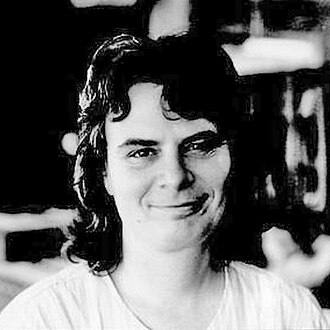
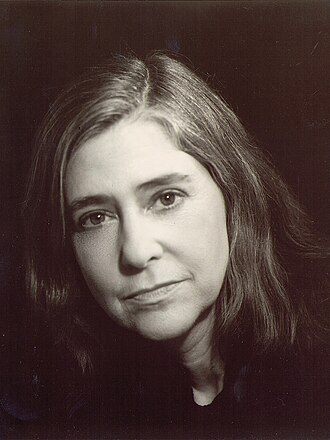
图:George Bergman · GFDL 1.2 · Wikimedia Commons
- 出生
- 1942 年 8 月 24 日,克利夫兰
- 国籍
- 美国
- 学科
- 数学、博物与综合
- 职业
- 大学教师、数学家
- 母语 / 工作语言
- 英语
- 母校
- 密歇根大学(文学士,1964 年)、布兰戴斯大学(硕士,博士,1968 年)、科朗数学研究所(1965 年)
- 工作单位
- 伊利诺伊大学厄巴纳-香槟分校(1971—1976)、芝加哥大学(1983—1988)、麻省理工学院、加州大学伯克利分校、伊利诺伊大学芝加哥分校(1976—1983)
研究领域
师承
博士导师1
博士生19
来自 Wikidata 的「博士导师」「师从」「博士生」「学生」记录,可能不全。
所获奖项(14)
- 1983麦克阿瑟天才奖
- 1985美国文理科学院院士
- 1988Noether Lecture
- 2000美国国家科学奖章
- 2000名誉博士
- 2001古根海姆学者奖
- 2001俄亥俄州立大学荣誉博士
- 2007哈佛大学名誉博士
- 2007Steele Prize for Seminal Contribution to Research
- 2012honorary doctorate from Princeton University
- 2013美国数学会会士
- 2019阿贝尔奖
- 2020Fellow of the Association for Women in Mathematics
- 2020Steele Prize for Lifetime Achievement
学会与院士
百科正文
乌伦贝克凭借“她在几何偏微分方程,规范场论和可积系统方面的开创性成就,以及她在数学分析、几何学和数学物理方面的工作的基本影响”赢得了2019年的阿贝尔奖。她是第一位获该奖的女性。
生平
1942年出生于美国克利夫兰,1968年获得布兰戴斯大学的数学博士学位。2019年获阿贝尔奖,表彰她在偏微分方程、规范场论和可积系统方面的开创性成果,并且深刻影响了分析学、几何学和物理学。
以上内容摘自维基百科「凯伦·乌伦贝克」,按 CC BY-SA 4.0 使用,去掉了参考文献、外部链接等尾部小节,公式改写成了纯文本。全文、配图和出处见原文。
英文维基百科补充中文条目比较短,下面是英文条目「Karen Uhlenbeck」的原文
Karen Keskulla Uhlenbeck ForMemRS (born August 24, 1942) is an American mathematician and one of the founders of modern geometric analysis. She is a professor emerita of mathematics at the University of Texas at Austin, where she held the Sid W. Richardson Foundation Regents Chair. She is currently a distinguished visiting professor at the Institute for Advanced Study and a visiting senior research scholar at Princeton University.
Uhlenbeck was elected to the American Philosophical Society in 2007. She won the 2019 Abel Prize for "her pioneering achievements in geometric partial differential equations, gauge theory, and integrable systems, and for the fundamental impact of her work on analysis, geometry and mathematical physics." She is the first, and so far only, woman to win the prize since its inception in 2003. She donated half of the prize money to organizations which promote more engagement of women and other minorities in research mathematics.
Life and career
Uhlenbeck was born in Cleveland, Ohio, to engineer Arnold Keskulla and schoolteacher and artist Carolyn Windeler Keskulla. While she was a child, the family moved to New Jersey. Uhlenbeck's maiden name, Keskulla, comes from Keskküla and from her grandfather who was Estonian, while her current surname is Dutch. Uhlenbeck received her B.A. (1964) from the University of Michigan. She began her graduate studies at the Courant Institute of Mathematical Sciences at New York University, and married biophysicist Olke C. Uhlenbeck (the son of physicist George Uhlenbeck) in 1965. When her husband went to Harvard, she moved with him and restarted her studies at Brandeis University, where she earned an MA (1966) and PhD (1968) under the supervision of Richard Palais.
Research
Uhlenbeck is one of the founders of the field of geometric analysis, a discipline that uses differential geometry to study the solutions to differential equations and vice versa. She has also contributed to topological quantum field theory and integrable systems.
Together with Jonathan Sacks in the early 1980s, Uhlenbeck established regularity estimates that have found applications to studies of the singularities of harmonic maps and the existence of smooth local solutions to the Yang–Mills–Higgs equations in gauge theory.[EMI][MIC][RSY] In particular, Simon Donaldson describes their joint 1981 paper The existence of minimal immersions of 2-spheres[EMI] as a "landmark paper...
Outreach
In 1991, Uhlenbeck co-founded, with Herbert Clemens and Dan Freed, the Park City Mathematics Institute (PCMI) with the mission to "provide an immersive educational and professional development opportunity for several parallel communities from across the larger umbrella of the mathematics profession." Uhlenbeck also co-founded the Women and Mathematics Program at the Institute for Advanced Study "with the mission to recruit and retain more women in mathematics." British theoretical physicist and author Jim Al-Khalili describes Uhlenbeck as a "role model" for her work in promoting a career in mathematics to young people, particularly women.
Personal life
Uhlenbeck is a self-described "messy reader" and "messy thinker", with boxes of books stacked on her desk at Princeton's Institute for Advanced Study. In spontaneous remarks made to Institute colleagues after winning the Abel Prize in March 2019, Uhlenbeck noted that for lack of prominent female role models during her apprenticeship in the field of mathematics, she had instead emulated chef Julia Child: "She knew how to pick the turkey up off the floor and serve it".
Awards and honors
In March 2019, Uhlenbeck became the first woman to receive the Abel Prize, with the award committee citing the decision for "her pioneering achievements in geometric partial differential equations, gauge theory and integrable systems, and for the fundamental impact of her work on analysis, geometry and mathematical physics." Hans Munthe-Kaas, who chaired the award committee, stated that "Her theories have revolutionised our understanding of minimal surfaces, such as more general minimisation problems in higher dimensions". She donated half of the cash prize to two organizations, the EDGE Foundation (which subsequently set up the Karen EDGE Fellowship Program), and the Institute for Advanced Study's Women and Mathematics (WAM) Program.
以上节选摘自英文维基百科「Karen Uhlenbeck」,按 CC BY-SA 4.0 使用,去掉了参考文献、外部链接等尾部小节,公式改写成了纯文本。篇幅所限,较长的小节只摘了开头一部分,有的小节没有收;全文、配图和出处见原文。
同一学科、同时代的科学家



同一学科的科学家
更多 ›