格物
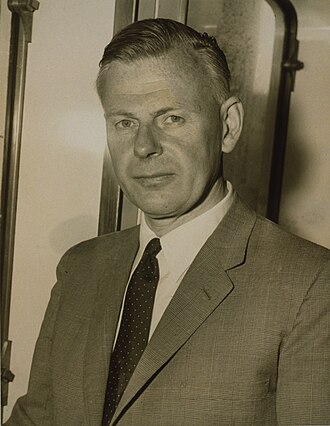
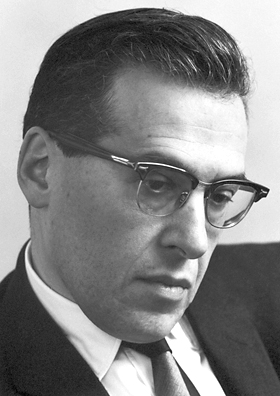
图:New York World-Telegram and the Sun staff photographer: Higg… · Public domain · Wikimedia Commons
本特·斯特龙根1908—1987
Bengt Strömgren
Danish astronomer (1908-1987)
本特·格奥尔·丹尼尔·斯特龙根,丹麦天文学家。
摘自维基百科「本特·斯特龙根」,CC BY-SA 4.0
- 出生
- 1908 年 1 月 21 日,哥德堡
- 逝世
- 1987 年 7 月 4 日,哥本哈根
- 国籍
- 美国、瑞典、丹麦王国
- 学科
- 物理学、天文学、博物与综合
- 职业
- 天文学家、天体物理学家、物理学家、大学教师
- 母语 / 工作语言
- 丹麦语、英语、德语、瑞典语
- 母校
- 哥本哈根大学、Metropolitanskolen(1925 年)
- 工作单位
- 哥本哈根大学(1926—)、芝加哥大学、莱顿大学、莱顿大学(1966—)
研究领域
师承
博士导师1
来自 Wikidata 的「博士导师」「师从」「博士生」「学生」记录,可能不全。
所获奖项(9)
- 1959布鲁斯奖
- 1962英国皇家天文学会金质奖章
- 1963Rosenkjær Award
- 1965亨利·诺利斯·罗素讲座
- 1965H.C.奥斯特奖章
- 1967让森奖章
- 1969卡尔·史瓦西奖章
- 1978Knight Grand Officer of the Order of the Dannebrog
- 1982honorary doctorate of Paris Observatory, PSL University
学会与院士
百科正文
生平
1908年出生于丹麦的哥德堡(今属瑞典),父亲伊利斯·斯特龙根是哥本哈根大学的天文学教授、哥本哈根大学天文台的台长。斯特龙根1925年进入哥本哈根大学,只用了两年就完成了本科学业,又用了两年以优异的成绩获得博士学位。斯特龙根曾在玻尔研究所从事理论物理学的研究,这对他后来的研究工作产生了重要的影响。
1936年,受芝加哥大学的天文学家奥托·斯特鲁维的邀请,斯特龙根前往美国叶凯士天文台工作了18个月,返回丹麦后,1940年,他继承了父亲的职位,担任哥本哈根大学天文台台长。在丹麦被德国占领期间,斯特龙根领导建设了一个新的天文台——Brorfelde天文台。第二次世界大战结束后,丹麦的天文学研究受到严重缺乏资金的困扰,斯特龙根决定离开丹麦,1951年前往美国,担任叶凯士天文台和麦克唐纳天文台的台长。1957年,他成为普林斯顿高等研究院的第一位理论天体物理学教授,直到1967年。此后他返回祖国丹麦。1970年到1973年,斯特龙根担任国际天文学联合会的主席。1987年病逝。
斯特龙根于20世纪30年代在恒星大气、恒星结构方面做了大量的工作,最重要的贡献是星际气体的电离理论。他推导了恒星的紫外辐射将气体云电离,形成电离氢区的边界,该边界以内的区域称为斯特龙根球,其到中心恒星的距离称为斯特龙根半径。后来他从事太阳和恒星光谱的研究,并于20世纪50年代提出了四色测光系统,称为斯特龙根测光系统。1959年,斯特龙根获得布鲁斯奖,1962年获得了英国皇家天文学会金质奖章。
以上内容摘自维基百科「本特·斯特龙根」,按 CC BY-SA 4.0 使用,去掉了参考文献、外部链接等尾部小节,公式改写成了纯文本。全文、配图和出处见原文。
英文维基百科补充中文条目比较短,下面是英文条目「Bengt Strömgren」的原文
Bengt Georg Daniel Strömgren (21 January 1908 – 4 July 1987) was a Danish astronomer and astrophysicist.
Life and career
Bengt Strömgren was born in Gothenburg. His parents were Hedvig Strömgren (née Lidforss) and Elis Strömgren, who was professor of astronomy at the University of Copenhagen and director of the University Observatory in Copenhagen. Bengt grew up in the professor's mansion surrounded with scientists, assistants, observers and guests. His father paced and promoted Bengt into a life with science, and Bengt's first paper was published already at the age of 14. He graduated from high school in 1925 and enrolled at the Copenhagen university. Only two years later, he graduated in astronomy and atomic physics, and during the following two years, he completed a doctoral degree, which was evaluated with the best marks in December 1929, when he was 21 years old.
He gained a great deal of useful experience from his studies in theoretical physics at Niels Bohr's Institute close by, and he was at the right place at the right time. He soon found out that he intended to use the fresh theoretical framework of quantum physics in space, and investigate the applications of quantum mechanics in stars. Obviously, questions of nepotism were in play when he applied for an assistantship already in 1925, which he didn't get. But only one year later it was given to him anyway — he was the best, regardless of his employer being also his own father.
After being appointed as lecturer at the university in 1932, Strömgren was invited to the University of Chicago in 1936 by Otto Struve. Going abroad for 18 months meant a lot to the young researcher, and when he went back to Denmark and to the rising national socialism in Europe, he succeeded his father's professorship in 1940. During five years of isolation, under the German occupation of Denmark, he initiated the building of a new Danish Observatory, the Brorfelde Observatory. But after the Second World War, Bengt Strömgren became tired of lacking state funding for the project, and with a stagnant national economy, he felt that he had to leave Danish research, which he did in 1951.
He went to the United States and became director of the Yerkes and McDonald Observatories, and stayed there for six years. In 1957, he was appointed the first professor of theoretical astrophysics at the Institute for Advanced Study in Princeton, where he got Albert Einstein's office. He stayed at Princeton with his family until 1967, when he went back to his homeland Denmark, and became the next to the last resident in a series of great Danish scientists of the Carlsberg Mansion and Honor, which had earlier been occupied by Niels Bohr among others. In 1987, he died after a short period of illness.
Science
Bengt Strömgren made momentous contributions to astrophysics. He found that the chemical composition of stars was very much different than previously assumed. In the late 1930s, he found the relative abundance of hydrogen to be nearly 70%, and helium to be about 27%. Just before the war, he discovered the so-called Strömgren Spheres — huge interstellar shells of ionized hydrogen around stars. And in the 1950s and 1960s, he pioneered photoelectric photometry with a novel four-colour system, now called Strömgren photometric system. Apart from the Danish observatory of Brorfelde, Strömgren was active in the early organisation of the joint European observatory of ESO at La Silla in Chile.
Honors
- Awards
- Bruce Medal (1959)
- Gold Medal of the Royal Astronomical Society (1962)
- Henry Norris Russell Lectureship (1965)
- Janssen Medal from the French Academy of Sciences (1967)
Memberships
- Member of the American Academy of Arts and Sciences (1955)
- Member of the United States National Academy of Sciences (1971)
- Member of the American Philosophical Society (1973)
Named after him
- Asteroid 1846 Bengt
- Strömgren age
- Strömgren photometry
- Strömgren spheres
- Strömgren integral
- Miscellaneous
- Asteroid 1493 Sigrid, named after his wife
以上内容摘自英文维基百科「Bengt Strömgren」,按 CC BY-SA 4.0 使用,去掉了参考文献、外部链接等尾部小节,公式改写成了纯文本。全文、配图和出处见原文。
同一学科、同时代的科学家


同一学科的科学家
更多 ›