格物
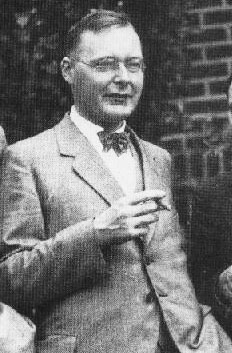
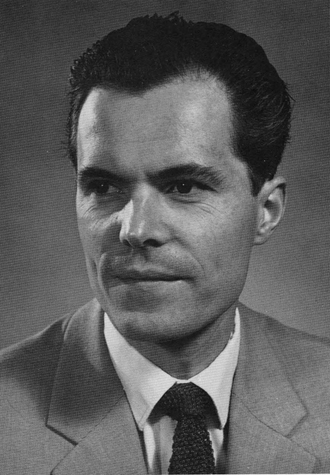
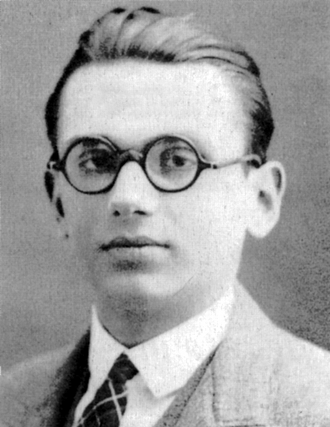
图:File:UhlenbeckKramersGoudsmit.jpg · Public domain · Wikimedia Commons
- 出生
- 1894 年 12 月 17 日,鹿特丹
- 逝世
- 1952 年 4 月 24 日,乌赫斯特海斯特
- 国籍
- 荷兰王国
- 学科
- 物理学、博物与综合
- 职业
- 理论物理学家、物理学家、大学教师
- 母语 / 工作语言
- 荷兰语、德语
- 母校
- 莱顿大学(1916 年)、哥本哈根大学(1919 年)
- 工作单位
- 乌得勒支大学(1926—1934)、代尔夫特理工大学(1931—1952)、莱顿大学(1934—1952)、哥本哈根大学(1920—1926)、巴达维亚石油公司(1941—1945)
研究领域
主要贡献
代表成就
师承
博士导师1
博士生26
来自 Wikidata 的「博士导师」「师从」「博士生」「学生」记录,可能不全。
所获奖项(4)
- 1947洛仑兹奖章
- 1949honorary doctor of the University of Toulouse
- 1949doctor honoris causa from the University of Paris
- 1951休斯奖章
学会与院士
百科正文
生平
汉斯·克喇末出生于鹿特丹。他是内科医生亨德里克·克喇末和Jeanne Susanne Breukelman的儿子。 1927年十月出席了在比利时召开的第五次索尔维会议。
他是位于阿姆斯特丹的荷兰数学和计算机科学研究学会的创始人之一。
个人生活
1920年10月25日,他与安娜·彼得森结婚。二人育有3个女儿和1个儿子。
克喇末很喜欢音乐,他能演奏大提琴和钢琴。
奖项和荣誉
1929年,克喇末当选为荷兰皇家艺术与科学学院院士,但在1942年被迫辞职。1945年,他再次加入荷兰皇家艺术与科学学院。
克喇末获得了洛伦兹奖章(1947年)和休斯奖章(1951年)。
以上内容摘自维基百科「汉斯·克喇末」,按 CC BY-SA 4.0 使用,去掉了参考文献、外部链接等尾部小节,公式改写成了纯文本。全文、配图和出处见原文。
英文维基百科补充中文条目比较短,下面是英文条目「Hans Kramers」的原文
Hendrik Anthony "Hans" Kramers (17 December 1894 – 24 April 1952) was a Dutch physicist who worked with Niels Bohr to understand how electromagnetic waves interact with matter and made important contributions to quantum mechanics and statistical physics.
Background and education
Hans Kramers was born on 17 December 1894 in Rotterdam. the son of Hendrik Kramers, a physician, and Jeanne Susanne Breukelman.
In 1912 Hans finished secondary education (HBS) in Rotterdam, and studied mathematics and physics at the University of Leiden, where he obtained a master's degree in 1916. Kramers wanted to obtain foreign experience during his doctoral research, but his first choice of supervisor, Max Born in Göttingen, was not reachable because of the First World War. Because Denmark was neutral in this war, as was the Netherlands, he travelled (by ship, overland was impossible) to Copenhagen, where he visited unannounced the then still relatively unknown Niels Bohr. Bohr took him on as a Ph.D. candidate and Kramers prepared his dissertation under Bohr's direction. Although Kramers did most of his doctoral research (on intensities of atomic transitions) in Copenhagen, he obtained his formal Ph.D. under Ehrenfest in Leiden, on 8 May 1919.
Kramers enjoyed music, and played cello and piano.
Academic career
He worked for almost ten years in Bohr's group, becoming an associate professor at the University of Copenhagen. He played a role in the ill-fated BKS theory of 1924-5. Kramers left Denmark in 1926 and returned to the Netherlands. He became a full professor in theoretical physics at Utrecht University, where he supervised Tjalling Koopmans.
In 1925, with Werner Heisenberg he developed the Kramers–Heisenberg dispersion formula, and in 1926 he was one of the authors of the WKB method. He is also credited with introducing in 1948 the concept of renormalization into quantum field theory, although his approach was nonrelativistic. He is also credited for the Kramers–Kronig relations with Ralph Kronig which are mathematical equations relating real and imaginary parts of complex functions constrained by causality. One further refers to a Kramers turnover when the rate of thermally activated barrier crossing as a function of the damping goes through a maximum, thereby undergoing a transition between the energy diffusion and spatial diffusion regimes. He is also known for Kramers' degeneracy theorem.
In 1934 he left Utrecht and succeeded Paul Ehrenfest in Leiden. From 1931 until his death he held also a cross appointment at Delft University of Technology.
Kramers was one of the founders of the Mathematisch Centrum in Amsterdam.
Family
On 25 October 1920 he was married to Anna Petersen. They had three daughters and one son.
Recognition
Kramers became member of the Royal Netherlands Academy of Arts and Sciences in 1929, he was forced to resign in 1942. He joined the Academy again in 1945. He was an International member of the American Philosophical Society. Kramers won the Lorentz Medal in 1947 and Hughes Medal in 1951.
以上内容摘自英文维基百科「Hans Kramers」,按 CC BY-SA 4.0 使用,去掉了参考文献、外部链接等尾部小节,公式改写成了纯文本。全文、配图和出处见原文。
同一学科、同时代的科学家



同一学科的科学家
更多 ›