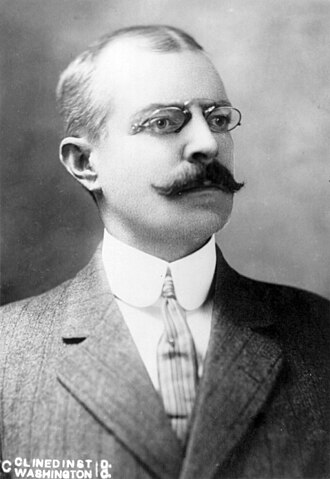
格物
Hollis Dow Hedberg1903—1988
研究者
Hollis Dow Hedberg was an American geologist specializing in petroleum exploration. His contribution to stratigraphic classification of rocks and procedures is a monumental work which received universal acceptance. The firm he worked for, the Gulf Oil Corporation in Venezuela, trusted his findings and explored what had until then been uncharted territory. As a result, they reaped huge benefits from their petroleum findings.
Hedberg taught at Princeton University from 1959 until his retirement in 1971. He was awarded the Mary Clark Thompson Medal by the National Academy of Sciences in 1973. In 1975 he was awarded the Wollaston Medal by the Geological Society of London. Hedberg won the Sidney Powers Memorial Award in 1963.
摘自英文维基百科「Hollis Dow Hedberg」(英文维基百科,暂无中文条目),CC BY-SA 4.0
- 出生
- 1903 年 9 月 29 日,堪萨斯州
- 逝世
- 1988 年 8 月 14 日,普林斯顿
- 国籍
- 美国
- 学科
- 地球科学
- 职业
- 地质学家
- 母语 / 工作语言
- 英语
- 母校
- 斯坦福大学、堪萨斯大学、康奈尔大学
- 工作单位
- 普林斯顿大学
所获奖项(5)
- 1962美国地球物理联盟会士
- 1963Sidney Powers Memorial Award
- 1973玛丽·克拉克·汤普森奖章
- 1975沃拉斯顿奖章
- 1980彭罗斯奖章得主列表
学会与院士
百科正文
本条目暂无中文维基百科条目,下面是英文维基百科原文。
Early life
Hollis Dow Hedberg was born on 29 May 1903 in Falun, Kansas. He belonged to a small Swedish community and his parents lived on the second floor of the house. At that time Kansas experienced the worst flood in its history. His father, Carl August Hedberg, born in Sweden came to the US as one of four children. His mother, Zada Mary Dow, was of Scottish-English descent. He had an older brother, James, and a younger sister, Carol.
His initial years were difficult; he worked in the fields. He learned how to whistle as a boy at age 8. Overtime, he developed a skill for whistling, which became one of his hobbies and traits later on in life, while ploughing fields with horses. He came from a musical family: his father played violin, his mother the piano, his brother James the viola, and he played cello. They were fond of reading books to one another.
Education
Hedberg joined the Falun elementary school in 1909 and attended Falun Rural High School from 1916 to 1920. After graduating from high school, in 1920 he was admitted to the University of Kansas in Lawrence. Initially he was interested in journalism but later decided to study geology. His college study was interrupted when his father died in 1921 forcing him to return home to run the farm. He resumed his studies in 1922 and in 1925 completed his BA degree in geology with a distinction as a Phi Beta Kappa key. He joined Cornell University in Ithaca, New York in 1925 and in 1926 was awarded an MS in geology. In 1924 and 1925, he enjoyed a summer internship as a field assistant for the Kansas State Geological Survey. In 1926, he contributed a technical paper on "The Effect of Gravitational Compaction on the Structure of Sedimentary Rocks" based on his investigations at the University of Kansas. He put forward a theory that porosity in shales was an index of pressure metamorphism liable to indicate the presence of oil, years before the approach was documented in the literature. He was awarded a Ph.D. from Stanford University in 1937.
Career
His first employment in 1926 was as a petrographer with the Maracaibo laboratory. He worked in this capacity for Lago Petroleum Corporation, a Venezuelan subsidiary of Standard Oil. In June 1926, he travelled to Maracaibo, his first business trip outside the United States. He wrote letters to his mother every other day as he was very close to his family. Fond of travel, he went on tours almost every week. When in the Misoa River area, on the eastern part of Lake Maracaibo, he almost lost his life in a flash flood in the Ryan River during an intense rainstorm. Based on his field investigations during this period he propounded the theory that correlation and dating of rocks could be undertaken without the help of fossils which he documented in a paper titled "Some Aspects of Sedimentary Petrography in Relation to Stratigraphy in the Bolivar Coast Fields of the Maracaibo Basin, Venezuela" (1928)".
As he was not enthused by the work he was doing, he terminated his contract with Lago Petroleum and returned to New York in March 1928. He then decided to join the geological laboratory of the Venezuelan Gulf Oil Company in Maracaibo as a stratigrapher. But his ship was diverted to Port Arthur and in the confusion he returned to New York on a train and took another ship. On board he met Frances Murray, whom he later married. In 1928, he became head of the geological laboratory.
In spite of frequent health problems, he undertook extensive field trips and published papers propounding many new theories on the stratigraphy of geological sections in different regions of Venezuela. A particular find described in a paper titled "Cretaceous Limestones as Petroleum Source Rock in Northwestern Venezuela" (1931) was of the La Luna Formation of Cenomanian/Turonian Age, concluding that Luna Formation was a major source of the petroleum embedded in tertiary sediments in the Lake Maracaibo area. He also established a network of measured stratigraphic sections of the Rio Querecual in eastern Venezuela.
One of Hedberg's endearing qualities in Venezuela was helping local Indians. One of them, Innocensio, a worker who was helping him in his field work in Perija Mountains was eager to learn to read and write, practicing under a tree at night. He appointed him as assistant in the laboratory at Maracaibo where Innocensio eventually turned out to be one of Gulf Oil's best technicians.
There was a brief interlude when Frances Murray visited Venezuela. Hedberg dated her, took a holiday in New York and after a brief engagement in September 1932, married her that November. She joined him later in Venezuela in 1933.
Honors
Hedberg received many honors and awards, becoming the first foreign recipient of the Medalla de Honor de la Instruccion Publica, which was awarded by the Venezuelan Government in 1941. Upon his retirement from Princeton, he was honored in 1972 by a conference on petroleum and global tectonics. His awards list is long and impressive and includes Sidney Powers Medal and the University of Kansas Distinguished Service Award in 1963 and the Geological Society of America's Penrose Medal in 1980. The Penrose Medal is the most prestigious award for a geologist in the United States.
Personal life
Hedberg married Frances Murray and they had five children: they had four sons: Ronald, James, William, and Franklin Augustin, and one daughter: Mary. He and Frances Murray had a happy married life of 56 years. His wife who helped him in his work contributed to a well knit family. Three of his children also hold Phd degrees.
Hedberg was a keen athlete and continued his interest of gardening in his vegetable garden in his holiday home in Cape Cod. Occasionally he played the accordion and also took part in square dancing with his wife. He died on 14 August 1988. ISEM had proudly housed the Hollis D. Hedberg Library. The Institute for the Study of Earth and Man at Southern Methodist University maintains the Hollis D. Hedberg Library, a collection of Hedberg's 18th to 20th century travel and geology books on Venezuela and Latin America.
以上节选摘自英文维基百科「Hollis Dow Hedberg」,按 CC BY-SA 4.0 使用,去掉了参考文献、外部链接等尾部小节,公式改写成了纯文本。篇幅所限,较长的小节只摘了开头一部分,有的小节没有收;全文、配图和出处见原文。
同一学科、同时代的科学家


同一学科的科学家
更多 ›