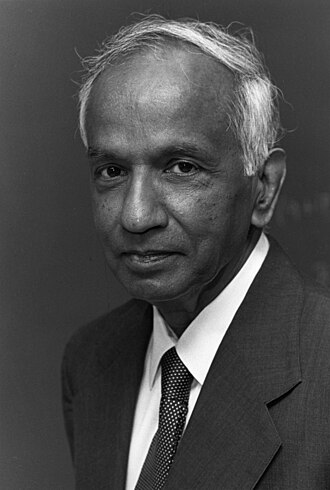
格物
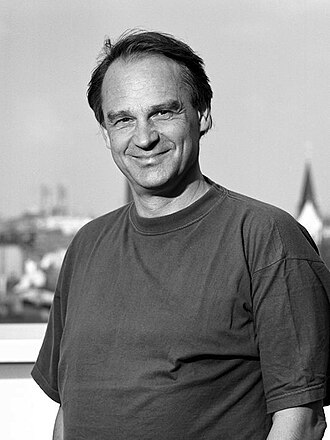
丹尼尔·克莱普纳1932—2025
Daniel Kleppner
American physicist (1932–2025)
丹尼尔·克莱普纳,美国物理学家。他是麻省理工学院纪念莱斯特·乌尔夫物理学教授和麻省理工学院 - 哈佛超冷原子中心的共同主任。
摘自维基百科「丹尼尔·克莱普纳」,CC BY-SA 4.0
- 出生
- 1932 年 12 月 16 日,纽约
- 逝世
- 2025 年 6 月 16 日,帕洛阿尔托
- 国籍
- 美国
- 学科
- 物理学、博物与综合
- 职业
- 物理学家、大学教师
- 母语 / 工作语言
- 英语
- 母校
- 哈佛大学(哲学博士,1959 年)、威廉姆斯学院(文学士)
- 工作单位
- 麻省理工学院
研究领域
师承
博士导师1
博士生2
来自 Wikidata 的「博士导师」「师从」「博士生」「学生」记录,可能不全。
所获奖项(12)
- 1986戴维森-格尔默奖
- 1991利林费尔德奖章
- 1991威廉·弗雷德里克·梅格斯光谱学奖
- 1992马克斯·普朗克研究奖
- 1997奥斯特奖章
- 2005沃尔夫物理学奖
- 2005Leo Szilard Lectureship Award
- 2006美国国家科学奖章
- 2007Frederic Ives Medal
- 2014富兰克林研究所奖项
- 2017APS Medal for Exceptional Achievement in Research
- —美国物理学会会士
学会与院士
百科正文
生平
克莱普纳1953年于威廉姆斯学院取得学士学位,1955年获剑桥大学,1959年获哈佛大学博士学位。之后,他留在哈佛,成为助理教授,1985年成为莱斯特·乌尔夫纪念教授。2005年,获沃尔夫物理学奖。
以上内容摘自维基百科「丹尼尔·克莱普纳」,按 CC BY-SA 4.0 使用,去掉了参考文献、外部链接等尾部小节,公式改写成了纯文本。全文、配图和出处见原文。
英文维基百科补充中文条目比较短,下面是英文条目「Daniel Kleppner」的原文
Daniel Kleppner (December 16, 1932 – June 16, 2025) was an American physicist who was the Lester Wolfe Professor Emeritus of Physics at Massachusetts Institute of Technology (MIT) and co-founder and co-director of the MIT-Harvard Center for Ultracold Atoms. His areas of science included atomic, molecular, and optical physics, and his research interests included experimental atomic physics, laser spectroscopy, and high precision measurements.
Working with Norman Ramsey Jr., he helped create the first hydrogen maser in 1960.
Together with Robert J. Kolenkow, he authored a popular textbook An Introduction to Mechanics for advanced students.
Early life
Kleppner was born in New York City on December 16, 1932, and grew up in nearby New Rochelle, New York. His father was Otto Kleppner, founder of an advertising agency.
Education and career
Kleppner graduated from Williams College with a B.A. in 1953 in Williamstown, Massachusetts. He also attended Cambridge University in England with a B.A. in 1955, and Harvard University, he attended the Harvard Graduate School of Arts and Sciences, with a Ph.D. in 1959.
In the 1950s, Kleppner became a physics doctoral student at Harvard University, where he worked under Norman Ramsey.
Here, Kleppner took the concepts behind an ammonia maser and applied them to a hydrogen maser, which became his Ph.D. thesis. This enabled the development of more precise atomic clocks. Kleppner did important research into Rydberg atoms, which enabled development of the neutral atom quantum computer.
Later, he became interested in creating a hydrogen Bose–Einstein condensate (BEC). In 1995, a group of researchers, including Kleppner's former students, made a BEC using rubidium atoms. It was not until 1998 that Kleppner and Tom Greytak finally created a hydrogen BEC. The advancements in cooling technology needed to achieve this contributed to even more precise atomic clocks. Kleppner went on to become one of the founders of a MIT-Harvard joint research lab, the Center for Ultracold Atoms.
Personal life and death
Kleppner married Beatrice Spencer in 1958, and they had three children. They were longtime residents of Belmont, Massachusetts. After falling ill while visiting family in California, Kleppner died at a hospital in Palo Alto on June 16, 2025, at the age of 92.
Honors and awards
- Kleppner was the recipient of many awards including
- 1991 Lilienfeld Prize,
- 1991 William F. Meggers Award,
- 1997 Oersted Medal,
- 2005 Wolf Prize in Physics,
- 2006 National Medal of Science
- 2007 Frederic Ives Medal,
- 2014 Benjamin Franklin Medal, and
2017 American Physical Society Medal for Exceptional Achievement in Research.
Within MIT he won the institute's prestigious James R. Killian, Jr. Faculty Achievement Award, conferring him the title of Killian Award Lecturer for 1995-1996.
He was elected the American Academy of Arts and Sciences in 1986, a Fellow of OSA in 1992, the French Academy of Sciences in 2004, and the American Philosophical Society in 2007.
以上内容摘自英文维基百科「Daniel Kleppner」,按 CC BY-SA 4.0 使用,去掉了参考文献、外部链接等尾部小节,公式改写成了纯文本。全文、配图和出处见原文。
同一学科、同时代的科学家


同一学科的科学家
更多 ›