格物
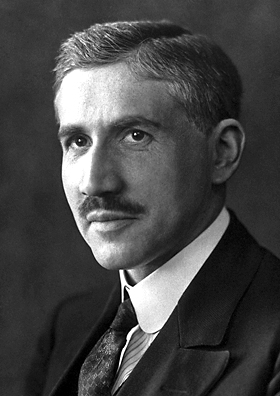
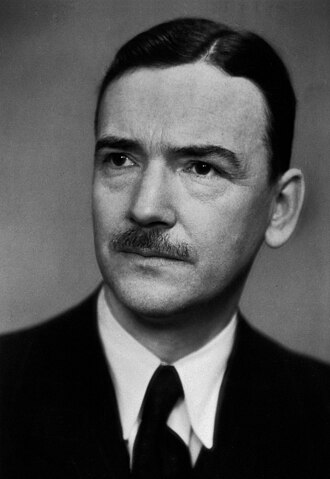
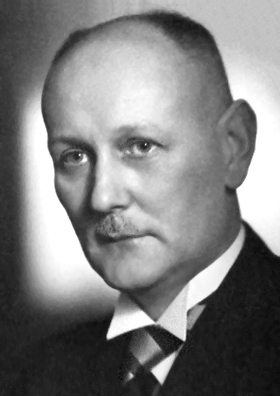
图:Nobel Foundation · Public domain · Wikimedia Commons
奥托·迈尔霍夫1884—1951
Otto Fritz Meyerhof
生物化学家, 德国
奥托·弗利兹·迈尔霍夫 是一位德国医师与生物化学家。
摘自维基百科「奧托·邁爾霍夫」,CC BY-SA 4.0
- 出生
- 1884 年 4 月 12 日,汉诺威
- 逝世
- 1951 年 10 月 6 日,费城
- 国籍
- 德国、美国
- 学科
- 化学、生物学、医学
- 职业
- 生物化学家、精神科医师、大学教师、生理学家
- 母语 / 工作语言
- 德语、英语
- 母校
- 斯特拉斯堡大学、海德堡大学、柏林洪堡大学
- 工作单位
- 基尔大学、海德堡大学、宾夕法尼亚大学
研究领域
师承
博士导师1
博士生1
来自 Wikidata 的「博士导师」「师从」「博士生」「学生」记录,可能不全。
所获奖项(2)
- 1922诺贝尔生理学或医学奖
- 1937英国皇家学会外籍会员
学会与院士
百科正文
生平
迈尔霍夫生于汉诺威的一个犹太家庭,大学就读斯特拉斯堡大学与海德堡大学,1909年从大学毕业,1912年进入基尔大学任教,并在1918年成为教授。1923年与阿奇博德·希尔共同获得1922年度的诺贝尔生理学或医学奖。
第二次世界大战前夕,由于纳粹党的对犹太人的迫害,先是迁居法国巴黎,最后流亡到美国。于宾州大学担任教授,1961年病逝于费城。
贡献
早年即从事有关生物能量转换问题的研究,主要以肌肉为材料,阐明了肌肉收缩过程中糖元和乳酸的循环性转变,以及两者之间的关系。此后更进而逐步阐明糖酵解的基本过程和很多有关的酶的作用。
首先提出能量偶合的观念,并通过多样的实验,证明生物能量转移和磷酸化作用之间有密切联系。这些贡献,对近代生物化学的发展有重要影响。
以上内容摘自维基百科「奧托·邁爾霍夫」,按 CC BY-SA 4.0 使用,去掉了参考文献、外部链接等尾部小节,公式改写成了纯文本。全文、配图和出处见原文。
英文维基百科补充中文条目比较短,下面是英文条目「Otto Fritz Meyerhof」的原文
Otto Fritz Meyerhof (German pronunciation: [ˈɔto ˈmaɪɐhoːf]; 12 April 1884 – 6 October 1951) was a German physician and biochemist who won the 1922 Nobel Prize in Physiology and Medicine.
Biography
Otto Fritz Meyerhof was born in Hannover, at Theaterplatz 16A (now:Rathenaustrasse 16A), the son of wealthy Jewish parents. In 1888, his family moved to Berlin, where Otto spent most of his childhood, and where he started his study of medicine. He continued these studies in Strasbourg and Heidelberg, from which he graduated in 1909, with a work titled "Contributions to the Psychological Theory of Mental Illness".
In Heidelberg, he met Hedwig Schallenberg. They married in 1914 and had three children together: a daughter, Bettina, and two sons, Gottfried (who after emigration used the anglicized name Geoffrey) and Walter.
In 1912, Otto Meyerhof moved to the University of Kiel, where he received a professorship in 1918. In 1922, he was awarded the Nobel Prize in Medicine, with Archibald Vivian Hill, for his work on muscle metabolism, including glycolysis. In 1929, he became one of the directors of the Kaiser Wilhelm Institute for Medical Research in Heidelberg, a position he held until 1938, when Jews were expelled from university teaching positions.
To escape the increasing oppression of Jews by the Nazi regime, in 1938 Meyerhof emigrated with his family to Paris. After the fall of France in 1940, they fled to Marseille. Aided by the Emergency Rescue Committee, they left the country by ship to the United States that year. Meyerhof was appointed to a guest professorship at the University of Pennsylvania in Philadelphia.
Meyerhof died in Philadelphia at the age of 67. In addition to receiving the Nobel Prize, he was recognized for his contributions to the study of glycolysis, by the naming of the common series of reactions for the pathway in Eukaryotes as the Embden–Meyerhof–Parnas Pathway.
以上内容摘自英文维基百科「Otto Fritz Meyerhof」,按 CC BY-SA 4.0 使用,去掉了参考文献、外部链接等尾部小节,公式改写成了纯文本。全文、配图和出处见原文。
同年获同一奖项
同一学科、同时代的科学家



同一学科的科学家
更多 ›