 格物
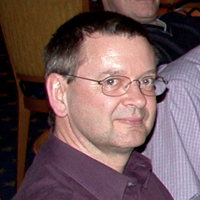
图:Sverige2012 · CC BY-SA 3.0 · Wikimedia Commons
- 出生
- 1950 年,瑞典
- 国籍
- 瑞典
- 职业
- 天文学家
- 母校
- 隆德大学(哲学博士,1980 年)
- 工作单位
- 隆德大学
师承
博士生1
来自 Wikidata 的「博士导师」「师从」「博士生」「学生」记录,可能不全。
所获奖项(1)
- 2022邵逸夫奖
学会与院士
百科正文
伦纳特·林德格伦在1980年获得博士学位,2000年成为天文学正教授。
空间天体测量及其各种应用一直是他的主要关注点。
奖项
1999 年 5 月 19 日,林德格伦因其在 ESA 科学任务中的非凡努力而被授予ESA的科学总监奖章。在瑞士伯尔尼举行的仪式上,前四枚奖章颁发给了 Hipparcos 任务的科学联盟领导人:来自法国的 Catherine Turon 和 吉恩·科瓦莱夫斯基 (Jean Kovalevsky)、来自瑞典的 伦莱纳特·林德格伦 和来自丹麦的 Erik Høg。
2009年,林德格伦被选为瑞典皇家科学院院士。 2011 年,他被巴黎天文台授予荣誉博士学位,以表彰他 30 多年来对空间天体测量的基本贡献。 2022年,他与迈克尔·佩里曼共同获得了天文学邵逸夫奖。
以上内容摘自维基百科「萊納特·林德格倫」,按 CC BY-SA 4.0 使用,去掉了参考文献、外部链接等尾部小节,公式改写成了纯文本。全文、配图和出处见原文。
英文维基百科补充中文条目比较短,下面是英文条目「Lennart Lindegren」的原文
Lennart Lindegren (born 1950) is a member of the staff at Lund Observatory, Sweden, where he obtained his PhD in 1980, and became a full professor of astronomy in 2000. Space astrometry and its various applications has been his main focus in astronomy since 1976. He has been involved in ESA's Hipparcos and Gaia missions throughout their duration.
Contributions to Hipparcos
During the early studies of ESA's Hipparcos space astrometry mission, and while still a graduate student in 1976, he was "recruited" to the project by Erik Høg and thereafter was involved in various aspects of the mission definition and data analysis. He set out the overall principles of the astrometric data reduction aiming to combine and solve together the attitude, the system and the astrometric parameters of the stars. This crucial '3-step procedure' was used successfully by the two consortia (NDAC and FAST) later entrusted by ESA with the Hipparcos data processing.
The principle of reconstructing space astrometric positions from one-dimensional observations carried out in the innovative Hipparcos sky scanning mode was new to the field and challenging to implement given the available computational power in 1997. The numerical principles had to be demonstrated, together with the solution’s statistical properties. Already by the end of 1976, Lindegren had produced a set of definitive technical notes and simulations showing how to obtain a 'rigid sphere' with all astrometric parameters from a scanning satellite. Since that time he has contributed to several aspects of space astrometry.
From 1990, Lennart Lindegren led the Consortium NDAC (Northern Data Analysis Consortium) sharing with FAST (led by Jean Kovalevsky) the data processing of Hipparcos.
Contributions to Gaia
Before the Hipparcos Catalogue was published, he was the first (with Michael Perryman), to set forth a new proposal for a more ambitious mission in terms of accuracy and sensitivity, resting on the same fundamental principles as Hipparcos. This was initially Roemer, and finally Gaia, eventually selected by ESA in 2000 (for a projected launch in 2012), and actually launched in December 2013. Lindegren contributed to the initial design of what was in the early phase an interferometer and in the assessment of the astrometric accuracy achievable. He also led the detailed design of the overall scheme of the astrometric solution, being a block iterative adjustment determining the attitude, the calibration and the system directly from the CCD images. This Astrometric Global Iterative Solution (AGIS) is now fully operational within the Gaia Data Processing and Analysis Consortium (DPAC).
Lindegren was a member of the ESA Gaia Science Advisory Group before mission selection, and the Gaia Science Team since selection in 2000.
Within the Gaia Data Processing and Analysis Consortium (DPAC), Lindegren leads the scientific implementation of the Astrometric Global Iterative Solution, a core element in the astrometric processing of the Gaia data. Between 2006–2010 he was project coordinator for the Marie Curie Research Training Network ELSA (European Leadership in Space Astrometry), aiming to develop the science of space astrometry and train the next generation of researchers in this area. Since 2010 he has served on the committee of the European Science Foundation's Research Networking Programme 'GREAT' (Gaia Research for European Astronomy Training).
Awards
On 19 May 1999, Lindegren was awarded the ESA's Director of Science Medal for his efforts in ESA's scientific missions. At a ceremony in Bern, Switzerland, the first four medals were presented to scientific consortia leaders of the Hipparcos mission: Catherine Turon and Jean Kovalevsky from France, Lennart Lindegren from Sweden, and Erik Høg from Denmark.
In 2009, Lindegren was elected as a member of the Royal Swedish Academy of Sciences. In 2011, he was awarded an Honorary Doctorate by the Paris Observatory, in recognition of his fundamental contributions to space astrometry over more than 30 years. In 2022 he received the Shaw Prize in Astronomy jointly with Michael Perryman.
以上节选摘自英文维基百科「Lennart Lindegren」,按 CC BY-SA 4.0 使用,去掉了参考文献、外部链接等尾部小节,公式改写成了纯文本。篇幅所限,较长的小节只摘了开头一部分,有的小节没有收;全文、配图和出处见原文。