 格物
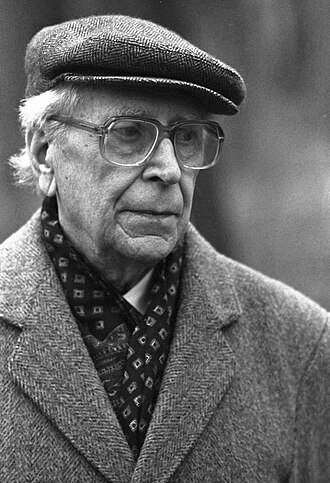
图:Igor Palmin · CC BY-SA 2.0 · Wikimedia Commons
科学家 ›
德米特里·谢尔盖耶维奇·利哈乔夫1906—1999
Dmitry Likhachov
Russian philologist (1906–1999)
德米特里·谢尔盖耶维奇·利哈乔夫 是俄罗斯中世纪主义者、古东斯拉夫语语言学家、苏联持不同政见作家和古拉格幸存者。
摘自维基百科「德米特里·利哈乔夫」,CC BY-SA 4.0
- 出生
- 1906 年 11 月 15 日,圣彼得堡
- 逝世
- 1999 年 9 月 30 日,圣彼得堡
- 国籍
- 俄罗斯帝国、苏维埃俄国、苏联、俄罗斯
- 职业
- 语言学家、历史学家、译者、文学史家
- 母语 / 工作语言
- 俄语
- 母校
- School No232(1916 年)、Karl May School(1920 年)、圣彼得堡国立大学(1928 年)
- 工作单位
- 圣彼得堡国立大学、普希金故居纪念馆
研究领域
师承
博士导师2
博士生4
学生8
来自 Wikidata 的「博士导师」「师从」「博士生」「学生」记录,可能不全。
所获奖项(30)
- 1952Stalin Prize, 2nd degree
- 1966红旗劳动勋章
- 1969苏联国家奖
- 1982honorary doctorate of the Bordeaux Montaigne University
- 1986列宁勋章
- 1986社会主义劳动英雄
- 1993罗蒙诺索夫金质奖章
- 1993俄罗斯联邦国家奖
- 1996Order "For Merit to the Fatherland", 2nd class
- 1997Prize of the President of the Russian Federation
- 1998圣安德鲁勋章
- 1999普希金奖章
- 1999俄罗斯联邦国家奖
- —斯大林奖
- —保卫列宁格勒奖章
- —劳动英勇奖章
- —退休劳动者奖章
- —VDNKh gold medal
- —世界反法西斯战争胜利50周年勋章
- —1941-1945年大卫国战争中忘我劳动奖章
- —1941-1945年伟大卫国战争四十周年纪念奖章
- —纪念列宁诞辰一百周年奖章
- —1941-1945年伟大卫国战争三十周年纪念奖章
- —列宁格勒建城两百五十周年纪念奖章
- —斯塔拉山脉勋章
- —Order of the cavalier of Madara
- —格奥尔基·季米特洛夫勋章
- —Order of Cyril and Methodius
- —honorary citizen of Saint Petersburg
- —Medal VDNKh
学会与院士
百科正文
生平
德米特里·谢尔盖耶维奇·利哈乔夫出生于圣彼得堡。从孩提时代起,他就对文学充满兴趣。
1923年,利哈乔夫进入列宁格勒国立大学语言文学系学习,并于1928年毕业。同年利哈乔夫被捕并被指控为一个专门讽刺苏联当局的组织的成员。
在入狱九个月后,利哈乔夫未经审判就被流放至索洛韦茨基群岛上的索洛维茨基隔离营。1931年起,利哈乔夫成为了一名白海-波罗的海运河工人。
后来利哈乔夫被释放并回到列宁格勒,此后利哈乔夫出版了500多部学术著作。利哈乔夫认为俄罗斯是欧洲文明不可分割的一部分,这与列夫·古米廖夫、鲍里斯·亚历山德罗维奇·雷巴科夫和许多其他同时代人观点相反。
利哈乔夫又来又在苏联科学院出版社担任校对员。1936年,在科学院院长亚历山大·彼得罗维奇·卡尔平斯基的呼吁下,苏联当局清除了德米特里·利哈乔夫的犯罪记录。1938年,利哈乔夫来到普希金之家古俄罗斯文学系担任研究人员,并在这里一直工作到去世。
以上内容摘自维基百科「德米特里·利哈乔夫」,按 CC BY-SA 4.0 使用,去掉了参考文献、外部链接等尾部小节,公式改写成了纯文本。全文、配图和出处见原文。
英文维基百科补充中文条目比较短,下面是英文条目「Dmitry Likhachev」的原文
Dmitry Sergeyevich Likhachev (Russian: Дми́трий Серге́евич Лихачёв, also spelled Dmitrii Likhachev or Dmitry Likhachov; 28 November [O.S. 15 November] 1906 – 30 September 1999) was a Russian medievalist, linguist, and an inmate of Gulag. During his lifetime, Likhachev was considered the world's foremost scholar of the Old Russian language and its literature.
He was revered as "the last of old St Petersburgers", and as "a guardian of national culture". Due to his high profile as a Soviet dissident writer, social critic, and activist during his later life, Likhachev was often referred to as "Russia's conscience".
Life and career
Childhood and concentration camp (1906 – 1931)
Dmitry Likhachev was born in Saint Petersburg. From his early childhood he had a passion for literature, even though his parents did not approve of this interest.
In a 1987 interview with David Remnick, Likhachev recalled how he had, "watched the February and October Revolutions from his window."
In 1923, at only 16 years old, Likhachev entered the Department of Linguistics and Literature of Leningrad State University. He attended the Roman-Germanic and Slavic-Russian sections at the same time, undertaking two diplomas. At the university the young Likhachev met many outstanding scientists and developed his own way of thinking. Likhachev graduated in 1928 from the Leningrad University. In 1928, at the end of his studies, Likhachev was arrested and accused of being a member of what Remnick called, "a students' literary group called the Cosmic Academy of Sciences", which "posed about as great a threat to the Kremlin as the Harvard Lampoon does to the White House."
For his election to the "Cosmic Academy", Likhachev had presented a short report, in which he poked fun at the new spelling rules of 1918 and urged that they be "reformed" by restoring the banned letter "Yat".
Family
In 1936, Likhachev married Zinaida Makarova (1907-2000), who devoted her entire life to her husband. They had twin daughters, Lyudmila and Vera (born 1937).
Legacy
A minor planet 2877 Likhachev discovered in 1969 by Soviet astronomer Lyudmila Chernykh is named after him.
Honours
- 1952 – Stalin Prize
- 1963 – Elected to the Bulgarian Academy of Sciences
- 1964 – Honorary doctorate of the Torun University
- 1964 – Honorary doctorate of the Oxford University
- 1966 – Order of the Red Banner of Labour
- 1968 – Elected to the Austrian Academy of Sciences
- 1970 – Elected to the Soviet Academy of Sciences
- 1964 – Honorary doctorate of the Edinburgh University
- 1969 – USSR State Prize
- 1972 – Elected to the Serbian Academy of Sciences
- 1973 – Elected to the Hungarian Academy of Sciences
- 1983 – Honorary doctorate of the University of Bordeaux
- 1983 – Honorary doctorate of the University of Zurich
- 1985 – Honorary doctorate of the Budapest University
- 1986 – Hero of Socialist Labour
- 1987 – Elected to the Lincean Academy
- 1988 – Honorary doctorate of the University of Göttingen
- 1991 – Honorary doctorate of the Charles University
- 1992 – Honorary doctorate of the University of Siena
- 1993 – Elected to the American Academy of Arts and Sciences
- 1993 – Lomonosov Gold Medal
- 1993 – Honorary Citizen of his native city, Saint Petersburg
- 1995 – Elected to the American Philosophical Society
1996 – Order "For Merit to the Fatherland", Order II class.
1998 – Order of St. Andrew
2000 – Russian State Prize
Main works
- 1942 – Defense of Old Russian Towns
- 1945 – National Self-Consciousness of Ancient Rus
- 1947 – Russian Chronicles and Their Cultural Significance
- 1950 – The Tale of Bygone Years (2 volumes)
- 1952 – Genesis of the Tale of Igor's Campaign
- 1955 – The Lay of Igor's Campaign
- 1958 – Human Dimension of the Old Russian Literature
- 1962 – Russian Culture at the Times of Andrei Rublev and Epiphanius the Wise
- 1962 – Textology
1967 – The Poetics of Early Russian Literature (Russian: Поэтика древнерусской литературы, romanized: Poetika Drevnerusskoy Literatury)
- 1971 – Artistic Heritage of Ancient Rus in Our Time
- 1973 – Development of Old Russian Literature: the Epochs and Styles
- 1975 – Great Heritage: Classic Works of Old Russian Literature
- 1976 – Laughing World of Ancient Rus
- 1978 – The Tale of Igor's Campaign and Culture of That Time
- 1981 – Russian Notes
- 1981 – Literature – Reality – Literature
- 1982 – The Poetry of Gardens
- 1985 – Letters about the Kind and Beautiful
- 1987 – Selected Works, in Three Volumes
- 1989 – From the Note-Books of Various Years
- 1992 – Russian Art from the Antiquity to Avantgarde
- 1995 – Reminiscences
- 1996 – Essays on the Philosophy of Artistic Creativity
- 1997 – Articles on Intelligentsia
以上节选摘自英文维基百科「Dmitry Likhachev」,按 CC BY-SA 4.0 使用,去掉了参考文献、外部链接等尾部小节,公式改写成了纯文本。篇幅所限,较长的小节只摘了开头一部分,有的小节没有收;全文、配图和出处见原文。