格物
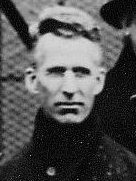
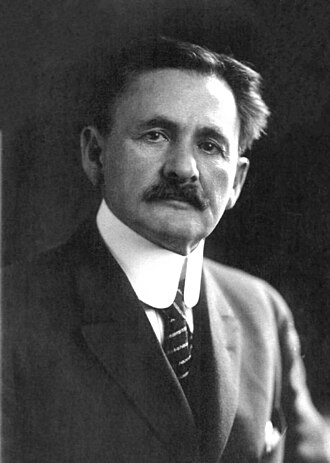
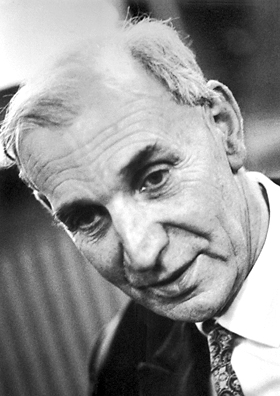
图:UnknownUnknown ("VanDerveer Photo" given on un-cropped versi… · Public domain · Wikimedia Commons
阿尔伯特·华莱士·赫尔1880—1966
Albert Hull
美国物理学家(1880-1966)
阿尔伯特·华莱士·赫尔,美国物理学家和电气工程师,他为真空管的发展做出了贡献,并发明了磁控管。他是美国国家科学院的成员。
摘自维基百科「阿尔伯特·华莱士·赫尔」,CC BY-SA 4.0
- 出生
- 1880 年 4 月 19 日,绍辛顿
- 逝世
- 1966 年 1 月 22 日,斯克内克塔迪
- 国籍
- 美国
- 学科
- 物理学、工程与发明、博物与综合
- 职业
- 物理学家、发明家
- 母校
- 耶鲁大学(哲学博士,1909 年)
- 工作单位
- 通用电气
研究领域
所获奖项(4)
- 1923霍华德N.波茨勋章
- 1930IEEE Morris N. Liebmann纪念奖
- 1958IEEE 荣誉奖章
- —美国物理学会会士
学会与院士
百科正文
出版
在1918年发行的IRE论文集中,他就他发明的dynatron真空管发表了一篇文章。在他的电子生涯中,他是72份技术出版物的作者或合着者,并获得94项专利。
荣誉
1924年 富兰克林研究所霍华德N.波茨勋章。
1930年 IEEE Morris N. Liebmann纪念奖
1958年 无线电工程师协会(IRE)“为电子管领域的杰出科学成就和开拓发明与发展”颁发的IRE荣誉勋章。
以上内容摘自维基百科「阿尔伯特·华莱士·赫尔」,按 CC BY-SA 4.0 使用,去掉了参考文献、外部链接等尾部小节,公式改写成了纯文本。全文、配图和出处见原文。
英文维基百科补充中文条目比较短,下面是英文条目「Albert W. Hull」的原文
Albert Wallace Hull (19 April 1880 – 22 January 1966) was an American physicist and electrical engineer who made contributions to the development of vacuum tubes, and invented the magnetron. He was a member of the National Academy of Sciences.
Biography
He was born on 19 April 1880 in Southington, Connecticut.
He majored in Greek and after taking one undergraduate course in physics, graduated from Yale University.
He taught languages at The Albany Academy before returning to Yale, to take a doctorate in physics. He then undertook research on photoelectricity whilst teaching physics for five years at the Worcester Polytechnic Institute.
In 1914 Hull joined the General Electric Research Laboratory (GERL) in Schenectady, New York and remained there until his retirement in 1949.
During 1916, Hull began investigation into the use of magnetic control of thermionic valves (vacuum tubes) as an alternative to grid or electrostatic control and he had tested successfully magnetic control by applying a magnetic field parallel to the axis of the tube. Initially, Hull's work on these novel electron tubes was part of an effort at General Electric to develop amplifiers and oscillators that might be used to circumvent the vacuum- tube triode patents of Lee de Forest and Edwin Armstrong. Hull was promoted to assistant director of the GERL in 1928. He served as president of the American Physical Society in 1942. He retired from General Electric Research Laboratory (GERL) in 1949. He did consulting work and served on an advisory committee of the Army Ballistic Research Laboratory after retirement from General Electric.
He died on 22 January 1966 at the age of 85 in Schenectady, New York.
Dynatron
He invented the dynatron vacuum tube which had three electrodes: a thermionic cathode, a perforated anode, and a supplementary anode or plate. In normal operation the supplementary anode was maintained at a lower positive voltage than the perforated anode. The secondary emission of electrons from the plate made the dynatron behave as a true negative resistance and so the tube could generate oscillations over a wide range of frequencies or be used as an amplifier. When a control grid was added between the cathode and the perforated anode, the device was called a "pliodynatron."
Magnetron
By 1920 his research led to his invention of the magnetron. This took the form of a central cathode and a coaxial cylindrical anode split into two halves, with an axial magnetic field produced by an external coil. The Hull magnetron was tested as an amplifier in radio receivers and also as a low-frequency oscillator. It was reported in 1925 that a magnetron made at GERL could generate a power of 15 kW at a frequency of 20 kHz. At the time Hull anticipated that the magnetron would find greater use as a power converter than in communication applications. Hull's split-anode magnetron didn't prove to be capable of high frequency or high power output and was little used. During WWII John Randall and Harry Boot built on Hull's concept to develop the modern cavity magnetron, the first device which could produce high power at microwave frequencies, and the resulting centimeter-band radar proved a crucial advantage for the Allies in aerial warfare.
Gas-filled electron tubes
During the 1920s, Hull also was a major contributor to the development of gas-filled electron tubes at the GERL. He discovered how to protect thermionic cathodes from rapid disintegration under ion bombardment. This discovery enabled the successful development of hot-cathode thyratrons (gaseous triodes) and phanotrons (gaseous diodes).
Awards
1924 Howard N. Potts Medal of the Franklin Institute.
1930 IEEE Morris N. Liebmann Memorial Award
1958 IRE Medal of Honor by the Institute of Radio Engineers (IRE) "For outstanding scientific achievement and pioneering inventions and development in the field of electron tubes."
以上内容摘自英文维基百科「Albert W. Hull」,按 CC BY-SA 4.0 使用,去掉了参考文献、外部链接等尾部小节,公式改写成了纯文本。全文、配图和出处见原文。
同一学科、同时代的科学家




同一学科的科学家
更多 ›