格物
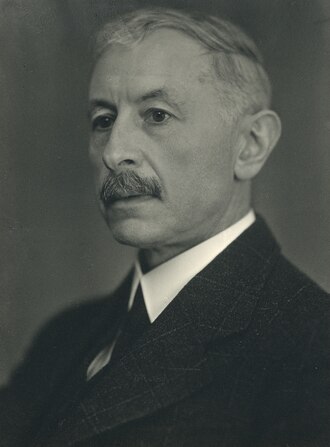
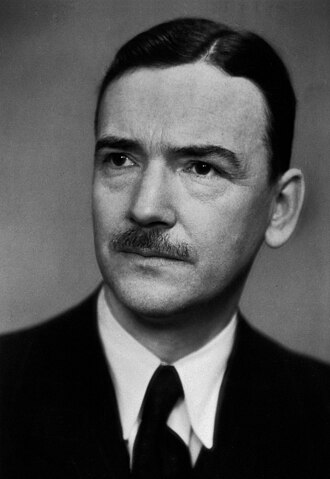
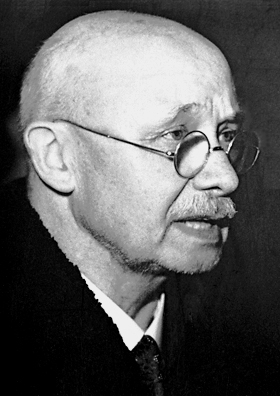
图:作者不详 · CC BY-SA 4.0 · Wikimedia Commons
保罗·卡勒1889—1971
Paul Karrer
化学家, 瑞士
保罗·卡勒,出生于俄罗斯莫斯科,瑞士有机化学家,因在维生素上的研究,他和沃尔特·霍沃思在1937年共同荣获诺贝尔化学奖。
摘自维基百科「保罗·卡勒」,CC BY-SA 4.0
- 出生
- 1889 年 4 月 21 日,莫斯科
- 逝世
- 1971 年 6 月 18 日,苏黎世
- 国籍
- 瑞士
- 学科
- 化学、生物学
- 职业
- 化学家、大学教师、生物化学家
- 母语 / 工作语言
- 德语
- 母校
- 苏黎世大学
- 工作单位
- 苏黎世大学(1919—1959)
研究领域
所获奖项(8)
- 1922马塞尔·本努瓦奖
- 1934honorary doctor of the University of Madrid Complutense
- 1937诺贝尔化学奖
- 1937doctor honoris causa from the University of Lyon
- 1938doctor honoris causa from the University of Paris
- 1947英国皇家学会外籍会员
- 1950honorary doctorate from the University of Strasbourg
- —Honorary Fellow of the Royal Society of Edinburgh
学会与院士
百科正文
早年
卡勒出生于俄罗斯莫斯科,父母保罗·卡勒和朱莉·勒希都是瑞士公民。1892年,卡勒全家返回瑞士,他在维尔德格和阿劳旧州立学校接受教育,并于1908年入学。他在苏黎世大学师从阿尔弗雷德·沃纳学习化学,并于1911年获得博士学位后,在化学研究所担任了一年助理。之后,他在法兰克福的乔治·施派尔故居担任化学家,与保罗·埃尔利希共事。
1919年,他成为化学教授兼化学研究所所长。
研究
卡拉早期的研究涉及复杂的金属化合物,但他最重要的研究工作涉及植物色素,特别是黄色类胡萝卜素。他阐明了这些物质的化学结构,并表明其中一些物质在体内会转化为维生素A。他的工作导致建立了维生素A主要前体β-胡萝卜素的正确组成式;这是维生素或维生素原的结构首次被确定。乔治·沃尔德曾在卡拉的实验室短暂工作,研究维生素A在视网膜中的作用。后来,卡拉确定了抗坏血酸(维生素C)的结构,并将他的研究扩展到维生素B2和E。他对黄素化学的重要贡献导致乳黄素被鉴定为最初被认为是维生素B2的复合物的一部分。
以上内容摘自维基百科「保罗·卡勒」,按 CC BY-SA 4.0 使用,去掉了参考文献、外部链接等尾部小节,公式改写成了纯文本。全文、配图和出处见原文。
英文维基百科补充中文条目比较短,下面是英文条目「Paul Karrer」的原文
Paul Karrer (21 April 1889 – 18 June 1971) was a Swiss organic chemist best known for his research on vitamins. He and British chemist Norman Haworth won the Nobel Prize for Chemistry in 1937.
Biography
Early years
Karrer was born in Moscow, Russia to Paul Karrer and Julie Lerch, both Swiss nationals. In 1892 Karrer's family returned to Switzerland where he was educated at Wildegg and at the Old Cantonal School Aarau where he matriculated in 1908. He studied chemistry at the University of Zurich under Alfred Werner and after gaining his PhD in 1911, he spent a further year as an assistant in the Chemical Institute. He then took a post as a chemist with Paul Ehrlich at the Georg Speyer Haus, Frankfurt-am-Main. In 1919 he became Professor of Chemistry and Director of the Chemical Institute.
Research
Karrer's early research concerned complex metal compounds but his most important work has concerned plant pigments, particularly the yellow carotenoids. He elucidated their chemical structure and showed that some of these substances are transformed in the body into vitamin A. His work led to the establishment of the correct constitutional formula for β-carotene, the chief precursor of vitamin A; the first time that the structure of a vitamin or provitamin had been established. George Wald worked briefly in Karrer's lab while studying the role of vitamin A in the retina. Later, Karrer confirmed the structure of ascorbic acid (vitamin C) and extended his researches into the vitamin B2 and E. His important contributions to the chemistry of the flavins led to the identification of lactoflavin as part of the complex originally thought to be vitamin B2.
Karrer published many papers and received many honours and awards, including the Nobel Prize in 1937. His textbook Lehrbuch der Organischen Chemie (Textbook of Organic Chemistry) was published in 1927, went through thirteen editions, and was published in seven languages.
Personal life
Karrer married Helena Froelich in 1914 and had three sons, one of whom died in infancy. He died on 18 June 1971, at the age of 82 in Zürich. His wife died in 1972.
Legacy
The prestigious Paul Karrer Gold Medal and lecture were established in his honour in 1959 by a group of leading companies such as CIBA AG, J.R. Geigy, F. Hoffmann-La Roche & Co. AG, Sandoz AG, Société des Produits Nestlé AG and Dr. A. Wander AG. It is awarded annually or biannually to an outstanding chemist who delivers a lecture at the University of Zurich.
The Paul Karrer Lecture Foundation is based at the Chemistry Institute of the University of Zurich at Rämistrasse 71, in Zürich.
以上内容摘自英文维基百科「Paul Karrer」,按 CC BY-SA 4.0 使用,去掉了参考文献、外部链接等尾部小节,公式改写成了纯文本。全文、配图和出处见原文。
同年获同一奖项
同一学科、同时代的科学家


同一学科的科学家
更多 ›