格物
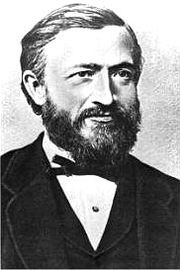
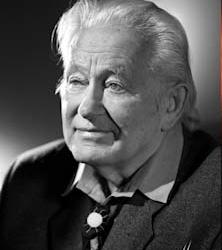
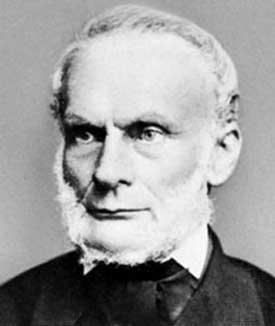
图:User:Tellerman · Public domain · Wikimedia Commons
- 出生
- 1834 年 1 月 7 日,盖尔恩豪森
- 逝世
- 1874 年 1 月 14 日,弗里德里希斯多尔夫
- 国籍
- 普鲁士王国、黑森选侯国
- 学科
- 物理学、工程与发明、博物与综合
- 职业
- 发明家、物理学家、科学家
- 母语 / 工作语言
- 英语
研究领域
主要贡献
本站收录的发现与发明
百科正文
英文维基百科补充中文条目比较短,下面是英文条目「Johann Philipp Reis」的原文
Johann Philipp Reis (German: [ʁaɪs]; 7 January 1834 – 14 January 1874) was a self-taught German scientist and inventor. In 1861, he constructed the first telephone, today called the Reis telephone. It was the first device to transmit a voice via electronic signals, and is regarded by some as the first telephone. Reis also coined the term telephone.
Early life and education
Reis was born in Gelnhausen, Germany, the son of Marie Katharine (Glöckner) and Karl Sigismund Reis, a great baker. His father belonged to the Evangelical Lutheran church. Reis's mother died while he was an infant, and he was raised by his paternal grandmother, a well-read, intelligent woman. At the age of six Reis was sent to the common school of his hometown of Gelnhausen. Here his talents attracted the notice of his instructors, who advised his father to extend his education at a higher college. His father died before Reis was ten years old. His grandmother and guardians placed him at Garnier's Institute, in Friedrichsdorf, where he showed a taste for languages, and acquired both French and English, as well as a stock of miscellaneous information from the library.
The telephone
Reis imagined electricity could be propagated through space, as light can, without the aid of a material conductor, and he performed some experiments on the subject. The results were described in a paper, "On the Radiation of Electricity", which, in 1859, he mailed to Professor Poggendorff for insertion in the then well-known periodical, Annalen der Physik. The manuscript was rejected, to the great disappointment of the sensitive young teacher.
Reis, as Bell would later do, had studied the organs of the ear and the idea of an apparatus for transmitting sound by means of electricity had floated on his mind for years. Inspired by his physics lessons he attacked the problem, and was rewarded with success. In 1860, he constructed the first prototype of a telephone, which could cover a distance of 100 meters.
Final days
Later, Reis continued his teaching and scientific studies, but his failing health had become a serious impediment. For several years it was only by the exercise of his strong will that he was able to carry on with his duties. His voice began to fail as his lung disease became more pronounced, and in the summer of 1873, he was obliged to forsake his tutoring duties for several weeks. An autumn vacation strengthened his hopes of recovery and he resumed his teaching, but it was to be the last flicker of his expiring flame. It was announced that he would show his new gravity-machine at a meeting of the Gesellschaft Deutscher Naturforscher und Ärzte (Society of German Scientists and Physicians) of Wiesbaden in September, but he was too ill to appear.
Recognition and technological assessment
In 1878, four years after his death and two years after Bell received his first telephone patent, European scientists dedicated a monument to Philip Reis as the inventor of the telephone.
Documents of 1947 in London's Science Museum later showed that after their technical adjustments, engineers from the British firm Standard Telephones and Cables (STC) found Reis' telephone dating from 1863 could transmit and "reproduce speech of good quality, but of low efficiency".
Sir Frank Gill, then chairman of STC, ordered the tests to be kept secret, as STC was then negotiating with AT&T, which had evolved from the Bell Telephone Company, created by Alexander Graham Bell. Professor Bell was generally accepted as having invented the telephone and Gill thought that evidence to the contrary might disrupt the ongoing negotiations.
Telephone invention controversies
Besides Reis and Bell, many others claimed to have invented the telephone. The result was the Gray-Bell telephone controversy, one of the United States' longest-running patent interference cases, involving Bell, Thomas Alva Edison, Elisha Gray, Emil Berliner, Amos Dolbear, J. W. McDonagh, G. B. Richmond, W. L. Voeker, J. H. Irwin, and Francis Blake Jr. The case started in 1878 and was not finalised until 27 February 1901. Bell and the Bell Telephone Company triumphed in this crucial decision, as well as every one of the over 600 other court decisions related to the invention of the telephone. The Bell Telephone Company never lost a case that had proceeded to a final trial stage.
以上节选摘自英文维基百科「Johann Philipp Reis」,按 CC BY-SA 4.0 使用,去掉了参考文献、外部链接等尾部小节,公式改写成了纯文本。篇幅所限,较长的小节只摘了开头一部分,有的小节没有收;全文、配图和出处见原文。
同一学科、同时代的科学家



同一学科的科学家
更多 ›