格物
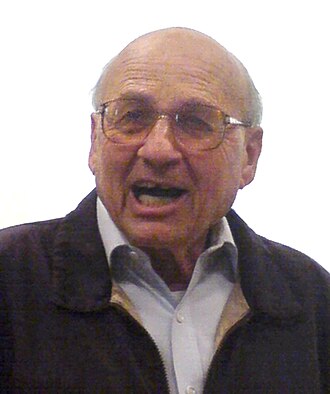
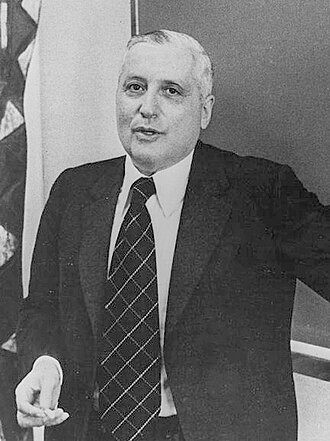
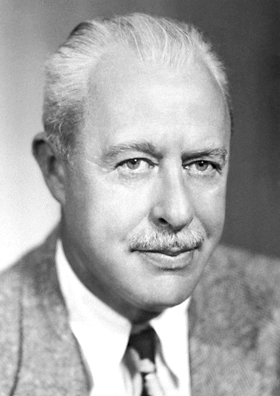
图:Jtk33 · CC BY-SA 3.0 · Wikimedia Commons
沃尔特·科恩1923—2016
Walter Kohn
物理学家, 加拿大
沃尔特·科恩 出生于奥地利维也纳,奥地利化学家,1998年与约翰·波普共同得到诺贝尔化学奖。科恩在密度泛函理论的发展中扮演了关键角色。
摘自维基百科「沃尔特·科恩」,CC BY-SA 4.0
- 出生
- 1923 年 3 月 9 日,维也纳
- 逝世
- 2016 年 4 月 19 日,圣巴巴拉
- 国籍
- 加拿大、美国、奥地利
- 学科
- 物理学、化学、博物与综合
- 职业
- 物理学家、大学教师、化学家
- 母语 / 工作语言
- 英语
- 母校
- 多伦多大学、哈佛大学、Akademisches Gymnasium
- 工作单位
- 加利福尼亚大学圣巴巴拉分校、圣迭戈加利福尼亚大学、卡内基梅隆大学
研究领域
主要贡献
代表成就
师承
博士导师1
博士生4
来自 Wikidata 的「博士导师」「师从」「博士生」「学生」记录,可能不全。
所获奖项(18)
- 1961奥利弗·巴克利奖
- 1977戴维森-格尔默奖
- 1980honorary doctorate from University of Paris-XI
- 1988美国国家科学奖章
- 1991Feenberg Medal
- 1997honorary doctorate of the Weizmann Institute of Science
- 1998UNESCO尼尔斯·玻尔奖章
- 1998诺贝尔化学奖
- 1998英国皇家学会外籍会员
- 1999奥地利共和国科学与艺术荣誉十字勋章
- 2001哈佛百年奖章
- 2002Three Physicists Prize
- 2002honorary doctor of the Dresden University of Technology
- 2012维也纳大学荣誉博士
- 2012哈佛大学名誉博士
- —Grand Officer of the Order of Honour for Services to the Republic of Austria
- —honorary doctor of the Vienna Technical University
- —古根海姆学者奖
学会与院士
百科正文
英文维基百科补充中文条目比较短,下面是英文条目「Walter Kohn」的原文
Walter Kohn (German pronunciation: [ˈvaltɐ ˈkoːn]; March 9, 1923 – April 19, 2016) was an Austrian-American theoretical physicist and theoretical chemist. He was awarded, with John Pople, the Nobel Prize in Chemistry in 1998. The award recognized their contributions to understanding the electronic properties of materials. In particular, Kohn played the leading role in the development of density functional theory, which made it possible to calculate quantum mechanical electronic structure by equations involving the electronic density (rather than the many-body wavefunction). This computational simplification led to more accurate calculations on complex systems as well as many new insights, and it has become an essential tool for materials science, condensed-phase physics, and the chemical physics of atoms and molecules.
Early years in Canada
Kohn arrived in England as part of the Kindertransport rescue operation immediately after the annexation of Austria by Hitler. He was from a Jewish family, and has written, "My feelings towards Austria, my native land, are – and will remain – very painful. They are dominated by my vivid recollections of 1 1/2 years as a Jewish boy under the Nazi regime, and by the subsequent murder of my parents, Salomon and Gittel Kohn, of other relatives and several teachers, during the Holocaust.... I want to mention that I have a strong Jewish identity and – over the years – have been involved in several Jewish projects, such as the establishment of a strong program of Judaic Studies at the University of California, San Diego.". Kohn also has identified as Deist.
Because he was an Austrian national, he was transferred to Canada in July 1940 after the outbreak of World War II. As a 17-year-old, Kohn traveled as part of a British convoy moving through U-boat-infested waters to Quebec City in Canada; and from there, by train, to a camp in Trois-Rivières. He was at first held in detention in a camp near Sherbrooke, Quebec. This camp, as well as others, provided a small number of educational facilities that Kohn used to the fullest, and he finally succeeded in entering the University of Toronto. As a German national, the future Nobel Laureate in Chemistry was not allowed to enter the chemistry building, so he opted for physics and mathematics.
Scientific career
Kohn received a war-time bachelor's degree in applied mathematics at the end of his one-year army service, having completed only 2½ out of the 4-year undergraduate program, from University College at the University of Toronto in 1945; he was awarded an M.A. degree in applied mathematics by Toronto in 1946. Kohn was awarded a Ph.D. degree in physics by Harvard University in 1948, where he worked under Julian Schwinger on the three-body scattering problem. At Harvard, he also fell under the influence of J. H. Van Vleck and developed an interest in solid-state physics.
He moved from Harvard to Carnegie Mellon University from 1950 to 1960, after a short stint in Copenhagen as a National Research Council of Canada post-doctoral fellow. At Carnegie Mellon, he did much of his seminal work on multiple-scattering band-structure work, now known as the KKR method. His association with Bell Labs got him involved with semiconductor physics and produced a long and fruitful collaboration with Luttinger (including, for example, development of the Luttinger-Kohn model of semiconductor band structure). In 1960 he moved to the newly founded University of California, San Diego, held a term as the physics department chair, and remained until 1979. It was during this period, he, along with his student Chanchal Kumar Majumdar developed the Kohn–Majumdar theorem related to Fermi gas and its bound and unbound states. He then accepted the founding director's position at the new Institute for Theoretical Physics in Santa Barbara.
Death
Kohn died from jaw cancer at his home in Santa Barbara, California, on April 19, 2016, at the age of 93.
Awards and honors
- Oliver E. Buckley prize in Solid State Physics (American Physical Society, 1961)
- Davisson-Germer Prize (American Physical Society, 1977)
- National Medal of Science (1988)
- Nobel Prize in Chemistry (1998)
- Elected a Foreign Member of the Royal Society (ForMemRS) in 1998
- Austrian Decoration for Science and Art (1999)
Grand Decoration of Honour in Silver with Star for Services to the Republic of Austria (2008)
Harvard University awarded him an Honorary Doctor of Science (May 2012)
以上节选摘自英文维基百科「Walter Kohn」,按 CC BY-SA 4.0 使用,去掉了参考文献、外部链接等尾部小节,公式改写成了纯文本。篇幅所限,较长的小节只摘了开头一部分,有的小节没有收;全文、配图和出处见原文。
同年获同一奖项
同一学科、同时代的科学家


同一学科的科学家
更多 ›