 格物
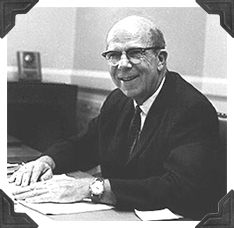
图:https://illinois.edu/emailer/files/82502/wm-everitt-oct2015.… · CC BY-SA 4.0 · Wikimedia Commons
科学家 ›
威廉·L·埃弗里特1900—1986
William Littell Everitt
American engineer (1900–1986)
William Littell Everitt was a noted American electrical engineer, educator, and founding member of the National Academy of Engineering. He received his Ph.D. from Ohio State University in 1933. He was adviser of numerous outstanding scientists at OSU including Karl Spangenberg, and Nelson Wax. His PhD adviser was Frederic Columbus Blake.
摘自英文维基百科「William Littell Everitt」(英文维基百科,暂无中文条目),CC BY-SA 4.0
- 出生
- 1900 年 4 月 14 日,巴尔的摩
- 逝世
- 1986 年 9 月 6 日
- 国籍
- 美国
- 职业
- 电气工程师、大学教师
- 母语 / 工作语言
- 英语
- 母校
- 密歇根大学、康奈尔大学、康乃尔大学工学院、俄亥俄州立大学
- 工作单位
- 伊利诺伊大学厄巴纳-香槟分校
研究领域
师承
博士生4
来自 Wikidata 的「博士导师」「师从」「博士生」「学生」记录,可能不全。
所获奖项(4)
- 1954IEEE 荣誉奖章
- 1957IEEE James H. Mulligan, Jr. Education Medal
- —IEEE Fellow
- —美国科学促进会会士
学会与院士
百科正文
本条目暂无中文维基百科条目,下面是英文维基百科原文。
Early life
Everitt was born in Baltimore, Maryland. From 1918 to 1919 he served in the United States Marine Corps, then joined Cornell University to study electrical engineering where he received his E.E. degree in 1922. From 1922 to 1924 he worked at the North Electric Manufacturing Company of Galion, Ohio, on telephony switchboards, then studied electrical engineering at the University of Michigan where he received his M.A. in 1926.
He then joined Ohio State University (OSU) as assistant professor, becoming associate professor (1929) and full professor (1933) when he received that institution's Ph.D. under Frederic Blake. His dissertation was entitled The Calculation and Design of Alternating Current Networks Employing Triodes Operating During a Portion of a Cycle. While at OSU he developed the theory of Class B and Class C electronic amplifiers.
Career
In 1940, Everitt was appointed to the National Defense Research Committee's Communications Section, and in 1942 became director of operations research with the United States Army Signal Corps, for which he received the Exceptionally Meritorious Civilian Award (1946). He was then professor of electrical engineering and head of department at the University of Illinois at Urbana-Champaign (1944–1949) and dean (1949–1968). One of the engineering buildings there bears his name.
In his long career, Everitt was a radar pioneer and author of basic texts on radio engineering and communication. He invented automatic telephone equipment, a "time compressor" to accelerate recorded speech, high-power radio amplification, a frequency modulation radio altimeter, and several antenna matching and feeding systems. His textbook Communications Engineering, first published in 1932, was a classic in the field.
Awards and honors
Everitt became Institute of Radio Engineers Fellow (1938), President (1945), and received its IEEE Medal of Honor in 1954 "for his distinguished career as author, educator and scientist; for his contributions in establishing electronics and communications as a major branch of electrical engineering; for his unselfish service to his country; for his leadership in the affairs of the Institute of Radio Engineers." He was named to the National Academy of Engineering in 1964. Everitt was also a Fellow of AIEE, and a member of the American Association for the Advancement of Science, the American Society for Engineering Education, the Acoustical Society of America, Eta Kappa Nu, the National Council of Tau Beta Pi, and Sigma Xi, and received 10 honorary doctorate degrees.
Personal life
Everitt's daughter, Barbara Everitt Bryant, became the first woman to direct the United States Census Bureau.
以上内容摘自英文维基百科「William Littell Everitt」,按 CC BY-SA 4.0 使用,去掉了参考文献、外部链接等尾部小节,公式改写成了纯文本。全文、配图和出处见原文。