格物
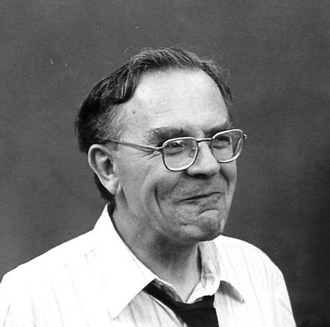
赫尔曼·弗朗西斯·马克1895—1992
Herman F. Mark
Austrian American chemist (1895–1992)
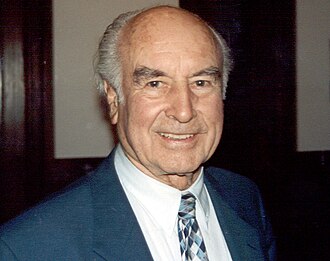
赫尔曼·弗朗西斯·马克,奥地利裔美国化学家,致力于高分子化学的发展。马克利用X射线衍射研究纤维分子结构,并由此提供了高分子结构理论的重要证据。他与豪温一同制定了马克-豪温方程,描述相对分子量对高分子特性黏度的影响。
摘自维基百科「赫爾曼·弗朗西斯·馬克」,CC BY-SA 4.0
- 出生
- 1895 年 5 月 3 日,维也纳
- 逝世
- 1992 年 4 月 6 日,奥斯汀
- 国籍
- 奥地利、美国
- 学科
- 化学、工程与发明
- 职业
- 化学家、工程师、大学教师
- 母语 / 工作语言
- 德语、英语
- 母校
- 维也纳大学
- 工作单位
- 维也纳大学、卡尔斯鲁厄理工学院、纽约大学坦登工程学院
研究领域
师承
博士生2
来自 Wikidata 的「博士导师」「师从」「博士生」「学生」记录,可能不全。
所获奖项(19)
- 1934威廉·埃斯内奖章
- 1960威廉·H·尼克尔斯奖
- 1965ACS Award in Polymer Chemistry
- 1966埃利奥特·克雷森奖章
- 1966奥地利共和国科学与艺术荣誉十字勋章
- 1972化学先驱奖
- 1975威拉德·吉布斯奖
- 1976哈维奖
- 1979美国国家科学奖章
- 1979沃尔夫化学奖
- 1980珀金奖章
- 1982Herman Mark Award in Polymer Chemistry
- 1987honorary doctorate of Claude Bernard University Lyon 1
- 1988查尔斯·古德伊尔奖章
- —维也纳大学荣誉博士
- —美国物理学会会士
- —honorary doctorate of the University of Graz
- —Honorary doctor of the Free University of Berlin
- —honorary doctor of the University of Uppsala
学会与院士
百科正文
英文维基百科补充中文条目比较短,下面是英文条目「Herman Francis Mark」的原文
Herman Francis Mark (born Hermann Franz Mark; May 3, 1895, Vienna – April 6, 1992, Austin, Texas) was an Austrian-American chemist regarded for his contributions to the development of polymer science. Mark's X-ray diffraction work on the molecular structure of fibers provided important evidence for the macromolecular theory of polymer structure. Together with Roelof Houwink he formulated an equation, now called the Mark–Houwink or Mark–Houwink–Sakurada equation, describing the dependence of the intrinsic viscosity of a polymer on its relative molecular mass (molecular weight). He was a long-time faculty at Polytechnic Institute of Brooklyn. In 1946, he established the Journal of Polymer Science.
Biography
Early life
Mark was born in Vienna in 1895, the son of Hermann Carl Mark, a physician, and Lili Mueller. Mark's father was Jewish, but converted to Christianity (Lutheran Church) upon marriage.
Several early stimuli apparently steered Herman Mark to science. He was greatly influenced by a teacher, Franz Hlawaty, who made mathematics and physics understandable. At the age of twelve, he and his friend toured the laboratories of the University of Vienna. His friend's father, who taught science, arranged the tour. The visit excited both boys and before long they turned their bedrooms into laboratories. Both had access to chemicals through their fathers, and they were soon performing experiments.
World War I
Mark served as an Officer in the elite k.k. Kaiserschützen Regiment Nr. II of the Austro-Hungarian Army during World War I. He was highly decorated and the Austrian hero of the alpine Battle of Mount Ortigara in June 1917.
X-ray diffraction
Mark worked on X-ray diffraction caused by passage through gases along with physicist Raimund Wierl. This led to the computation of intermolecular distances. Linus Pauling learned X-ray diffraction from Mark, and that knowledge led to Pauling's seminal work on the structure of proteins.
Albert Einstein asked Mark and his colleagues to use the intense and powerful X-ray tubes available at their laboratory to verify the Compton Effect; this work provided the strongest confirmation yet of Einstein's light quantum theory for which he won the Nobel Prize in Physics.
IG Farben
In 1926, chemist Kurt Meyer of IG Farben offered Mark the assistant directorship of research at one of the company's laboratories. In his years at Farben, Mark worked on the first serious attempts at the commercialization of polystyrene, polyvinyl chloride, polyvinyl alcohol, and the first synthetic rubbers. Mark helped make Farben a leader in manufacturing and distribution of new polymers and co-polymers.
Mark's son Hans Mark (1929–2021) later became an American government official.
With the rise of Nazi power, Mark's plant manager recognised that as a foreigner and the son of a Jewish father he would be most vulnerable. Mark took his manager's advice and accepted a position as professor of physical chemistry at the University of Vienna, which brought him back to the city where he grew up. Mark's stay in Vienna lasted six very successful years during which he designed a new curriculum in polymer chemistry and continued research in the field of macromolecules.
In September 1937, Mark met C.B. Thorne, an official with the Canadian International Pulp and Paper Company, in Dresden. At the meeting, Thorne offered Mark a position as research manager with the company in Hawkesbury, Ontario, Canada, with the goal of modernizing its production of wood pulp for the purpose of making rayon, cellulose acetate, and cellophane. Mark replied that he was busy but that he would try to visit Canada the following year to help reorganize the company's research facilities.
Escape from Nazi Europe
In early 1938 Mark began preparing to leave Austria by delegating his administrative duties to colleagues. At the same time he clandestinely started to buy platinum wire, worth roughly $50,000, which he bent into coat hangers while his wife knitted covers so that the hangers could be taken out of the country.
Decorations and awards
- 1960: William H. Nichols Medal
- 1965: Austrian Decoration for Science and Art
- 1966: Foreign member of the Soviet Academy of Sciences
- 1966: Elliott Cresson Medal
- 1972: Chemical Pioneer Award
- 1975: Willard Gibbs Award
- 1975: Aachen and Munich Prize for Technology and Applied Sciences
- 1976: Harvey Prize
- 1979: National Medal of Science (United States)
- 1979: Wolf Prize in Chemistry
- 1980: Colwyn medal
- 1980: Perkin Medal
- 1988: Charles Goodyear Medal
以上节选摘自英文维基百科「Herman Francis Mark」,按 CC BY-SA 4.0 使用,去掉了参考文献、外部链接等尾部小节,公式改写成了纯文本。篇幅所限,较长的小节只摘了开头一部分,有的小节没有收;全文、配图和出处见原文。
同一学科、同时代的科学家