格物
- 出生
- 1942 年 2 月 11 日,柏林
- 国籍
- 德国
- 学科
- 物理学
- 职业
- 物理学家、大学教师
- 母语 / 工作语言
- 德语、英语
- 母校
- Karls-Gymnasium Stuttgart、斯图加特大学
- 工作单位
- 杜伊斯堡-埃森大学、奥克兰大学
师承
博士导师1
博士生1
来自 Wikidata 的「博士导师」「师从」「博士生」「学生」记录,可能不全。
所获奖项(2)
- 2009马克斯·普朗克奖章
- —honorary doctor of the Eötvös Loránd University
百科正文
部分出版物
Von der Laserschwelle zum Quantenphasenübergang - Photonen und Atome als Quantengase im Fließgleichgewicht. In: Physik Journal. 2009, No. 8/9 (prize acceptance speech for the Max Planck medal)
Statistical theory of instabilities in stationary nonequilibrium systems with applications to lasers and nonlinear optics (= Springer Tracts in Modern Physics, Vol. 66). 1973 (Habilitation 1971)
Macroscopic potentials, bifurcations and noise in dissipative systems. In: F. Moss und P.V.E. McClintock (eds.): Noise in nonlinear dynamical systems. Band 1, Cambridge University Press 1989, pages 225–278
以上内容摘自维基百科「罗伯特·格拉姆」,按 CC BY-SA 4.0 使用,去掉了参考文献、外部链接等尾部小节,公式改写成了纯文本。全文、配图和出处见原文。
英文维基百科补充中文条目比较短,下面是英文条目「Robert Graham (physicist)」的原文
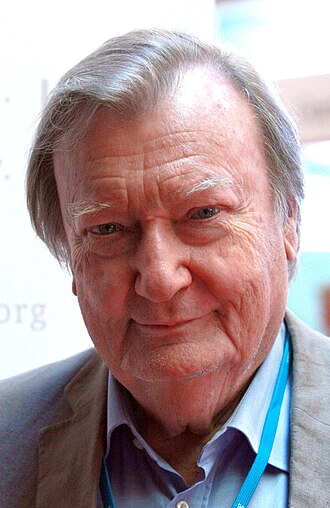
Robert Graham (born 11 February 1942, Berlin) is a German theoretical physicist.
Biography
Graham attended the Karls-Gymnasium in Stuttgart and studied at the University of Stuttgart, where in 1967 he earned under Hermann Haken his physics Diplom (quantum fluctuations of the optical parametric oscillator) and in 1969 his PhD (Lichtausbreitung in laseraktiven fluktuierenden Medien, "Light Propagation in Laser-active Fluctuating Media"). Continuing this work, he applied the theory of cooperative systems publicized by Haken as "Synergetik" (Synergetics) in quantum optics. As a post-doc, he was a guest scientist at New York University and, after his Habilitation in 1971, scientific advisor and professor at the University of Stuttgart. From 1975 he was a professor at the Universität Duisburg-Essen, where he is now retired as professor emeritus. He was there also dean and prorector for research.
He worked on extremely diverse areas of quantum theoretical statistical mechanics, apart from laser theory also in the 1990s with the theory of Bose–Einstein condensate. In 2009 he received the Max Planck medal, the highest honor of the DPG in theoretical physics for his contributions in the areas of quantum optics, the statistical mechanics of open stationary systems outside thermodynamic equilibrium, quantum fluids and quantum gases as well as quantum chaos (according to the Laudatio of the Max Planck medal 2009) and his contributions to quantum aspects of cosmology and gravitation.
以上内容摘自英文维基百科「Robert Graham (physicist)」,按 CC BY-SA 4.0 使用,去掉了参考文献、外部链接等尾部小节,公式改写成了纯文本。全文、配图和出处见原文。
同一学科、同时代的科学家


同一学科的科学家
更多 ›