格物
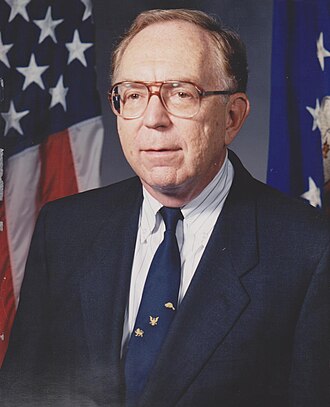
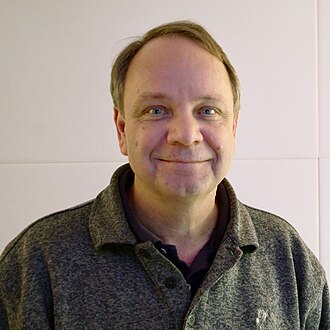
图:United States Air Force · Public domain · Wikimedia Commons
- 出生
- 1936 年 1 月 20 日,威活肯
- 国籍
- 美国
- 学科
- 计算机科学、工程与发明、博物与综合
- 职业
- 计算机科学家、大学教师、人工智能研究者、发明家
- 母语 / 工作语言
- 英语
- 母校
- 卡内基梅隆大学、Weehawken High School
- 工作单位
- 斯坦福大学
研究领域
师承
博士导师1
博士生8
来自 Wikidata 的「博士导师」「师从」「博士生」「学生」记录,可能不全。
所获奖项(5)
- 1990人工智能促进协会会士
- 1994图灵奖
- 2007ACM会士
- 2012Computer History Museum Fellow
- 2013计算机先驱奖
学会与院士
百科正文
生平
费根鲍姆出生在新泽西州,一个犹太人家庭中。1956年在卡内基技术学院(今卡内基梅隆大学的前身)取得学士学位,1960年取得博士学位,指导教授为赫伯特·西蒙。在他的博士论文中,费根鲍姆建立了EPAM,第一个模仿人类学习能力的电脑系统。 2011年, 费根鲍姆因其在人工智能和智能系统上的显著贡献而入选IEEE Intelligent Systems'人工智能'名人堂。
2012年, 他因其在人工智能和专家系统上的创举工作而成为计算机历史博物馆研究员。
以上内容摘自维基百科「愛德華·費根鮑姆」,按 CC BY-SA 4.0 使用,去掉了参考文献、外部链接等尾部小节,公式改写成了纯文本。全文、配图和出处见原文。
英文维基百科补充中文条目比较短,下面是英文条目「Edward Feigenbaum」的原文
Edward Albert Feigenbaum (born January 20, 1936) is an American computer scientist working in the field of artificial intelligence, and with Raj Reddy he won the 1994 ACM Turing Award. He is often called the "father of expert systems".
Education and early life
Feigenbaum was born in Weehawken, New Jersey in 1936 to a culturally Jewish family, and moved to nearby North Bergen, where he lived until the age of 16, when he left to start college. His hometown did not have a secondary school of its own, and so he chose Weehawken High School for its college preparatory program. He was inducted into his high school's hall of fame in 1996.
Feigenbaum completed his undergraduate degree (1956), and a Ph.D. (1960), at Carnegie Institute of Technology (now Carnegie Mellon University). In his PhD thesis, carried out under the supervision of Herbert A. Simon, he developed EPAM, one of the first computer models of how people learn.
During undergrad years, Feigenbaum took a graduate-level course called "Ideas and Social Change" taught by James March. March introduced him to Herbert Simon. Feigenbaum took a course "Mathematical Models in the Social Sciences" taught by Simon, where Simon announced the Logic Theorist with "Over the Christmas holidays, Al Newell and I invented a thinking machine." Simon gave Feigenbaum a manual of IBM 701, which he read in one night. Feigenbaum later called it a "born-again experience".
Career and research
Feigenbaum completed a Fulbright fellowship at the National Physical Laboratory (United Kingdom) and in 1960 went to the University of California, Berkeley, to teach in the School of Business Administration. He joined the Stanford University faculty in 1965 as one of the founders of its computer science department. He was the director of the Stanford Computation Center from 1965 to 1968. He established the Knowledge Systems Laboratory at Stanford University. Important projects that Feigenbaum was involved in include systems in medicine, as ACME, MYCIN, SUMEX, and Dendral. He also co-founded companies IntelliCorp and Teknowledge.
Teknowledge was founded in July 1981 by 20 computer scientists from Stanford University, MIT, and the Rand Corporation. The company's staff "represent about 1/3 of the world's high-level expertise in the design and development of knowledge systems". Its aim was to allow people without training in knowledge-engineering technology to use it for commercial and industrial applications.
In 2000, Feigenbaum became a Professor Emeritus of Computer Science at Stanford University. His former doctoral students include Peter Karp, Niklaus Wirth, and Alon Halevy.
In January 2026, the Association for the Advancement of Artificial Intelligence (AAAI) honored Feigenbaum at its 40th annual conference in Singapore in celebration of his 90th birthday, recognizing his foundational contributions to the field of expert systems.
Honors and awards
1984: Selected as one of the initial fellows of the American College of Medical Informatics (ACMI)
1986: Elected a member of the National Academy of Engineering for pioneering contributions to knowledge engineering and expert systems technology, and for leadership in education and technology of applied artificial intelligence.
1994: Turing Award jointly with Raj Reddy for "pioneering the design and construction of large scale artificial intelligence systems, demonstrating the practical importance and potential commercial impact of artificial intelligence technology".
1997: U.S. Air Force Exceptional Civilian Service Award
2007: Inducted as fellow of the Association for Computing Machinery (ACM)
2011: The AAAI established the Feigenbaum Prize, awarded biennially for outstanding AI research advances.
2011: IEEE Intelligent Systems AI's Hall of Fame Archived 2011-12-16 at the Wayback Machine for "significant contributions to the field of AI and intelligent systems".
2012. Made fellow of the Computer History Museum "for his pioneering work in artificial intelligence and expert systems."
2013. IEEE Computer Society Computer Pioneer Award for "pioneering work in Artificial Intelligence, including development of the basic principles and methods of knowledge-based systems and their practical applications".
以上内容摘自英文维基百科「Edward Feigenbaum」,按 CC BY-SA 4.0 使用,去掉了参考文献、外部链接等尾部小节,公式改写成了纯文本。全文、配图和出处见原文。
同年获同一奖项
同一学科、同时代的科学家




同一学科的科学家
更多 ›