格物

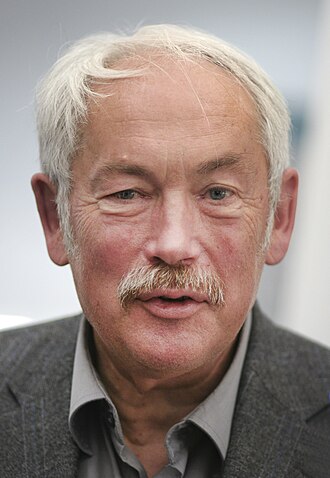
图:KirstenRichards · CC BY-SA 3.0 · Wikimedia Commons
- 出生
- 1947 年 3 月 26 日,斯利那加
- 国籍
- 印度
- 学科
- 物理学、数学、计算机科学、博物与综合
- 职业
- 数学家、密码学家、诗人、计算机科学家
- 母语 / 工作语言
- 克什米尔语、印地语、乌尔都语、印度斯坦语、英语
- 母校
- 德里印度理工学院、National Institute of Technology, Srinagar、印度理工学院
- 工作单位
- 伦敦帝国学院、贾瓦哈拉尔·尼赫鲁大学
师承
博士导师1
博士生12
来自 Wikidata 的「博士导师」「师从」「博士生」「学生」记录,可能不全。
所获奖项(1)
- 2019Padma Shri in science & engineering
百科正文
卡卡发表过有关科学史,科学哲学,天文学史、数学史的论文,卡卡还发表过关于考古天文学的文章,并提倡土著雅利安人(Indigenous Aryans)的思想。但其理论被其他许多学者批评。
2019年被印度政府授予莲花士勋章。
以上内容摘自维基百科「苏巴卡卡」,按 CC BY-SA 4.0 使用,去掉了参考文献、外部链接等尾部小节,公式改写成了纯文本。全文、配图和出处见原文。
英文维基百科补充中文条目比较短,下面是英文条目「Subhash Kak」的原文
Subhash Kak is an Indian-American computer scientist and Hindutva historical revisionist. He is the Regents Professor of the School of Electrical & Computer Engineering at Oklahoma State University–Stillwater, an honorary visiting professor of engineering at Jawaharlal Nehru University, and a member of the Indian Prime Minister's Science, Technology and Innovation Advisory Council (PM-STIAC).
Kak has published on the history of science, the philosophy of science, ancient astronomy, and the history of mathematics. Kak has also published on archaeoastronomy, and advocated the idea of Indigenous Aryans. Many scholars have rejected his theories on these topics in entirety, and his writings have been heavily criticized.
In 2019, the Government of India awarded him the Padma Shri, the fourth highest civilian award in India.
Early life and education
Kak was born to Ram Nath Kak, a government veterinary doctor and Sarojini Kak in Srinagar, India. His brother is the computer scientist Avinash Kak and his sister is the literary theorist Jaishree Odin.
Kak received a Bachelor of Engineering degree from the Regional Engineering College, Srinagar (now the National Institute of Technology, Srinagar) and a Ph.D. from the Indian Institute of Technology Delhi in 1970.
Academic career
During 1975–1976, Kak was a visiting faculty at Imperial College, London, and a guest researcher at Bell Laboratories, Murray Hill. In 1977, he was a visiting researcher at the Tata Institute of Fundamental Research, Bombay. In 1979, he joined Louisiana State University, Baton Rouge, where he was appointed the Donald C. and Elaine T. Delaune Distinguished Professor of Electrical and Computer Engineering. In 2007, he joined the Computer Science department at Oklahoma State University–Stillwater.
Kak proposed an efficient three-layer feed-forward neural network architecture and developed four corner classification algorithms for training it. Despite being criticized for scalability issues; it gained the attention of the electronic hardware community. Kak has argued that there are limits to artificial intelligence and that it cannot match biological intelligence. Kak has been critical of the generalization of the quantum computing to commercial scale; he argues error correction is a significant challenge for scalability although it's fundamental to multi-purpose computing.
Kak is the Regents Professor of the School of Electrical & Computer Engineering at Oklahoma State University–Stillwater, and an honorary visiting professor of engineering at Jawaharlal Nehru University. He is also an honorary visiting professor of media studies at Jawaharlal Nehru University.
On 28 August 2018, he was appointed member of the Prime Minister's Science, Technology and Innovation Advisory Council (PM-STIAC) in India.
Indology
Indigenous Aryanism
Kak primarily advocates for an autochthonous origin of the Indo-Aryans from Punjab ("Indigenous Aryans" hypothesis) in contradiction of the scholarly consensus about the validity of Indo-Aryan migration theory; Kak reads the promotion of the latter theory to stem from racist tendencies. Scholars have noted his charges to be without any basis, lacking in any critical examination and primarily intended to promote Hindu supremacy.
Ancient astronomy in the Rig Veda
Kak has also claimed to find evidences of advanced computing and astronomy in the Rig Veda, in what Noretta Koertge deems to be a "social constructivist and postmodern attack on modern science". He insists that Vedic scientists discovered the physical laws by Yogic meditation and that it is a valid scientific method which can be only evaluated within the paradigm of Vedic assumptions and by those who have attained Yogic enlightenment. According to Meera Nanda, Kak believes in the superiority of Hindus over Muslims. In a 2004 critique, she summarized some of Kak's views on the matter: according to Kak, Hindus built "cultural empires" without military conquest, in contrast to Muslim "military empires" reliant on conquest.
Reviewed works
Archaeoastronomy – The Astronomical Code of the Rigveda
In the book, Kak proposes that the organization of hymns in the Rig Veda was dictated by an astronomic code concerning the courses of planets—length of solar year and lunar year, the distance between sun and earth et cetera. He then leverages the proposition to argue for the existence of a tradition of sophisticated observational astronomy as far back as 3000 or 4000 BCE. Kak also states that the construction of fire-altars were a coded representation of their astronomic knowledge and that the Vedic civilisation were aware of the speed of light.
以上节选摘自英文维基百科「Subhash Kak」,按 CC BY-SA 4.0 使用,去掉了参考文献、外部链接等尾部小节,公式改写成了纯文本。篇幅所限,较长的小节只摘了开头一部分,有的小节没有收;全文、配图和出处见原文。
同一学科、同时代的科学家






同一学科的科学家
更多 ›