 格物
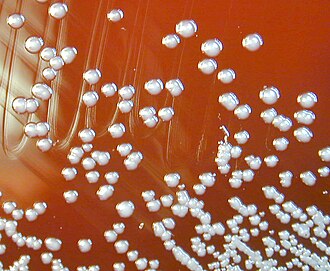
图:https://phil.cdc.gov/Details.aspx?pid=1926 · Public domain · Wikimedia Commons
- 学名
- Betaproteobacteria
- 分类等级
- 纲
- 上级类群
- 假单胞菌门
- 大类
- 细菌
- 数据库
- NCBI 分类 · GBIF
下级类群(3)
百科正文
下级分类
本纲包括以下目:
伯克氏菌目 Burkholderiales Garrity et al. 2006
- Ferritrophicales Weiss et al. 2007
- Ferrovales Johnson et al. 2014
- 奈氏球菌目 Neisseriales Tønjum 2006
Candidatus Procabacteriales Garrity et al. 2003
- 红环菌目 Rhodocyclales Garrity et al. 2006
- Spirillales Prévot 1940
- 目的地位未定的科:
中科微菌科 Casimicrobiaceae Song et al. 2020,本科以中国科学院微生物研究所命名
中科微菌属 Casimicrobium Song et al. 2020
惠芳中科微菌 Casimicrobium huifangae Song et al. 2020,以中国微生物学家杨惠芳的名字命名,她在环境微生物学方面做了开创性的工作
以上内容摘自维基百科「Β-變形菌」,按 CC BY-SA 4.0 使用,去掉了参考文献、外部链接等尾部小节,公式改写成了纯文本。全文、配图和出处见原文。
英文维基百科补充中文条目比较短,下面是英文条目「Betaproteobacteria」的原文
Betaproteobacteria are a class of Gram-negative bacteria, and one of the six classes of the phylum Pseudomonadota (synonym Proteobacteria).
Metabolism
The Betaproteobacteria comprise over 75 genera and 400 species. Together, they represent a broad variety of metabolic strategies and occupy diverse environments, ranging from obligate pathogens living within host organisms to oligotrophic groundwater ecosystems. Whilst most members of the Betaproteobacteria are heterotrophic, deriving both their carbon and electrons from organocarbon sources, some are photoheterotrophic, deriving energy from light and carbon from organocarbon sources. Other genera are autotrophic, deriving their carbon from bicarbonate or carbon dioxide and their electrons from reduced inorganic ions such as nitrite, ammonium, thiosulfate or sulfide — many of these chemolithoautotrophic.
Betaproteobacteria are economically important, with roles in maintaining soil pH and in elementary cycling. Some economically important members of the Betaproteobacteria use nitrate as their terminal electron acceptor and can be used industrially to remove nitrate from wastewater by denitrification. A number of Betaproteobacteria are diazotrophs, meaning that they can fix molecular nitrogen from the air as their nitrogen source for growth – this is important to the farming industry as it is a primary means of ammonium levels in soils rising without the presence of leguminous plants.
Phylogeny
The Betaproteobacteria are one of the eight classes that make up the Pseudomonadota ("Proteobacteria"). The Betaproteobacteria are most closely related to the Gammaproteobacteria, Acidithiobacillia and Hydrogenophilalia, which together make up a taxon which has previously been called "Chromatibacteria".
Four orders of Betaproteobacteria are currently recognised — the Burkholderiales, the Neisseriales, the Nitrosomonadales and the Rhodocyclales. The name "Procabacteriales" was also proposed for an order of endosymbionts of Acanthamoeba, but since they cannot be grown in culture and studies have been limited, the name has never been validly or effectively published, and thus is no more than a nickname without any standing in nomenclature.
An extensive reclassification of families and orders of the class based on a polyphasic analysis (including 16S rRNA gene analyses and 53-protein ribosomal protein concatamer analyses using the rMLST Multilocus sequence typing system) was published in 2017, that removed the order Hydrogenophilales from the class and into a novel class of the "Pseudomonadota", the Hydrogenophilalia. The same study also merged the former order Methylophilales into the Nitrosomonadales.
The four orders of the Betaproteobacteria are:
Burkholderiales (type order) comprises the families Burkholderiacae (type family), Alcaliginaceae, Comamonadaceae, Oxalobacteraceae and Sutterellaceae. They exhibit a range of morphologies, including rods, curved rods, cocci, spirillae and multicellular 'tablets'. Both heterotrophs and photoheterotrophs are found along with some facultative autotrophs.
Role in disease
Some members of the Betaproteobacteria can cause disease in various eukaryotic organisms, including humans. For example, Neisseria gonorrhoeae and Neisseria meningitidis cause gonorrhea and meningitis respectively, while Bordetella pertussis causes whooping cough. Other members of the class infect plants, such as Ralstonia solanacearum which causes bacterial wilt disease of over 250 plant species, Burkholderia cepacia which causes bulb rot in onions, and Xylophilus ampelinus which causes necrosis of grapevines.
Economic importance
Betaproteobacteria play an important role in denitrification, removal of phosphorus, and xenobiotic degradation from waste. Various human activities, such as fertilizer production and chemical plant usage, release significant amounts of ammonium ions into rivers and oceans. Ammonium buildup in aquatic environments is potentially dangerous because high ammonium content can lead to eutrophication. Biological wastewater treatment systems, as well as other biological ammonium-removing methods, depend on the metabolism of various Bacteria including members of the Nitrosomonadales of the Betaproteobacteria that perform nitrification to remove excessive ammonia from wastewater. The ammonia is first oxidized into nitrite, further oxidized to nitrate. A variety of other organisms then reduces nitrate into molecular nitrogen gas (denitrification), which leaves the ecosystem and is carried into the atmosphere.
以上节选摘自英文维基百科「Betaproteobacteria」,按 CC BY-SA 4.0 使用,去掉了参考文献、外部链接等尾部小节,公式改写成了纯文本。篇幅所限,较长的小节只摘了开头一部分,有的小节没有收;全文、配图和出处见原文。