格物
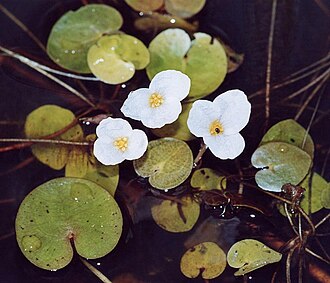
图:Christian Fischer · CC BY-SA 3.0 · Wikimedia Commons
- 学名
- Hydrocharitaceae
- 分类等级
- 科
- 上级类群
- 泽泻目
- 大类
- 被子植物
- 命名
- 安托万·洛朗·德朱西厄,1789 年
- 数据库
- NCBI 分类 · GBIF
下级类群(10)
百科正文
1981年的克朗奎斯特分类法将其单独列为一个水鳖目,1998年根据基因亲缘关系分类的APG 分类法将其并入泽泻目,并合并一些原来分类属于其他科的属,如茨藻属。
在台湾,瘤果篑藻、有尾篑藻、日本篑藻、水蕴草、黑藻、水车前、大苦草、苦草均属于水鳖目水鳖科,而除了东部地区,全岛均有分布。不过这些野生科种,因福寿螺等公害而有大量减少趋势。
2003年的APG II植物分类系统就取消了水鳖目这个目,而将水鳖目的种类改分类至泽泻目下。
有几种水鳖科的植物被作为观赏植物或水族箱中装饰的植物而引进。
形态
浮水或沉水草本植物,生长在淡水或咸水中;一年生或多年生。
叶子基生或茎生,茎生叶无柄,互生、对生或轮生;为单叶,线形或阔。
花辐射对称,单性,同株或异株,很少两性,着生在一佛焰苞或两个对生的苞片内,雄花常多数,雌花单生;花被1-2列,每列3片;雄蕊3至多数;子房下位一室,有3-6个侧膜胎座;花柱通常与胎座同数;胚珠多数。
果实球形至线形,干燥或有肉瓤,不规则地破裂。
属
- 水育花属 Apalanthe
- 团花藻属 Appertiella
- 水筛属 Blyxa
- 水蕴草属 Egeria
- 伊乐藻属 Elodea
- 海菖蒲属 Enhalus
- 喜盐草属 Halophila
- 黑藻属 Hydrilla
- 水鳖属 Hydrocharis
- 软骨草属 Lagarosiphon
- 南美海绵属 Limnobium
- 轮丝藻属 Maidenia
- 茨藻属 Najas
- 虾子草属 Nechamandra
- 水车前属 Ottelia
- Stratiotes
- 泰来藻属 Thalassia
- 苦草属 Vallisneria
以上内容摘自维基百科「水鳖科」,按 CC BY-SA 4.0 使用,去掉了参考文献、外部链接等尾部小节,公式改写成了纯文本。全文、配图和出处见原文。
英文维基百科补充中文条目比较短,下面是英文条目「Hydrocharitaceae」的原文
Hydrocharitaceae is a flowering plant family which includes 14 accepted genera and a total of ca 135 known species (Christenhusz & Byng 2016). The family holds a number of species of aquatic plants, including tape-grass, the well-known Canadian waterweed, and frogbit.
The family includes both freshwater and marine aquatics. They are found throughout the world in a wide variety of habitats, but are primarily tropical.
Description
The species are annual or perennial, with a creeping monopodial rhizome with the leaves arranged in two vertical rows, or an erect main shoot with roots at the base and spirally arranged or whorled leaves. The leaves are simple and usually found submerged, though they may be found floating or partially emerse. As with many aquatics they can be quite variable in shape – from linear to orbicular, with or without a petiole, and with or without a sheathing base.
The flowers are arranged in a forked, spathe-like bract or between two opposite bracts. They are usually irregular, though in some case they may be slightly irregular, and either bisexual or unisexual. The perianth segments are in 1 or 2 series of 2–3 free segments; the inner series when present are usually showy and petal-like. Stamens 1–numerous, in 1 or more series; the inner ones sometimes sterile. pollen grains are globular and free but in the marine genera (Thalassia and Halophila) – the pollen grains are carried in chains, like strings of beads. The ovary is inferior with 2–15 united carpels containing a single locule with numerous ovules on parietal placentas which either protrude nearly to the centre of the ovary or are incompletely developed. Fruits are globular to linear, dry or pulpy, dehiscent or more usually indehiscent and opening by decay of the pericarp. Seeds are normally numerous with straight embryos and no endosperm.
Pollination can be extremely specialised.
The most recent phylogenetic treatment of the family recognizes four subfamilies.
Subfamily Anacharioideae (Appertiella, Blyxa, Egeria, Elodea, Lagarosiphon and Ottelia)
Subfamily Hydrilloideae (Enhalus, Halophila, Hydrilla, Maidenia, Najas, Nechamandra, Thalassia and Vallisneria).
Subfamily Hydrocharitoideae (Hydrocharis, Limnobium)
Subfamily Stratiotoideae (Stratiotes)
Uses
Some species have become established ornamental plants, and subsequently serious weeds in the wild (especially Egeria, Elodea and Hydrilla).
Genera
14 genera are currently accepted.
以上内容摘自英文维基百科「Hydrocharitaceae」,按 CC BY-SA 4.0 使用,去掉了参考文献、外部链接等尾部小节,公式改写成了纯文本。全文、配图和出处见原文。