 格物
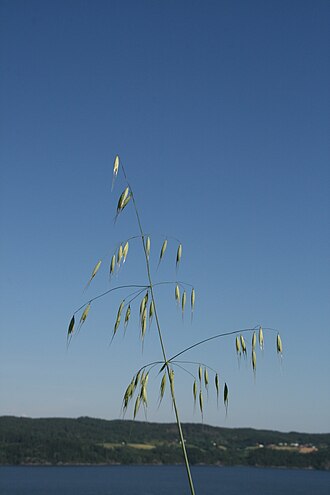
图:Helge Oskarsen · CC BY-SA 3.0 · Wikimedia Commons
- 学名
- Avena fatua
- 分类等级
- 种
- 上级类群
- 燕麦属
- 大类
- 被子植物
- 命名
- 卡尔·林奈,1753 年
- 中文别名
- 乌麦、燕麦草、西方燕麦、野麦子
- 保护状况(IUCN)
- 无危物种
- 用途
- 药用植物、食物、饲料
- 数据库
- NCBI 分类 · GBIF · IUCN 红色名录
百科正文
形态
草本植物,高30~150厘米。须根,茎丛生;叶鞘松弛,没有叶耳,叶舌大而透明,这些与麦苗不同;圆锥花序;小穗下垂;纺锤形颖果,被有淡棕色柔毛。
以上内容摘自维基百科「野燕麦」,按 CC BY-SA 4.0 使用,去掉了参考文献、外部链接等尾部小节,公式改写成了纯文本。全文、配图和出处见原文。
英文维基百科补充中文条目比较短,下面是英文条目「Avena fatua」的原文
Avena fatua is a species of grass in the oat genus. It is known as the common wild oat. Like fellow wild oat species A. sterilis, it bears 42 chromosomes, and its seeds shatter at maturity for yearly seeding. This oat is native to Eurasia (particularly the eastern Mediterranean) but it has been introduced to most of the other temperate regions of the world. It is naturalized in some areas and considered a noxious weed in others.
A. fatua is a typical oat in appearance, a green grass with hollow, erect stems 1 to 4 feet (0.30 to 1.22 m) tall bearing nodding structures – panicles – of spikelets. The long dark green leaves are up to 1 centimetre (0.39 in) wide and rough due to small hairs. The seedlings are also hairy. The seed kernel is thinner, longer, darker and hairy when compared with the seed of the common cultivated oat (A. sativa). This species and other wild oats can become troublesome in prairie agriculture when it invades and lowers the quality of a field crop, or competes for resources with the crop plants. It takes very few wild oat plants to cause a significant reduction in the yield of a wheat or cultivated oat field.
以上内容摘自英文维基百科「Avena fatua」,按 CC BY-SA 4.0 使用,去掉了参考文献、外部链接等尾部小节,公式改写成了纯文本。全文、配图和出处见原文。