 格物
- 类型
- 假说
- 命名来源
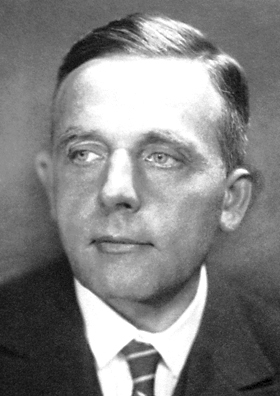
- 奥托·海因里希·瓦尔堡
- 学科
- 化学
相关科学家
百科正文
假说
瓦尔堡假说最初由瓦尔堡于1924年提出。他认为,癌症的产生与肿瘤的生长是由于癌细胞主要通过无氧糖酵解产生能量(如ATP)。与之相对的是,正常细胞则是通过氧化丙酮酸的方式产生能量的。丙酮酸是糖酵解的终产物,之后进入线粒体进行氧化反应。因而根据瓦尔堡的理论,癌细胞产生的原因便是由于线粒体呼吸作用受到了损伤。瓦尔堡认为癌细胞与正常细胞的根本区别便源于两者糖酵解作用与呼吸作用所占比例的差别。这一现象亦被称为瓦尔堡效应。
1966年6月30日,瓦尔堡在德国博登湖畔林道的诺贝尔奖得主会议上发表了题为《癌症的主要原因与预防》(The Prime Cause and Prevention of Cancer)的演讲,详细闸述了他的这一假说。在演讲中,他明确提到“癌症的主要原因是正常身体细胞的有氧呼吸被糖的酵解所替代了”。
一些学者并不同意瓦尔堡的观点,认为瓦尔堡效应并非癌症的根本原因。他们认为,癌症是由突变所引起的,在恶性转化的过程中改变了基因表达,最终导致细胞无节制的生长。瓦尔堡观察到的代谢变化使癌细胞适应于实体肿瘤内的缺氧环境,这主要是源于致癌基因与抑癌基因的突变,而这些突变也导致了癌细胞其他的异常特征。因而,瓦尔堡所观察到的现象并非是癌症的起因,而只是癌变所造成的结果之一。
以上内容摘自维基百科「瓦尔堡假说」,按 CC BY-SA 4.0 使用,去掉了参考文献、外部链接等尾部小节,公式改写成了纯文本。全文、配图和出处见原文。
英文维基百科补充中文条目比较短,下面是英文条目「Warburg hypothesis」的原文
The Warburg hypothesis (, [ˈvaːɐ̯bʊʁk]), sometimes known as the Warburg theory of cancer, postulates that the driver of carcinogenesis (cancer formation) is insufficient cellular respiration caused by insult (damage) to mitochondria. The Warburg effect, on the other hand, describes the observation that cancer cells, and many cells grown in vitro, exhibit glucose fermentation even when enough oxygen is present to properly respire. In other words, instead of fully respiring in the presence of adequate oxygen, cancer cells ferment. The Warburg hypothesis is that the Warburg effect is the root cause of cancer.
Hypothesis
The hypothesis was postulated by the Nobel laureate Otto Heinrich Warburg in 1924. He hypothesized that cancer, malignant growth, and tumor growth are caused by the fact that tumor cells mainly generate energy (as e.g., adenosine triphosphate / ATP) by non-oxidative breakdown of glucose (a process called glycolysis). This is in contrast to healthy cells which mainly generate energy from oxidative breakdown of pyruvate. Pyruvate is an end-product of glycolysis, and is oxidized within the mitochondria. Hence, according to Warburg, carcinogenesis stems from the lowering of mitochondrial respiration. Warburg regarded the fundamental difference between normal and cancerous cells to be the ratio of glycolysis to respiration; this observation is also known as the Warburg effect.
In the somatic mutation theory of cancer, malignant proliferation is caused by mutations and altered gene expression, in a process called malignant transformation, resulting in an uncontrolled growth of cells. The metabolic difference observed by Warburg adapts cancer cells to the hypoxic (oxygen-deficient) conditions inside solid tumors, and results largely from the same mutations in oncogenes and tumor suppressor genes that cause the other abnormal characteristics of cancer cells. Therefore, the metabolic change observed by Warburg is not so much the cause of cancer, as he claimed, but rather, it is one of the characteristic effects of cancer-causing mutations.
Warburg articulated his hypothesis in a paper entitled The Prime Cause and Prevention of Cancer which he presented in lecture at the meeting of the Nobel-Laureates on June 30, 1966 at Lindau, Lake Constance, Germany. In this speech, Warburg presented additional evidence supporting his theory that the elevated anaerobiosis seen in cancer cells was a consequence of damaged or insufficient respiration. Put in his own words, "the prime cause of cancer is the replacement of the respiration of oxygen in normal body cells by a fermentation of sugar."
The body often kills damaged cells by apoptosis, a mechanism of self-destruction that involves mitochondria, but this mechanism fails in cancer cells where the mitochondria are shut down. The reactivation of mitochondria in cancer cells restarts their apoptosis program.
以上内容摘自英文维基百科「Warburg hypothesis」,按 CC BY-SA 4.0 使用,去掉了参考文献、外部链接等尾部小节,公式改写成了纯文本。全文、配图和出处见原文。