 格物
投票悖论
voting paradox (Condorcet)
Marquis de Condorcet's observation regarding times when voters' collective preferences are cyclic, even when voters' individual preferences are not
投票悖论或孔多塞悖论 是一个由法国学者尼古拉·德·孔多塞在18世纪晚期提出的一个悖论。在这个假想情况中,集体倾向可以是循环性的,即使个人的倾向不是。
摘自维基百科「投票悖论」,CC BY-SA 4.0
- 类型
- 悖论、科学理论
- 发现者 / 提出者
- 尼古拉·德·孔多塞
- 命名来源
- 尼古拉·德·孔多塞
- 学科
- 数学
相关科学家
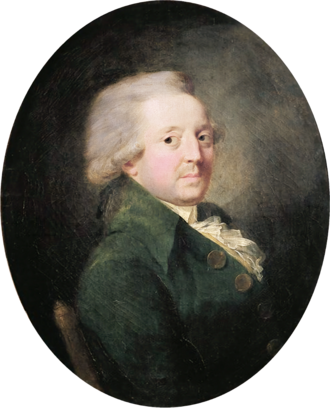
百科正文
示例
假设甲乙丙三人,面对ABC三个备选方案,有如以下的偏好排序:
无论投票结果是什么,都会有至少两人认可的更优方案存在。
如果投票结果是A,则乙和丙都认为C比A更好。当结果是C时,甲和乙都认为B比C好。无论结果如何,多数人都会倾向于另一套方案。
以上内容摘自维基百科「投票悖论」,按 CC BY-SA 4.0 使用,去掉了参考文献、外部链接等尾部小节,公式改写成了纯文本。全文、配图和出处见原文。
英文维基百科补充中文条目比较短,下面是英文条目「Condorcet paradox」的原文
In social choice theory, Condorcet's voting paradox (also called Condorcet's paradox or the Condorcet paradox) is a fundamental discovery by the Marquis de Condorcet that majority rule can be self-contradictory as majority preferences can become intransitive with three or more options. For example, there can be rock-paper-scissors scenarios where a majority of voters will prefer A to B, B to C, and also C to A, even if every voter's individual preferences are rational and avoid self-contradiction. Examples of Condorcet's paradox are called Condorcet cycles or cyclic ties.
In such a cycle, every possible choice is rejected by the electorate in favor of another alternative, who is preferred by more than half of all voters. Thus, any attempt to ground social decision-making in majoritarianism must accept such self-contradictions (commonly called spoiler effects). Systems that attempt to do so, while minimizing the rate of such self-contradictions, are called Condorcet methods.
Condorcet's paradox is a special case of Arrow's paradox, which shows that any kind of social decision-making process is either self-contradictory or a dictatorship.
History
Condorcet's paradox was first discovered by Catalan philosopher and theologian Ramon Llull in the 13th century, during his investigations into church governance, but his work was lost until the 21st century. The mathematician and political philosopher Marquis de Condorcet rediscovered the paradox in the late 18th century.
Condorcet's discovery means he arguably identified the key result of Arrow's impossibility theorem, albeit under stronger conditions than required by Arrow: Condorcet cycles create situations where any ranked voting system that respects majorities must have a spoiler effect.
Example
Suppose we have three candidates, A, B, and C, and that there are three voters with preferences as follows:
If C is chosen as the winner, it can be argued that B should win instead, since two voters (1 and 2) prefer B to C and only one voter (3) prefers C to B. However, by the same argument A is preferred to B, and C is preferred to A, by a margin of two to one on each occasion. Thus the society's preferences show cycling: A is preferred over B which is preferred over C which is preferred over A.
As a result, any attempt to appeal to the principle of majority rule will lead to logical self-contradiction. Regardless of which alternative we select, we can find another alternative that would be preferred by most voters.
Practical scenario
The voters in Cactus County prefer the incumbent county executive Alex of the Farmers' Party over rival Beatrice of the Solar Panel Party by about a 2-to-1 margin.
Likelihood
It is possible to estimate the probability of the paradox by extrapolating from real election data, or using mathematical models of voter behavior, though the results depend strongly on which model is used.
Impartial culture model
We can calculate the probability of seeing the paradox for the special case where voter preferences are uniformly distributed among the candidates. (This is the "impartial culture" model, which is known to be a "worst-case scenario"—most models show substantially lower probabilities of Condorcet cycles.)
For n voters providing a preference list of three candidates A, B, C, we write Xₙ (resp. Yₙ, Zₙ) the random variable equal to the number of voters who placed A in front of B (respectively B in front of C, C in front of A). The sought probability is pₙ=2P(Xₙ>n/2,Yₙ>n/2,Zₙ>n/2) (we double because there is also the symmetric case A> C> B> A).
Implications
When a Condorcet method is used to determine an election, the voting paradox of cyclical societal preferences implies that the election has no Condorcet winner: no candidate who can win a one-on-one election against each other candidate. There will still be a smallest group of candidates, known as the Smith set, such that each candidate in the group can win a one-on-one election against each of the candidates outside the group. The several variants of the Condorcet method differ on how they resolve such ambiguities when they arise to determine a winner. The Condorcet methods which always elect someone from the Smith set when there is no Condorcet winner are known as Smith-efficient. Note that using only rankings, there is no fair and deterministic resolution to the trivial example given earlier because each candidate is in an exactly symmetrical situation.
以上节选摘自英文维基百科「Condorcet paradox」,按 CC BY-SA 4.0 使用,去掉了参考文献、外部链接等尾部小节,公式改写成了纯文本。篇幅所限,较长的小节只摘了开头一部分,有的小节没有收;全文、配图和出处见原文。