格物
- 类型
- 悖论、数学概念
- 发现者 / 提出者
- 丹尼尔·伯努利
- 命名来源
- 圣彼得堡
- 学科
- 物理学
相关科学家
百科正文
问题内容
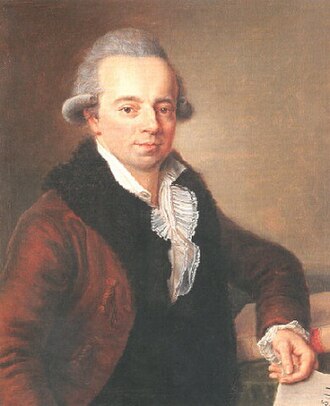
1730年代,数学家丹尼尔·伯努利的堂兄尼古拉一世·伯努利,在致法国数学家皮耶·黑蒙·德蒙马特的信件中,提出一个问题:
有一个“掷硬币掷到正面为止”的赌局,第一次掷出正面,就给你1元。第一次掷出反面,那就要再掷一次,若第二次掷的是正面,你便赚2元。若第二次掷出反面,那就要掷第三次,若第三次掷的是正面,你便赚2*2元……如此类推,一直掷到正面为止。你可能掷一次,赌局便结束,也可能反复一直掷,掷个没完没了。问题是,你最多肯付多少钱参加这个赌局?
你最多肯付的钱应等于该游戏的期望: E=1/2· 1+1/4· 2+1/8· 4+1/16· 8+⋯
= =1/2+1/2+1/2+1/2+⋯
= (公式略)
这个赌局的期望是无限大,即你最多肯付出无限的金钱去参加这个游戏。但是,你更可能只赚到1元,或者2元,或者4元等,而不可能赚到无限的金钱。那你为什么肯付出无限的金钱参加赌局呢?
如果限定最多可以掷100次(100次都是反面,就不给你钱了),则期望为50元,但是一般人都不愿意真的付50元去参加这个赌局。
实验的论文解释
丹尼尔·伯努利在1738年的论文里,对这个悖论提出了解答,他以效用的概念,来挑战以金额期望为决策标准,论文主要包括两条原理:
边际效用递减原理:一个人对于财富的占有多多益善,即效用函数一阶导数大于零;随着财富的增加,满足程度的增加速度不断下降,效用函数二阶导数小于零。
最大效用原理:在风险和不确定条件下,个人的决策行为准则是为了获得最大期望效用值而非最大期望金额值。
以上内容摘自维基百科「圣彼得堡悖论」,按 CC BY-SA 4.0 使用,去掉了参考文献、外部链接等尾部小节,公式改写成了纯文本。全文、配图和出处见原文。
英文维基百科补充中文条目比较短,下面是英文条目「St. Petersburg paradox」的原文
The St. Petersburg paradox or St. Petersburg lottery is a paradox involving the game of flipping a coin where the expected payoff of the lottery game is infinite but nevertheless seems to be worth only a very small amount to the participants. The St. Petersburg paradox is a situation where a naïve decision criterion that takes only the expected value into account predicts a course of action that presumably no actual person would be willing to take. Several resolutions to the paradox have been proposed, including the impossible amount of money a casino would need to continue the game indefinitely.
The problem was invented by Nicolas Bernoulli, who stated it in a letter to Pierre Raymond de Montmort on September 9, 1713. However, the paradox takes its name from its analysis by Nicolas' cousin Daniel Bernoulli, one-time resident of Saint Petersburg, who in 1738 published his thoughts about the problem in the Commentaries of the Imperial Academy of Science of Saint Petersburg.
St. Petersburg game
A casino offers a game of chance for a single player in which a fair coin is tossed at each stage. The initial stake begins at 2 dollars and is doubled every time tails appears. The first time heads appears, the game ends and the player wins whatever is the current stake. Thus the player wins 2 dollars if heads appears on the first toss, 4 dollars if tails appears on the first toss and heads on the second, 8 dollars if tails appears on the first two tosses and heads on the third, and so on. Mathematically, the player wins 2^(k+1) dollars, where k is the number of consecutive tails tosses. What would be a fair price to pay the casino for entering the game?
To answer this, one needs to consider what would be the expected payout at each stage: with probability 1/2, the player wins 2 dollars; with probability 1/4 the player wins 4 dollars; with probability 1/8 the player wins 8 dollars, and so on.
Paradox
Considering nothing but the expected value of the net change in one's monetary wealth, one should therefore play the game at any price if offered the opportunity. Yet, Daniel Bernoulli, after describing the game with an initial stake of one ducat, stated, "Although the standard calculation shows that the value of [the player's] expectation is infinitely great, it has... to be admitted that any fairly reasonable man would sell his chance, with great pleasure, for twenty ducats." Robert Martin quotes Ian Hacking as saying, "Few of us would pay even $25 to enter such a game", and he says most commentators would agree. The apparent paradox is the discrepancy between what people seem willing to pay to enter the game and the infinite expected value.
Solutions
Several approaches have been proposed for solving the paradox.
Expected utility theory
The classical resolution of the paradox involved the explicit introduction of a utility function, an expected utility hypothesis, and the presumption of diminishing marginal utility of money.
According to Daniel Bernoulli:
The determination of the value of an item must not be based on the price, but rather on the utility it yields... There is no doubt that a gain of one thousand ducats is more significant to the pauper than to a rich man though both gain the same amount.
A common utility model, suggested by Daniel Bernoulli, is the logarithmic function U(w) = ln(w) (known as log utility). It is a function of the gambler's total wealth w, and the concept of diminishing marginal utility of money is built into it. The expected utility hypothesis posits that a utility function exists that provides a good criterion for real people's behavior; i.e.
Recent discussions
Feller
A solution involving sampling was offered by William Feller. Intuitively Feller's answer is "to perform this game with a large number of people and calculate the expected value from the sample extraction". In this method, when the games of infinite number of times are possible, the expected value will be infinity, and in the case of finite, the expected value will be a much smaller value.
A paper by Paul Godek and Timothy R. Dulaney (available at Social Science Research Network: https://ssrn.com/abstract=3062683) purports to show that Feller’s analysis provides an internal resolution of the paradox. (The term “internal” distinguishes Feller’s approach from those that rely on explanations external to the game itself.
以上节选摘自英文维基百科「St. Petersburg paradox」,按 CC BY-SA 4.0 使用,去掉了参考文献、外部链接等尾部小节,公式改写成了纯文本。篇幅所限,较长的小节只摘了开头一部分,有的小节没有收;全文、配图和出处见原文。