格物
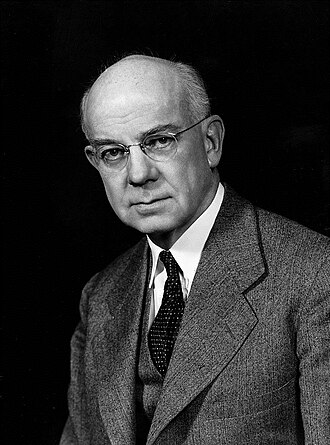
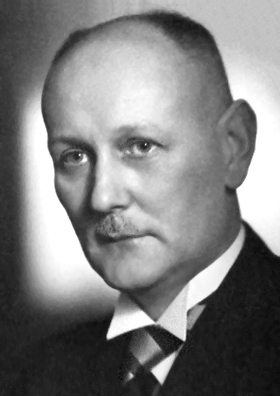
图:Unknown (Mondadori Publishers) · Public domain · Wikimedia Commons
爱德华·卡尔文·肯德尔1886—1972
Edward Calvin Kendall
化学家, 美国
爱德华·卡尔文·肯德尔,美国化学家。由于发现肾上腺皮质激素及其结构和生理效应,他与菲利普·肖瓦特·亨奇、塔德乌什·赖希施泰因共同获得了1950年诺贝尔生理学或医学奖。
摘自维基百科「爱德华·卡尔文·肯德尔」,CC BY-SA 4.0
- 出生
- 1886 年 3 月 8 日,南诺沃克
- 逝世
- 1972 年 5 月 4 日,普林斯顿
- 国籍
- 美国
- 学科
- 化学、生物学
- 职业
- 化学家、生物化学家
- 母语 / 工作语言
- 英语
- 母校
- 哥伦比亚大学、哥伦比亚大学工学院、Norwalk High School、史丹佛高中
- 工作单位
- 妙佑医疗国际
研究领域
所获奖项(8)
- 1920约翰·斯科特奖
- 1949拉斯克临床医学研究奖
- 1950诺贝尔生理学或医学奖
- 1950Remsen Award
- 1952George M. Kober Medal
- 1965AMA科学成就奖
- 1966Golden Plate Award
- —Cameron Prize of the University of Edinburgh
学会与院士
百科正文
英文维基百科补充中文条目比较短,下面是英文条目「Edward Calvin Kendall」的原文
Edward Calvin Kendall (March 8, 1886 – May 4, 1972) was an American biochemist. In 1950, Kendall was awarded the Nobel Prize for Physiology or Medicine along with Swiss chemist Tadeusz Reichstein and Mayo Clinic physician Philip S. Hench, for their work with the hormones of the adrenal glands. Kendall not only researched the adrenal glands, he also isolated thyroxine, a hormone of the thyroid gland and worked with the team that crystallized glutathione and identified its chemical structure.
Kendall was a biochemist at the Graduate School of the Mayo Foundation at the time of the Nobel award. He received his education at Columbia University. After retiring from his job with the Mayo Foundation, Kendall joined the faculty at Princeton University, where he remained until his death in 1972. Kendall Elementary School, in Norwalk is named for him.
Early life and education
Kendall was born in South Norwalk, Connecticut in 1886. He attended Columbia University, earning a Bachelor of Science degree in 1908, a Master of Science degree in Chemistry in 1909, and a Ph.D. in Chemistry in 1910.
Research career
After obtaining his Ph.D., his first job was in research for Parke, Davis and Company, and his first task was to isolate the hormone associated with the thyroid gland. He continued this research at St. Luke's Hospital in New York until 1914. He was appointed Head of the Biochemistry Section in the Graduate School of the Mayo Foundation, and the following year he was appointed as the Director of the Division of Biochemistry.
Kendall made several significant contributions to biochemistry and medicine. His most important discovery was the isolation of thyroxine, although it was not the work for which he received the most accolades. Along with associates, Kendall was involved with the isolation of glutathione and determining its structure. He also isolated several steroids from the adrenal gland cortex, one of which was initially called Compound E. Working with Mayo Clinic physician Philip Showalter Hench, Compound E was used to treat rheumatoid arthritis. The compound was eventually named cortisone. In 1950, Kendall and Hench, along with Swiss chemist Tadeus Reichstein were awarded the 1950 Nobel Prize in Physiology or Medicine for "their discoveries relating to the hormones of the adrenal cortex, their structure and biological effects." His Nobel lecture focused on the basic research that led to his award, and was titled "The Development of Cortisone As a Therapeutic Agent." As of the 2010 awards, Kendall and Hench were the only Nobel Laureates to be affiliated with Mayo Clinic.
Kendall was elected to the United States National Academy of Sciences in 1950, and both the American Academy of Arts and Sciences and the American Philosophical Society in 1951.
Kendall's career at Mayo ended in 1951, when he reached mandatory retirement age. He moved on to Princeton University, where he was a visiting professor in the Department of Biochemistry. He remained affiliated with Princeton until his death in 1972. In addition to the Nobel Prize, Kendall received other major awards including the Lasker Award, the Passano Foundation Award and the Cameron Prize for Therapeutics of the University of Edinburgh. Kendall received the Golden Plate Award of the American Academy of Achievement in 1966. He was awarded honorary doctorates from the University of Cincinnati, Western Reserve University, Williams College, Yale University, Columbia University, National University of Ireland, and Gustavus Adolphus College.
Family life
Kendall married Rebecca Kennedy in 1915, and they had four children. He died in 1972 in Princeton, New Jersey. His wife died in 1973.
以上内容摘自英文维基百科「Edward Calvin Kendall」,按 CC BY-SA 4.0 使用,去掉了参考文献、外部链接等尾部小节,公式改写成了纯文本。全文、配图和出处见原文。
同年获同一奖项
同一学科、同时代的科学家