格物
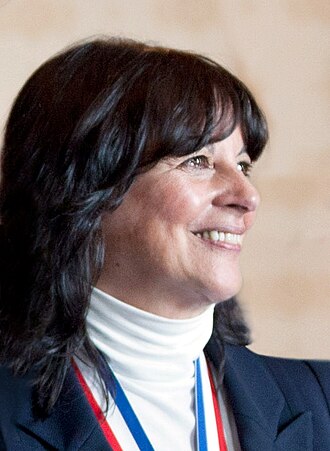
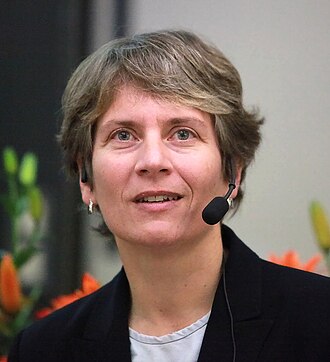
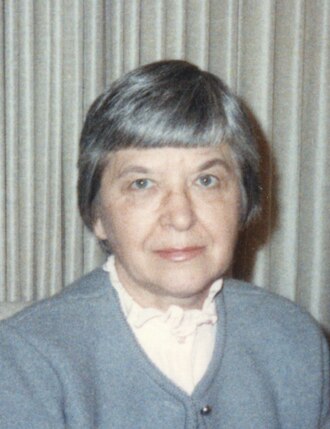
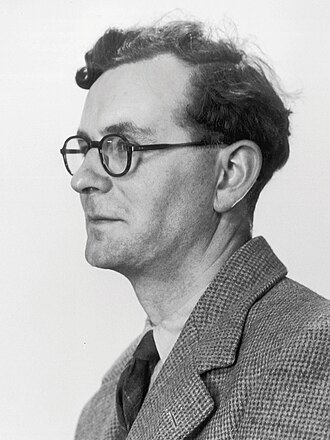
图:National Medal of Science 2010 recipients.jpg: The White Hou… · Public domain · Wikimedia Commons
- 出生
- 1952 年 5 月 7 日,纽约
- 国籍
- 美国
- 学科
- 化学
- 职业
- 化学家、大学教师、教授、商人
- 母语 / 工作语言
- 英语
- 母校
- 巴纳德学院(文学士,1974 年)、哥伦比亚大学工学院、里弗代尔乡村学校
- 工作单位
- 加州理工学院、亨特学院、加州理工学院(1997—)
研究领域
师承
博士导师1
来自 Wikidata 的「博士导师」「师从」「博士生」「学生」记录,可能不全。
所获奖项(26)
- 1985艾伦·T·沃特曼奖
- 1987Eli Lilly Award in Biological Chemistry
- 1988美国化学学会纯化学奖
- 1991麦克阿瑟天才奖
- 1991Leo Hendrik Baekeland Award
- 1992加尔文–奥林奖章
- 1992Agnes Fay Morgan Research Award
- 1994托勒曼奖
- 1996保罗·卡勒金质奖章
- 1997威廉·H·尼克尔斯奖
- 1998魏茨曼女性与科学奖
- 2003Ronald Breslow Award for Achievement in Biomimetic Chemistry
- 2006威拉德·吉布斯奖
- 2007莱纳斯·鲍林奖
- 2007F. A. Cotton Medal
- 2009汤森路透引文桂冠奖
- 2010美国国家科学奖章
- 2015普里斯特利奖章
- 2015美国化学家协会金牌
- 2018Centenary Prize
- 2019美国国家科学院化工科学奖
- 2021Theodore William Richards Medal
- 2023韦尔奇化学奖
- —Fellow of the American Chemical Society
- —美国文理科学院院士
- —Camille Dreyfus Teacher-Scholar Awards
学会与院士
百科正文
生平
她是加州理工学院阿瑟和玛丽安·哈尼施纪念化学教授。其研究的主要领域是双链DNA中的横向电子传递,它在DNA损伤及修复中的作用,以及它在材料科学应用中的潜能。
以上内容摘自维基百科「杰奎琳·巴顿」,按 CC BY-SA 4.0 使用,去掉了参考文献、外部链接等尾部小节,公式改写成了纯文本。全文、配图和出处见原文。
英文维基百科补充中文条目比较短,下面是英文条目「Jacqueline Barton」的原文
Jacqueline K. Barton (born May 7, 1952 New York City, NY), is an American chemist. She worked as a professor of chemistry at Hunter College (1980–82), and at Columbia University (1983–89) before joining the California Institute of Technology. In 1997 she became the Arthur and Marian Hanisch Memorial Professor of Chemistry and from 2009 to 2019, the Norman Davidson Leadership Chair of the Division of Chemistry and Chemical Engineering at Caltech. She currently is the John G. Kirkwood and Arthur A. Noyes Professor of Chemistry, Emerita.
Barton studies the chemical and physical properties of DNA and their roles in biological activities. The primary focus of her research is transverse electron transport along double-stranded DNA, its implications in the biology of DNA damage and repair, and its potential for materials sciences applications such as targeted chemotherapeutic treatments for cancer. Among many other awards, Barton has received the 2011 National Medal of Science and the 2015 Priestley Medal.
Early life and education
Jacqueline Ann Kapelman was born on May 7, 1952, in New York City. Her father served in the Assembly for nearly a decade before serving as a trial judge in the New York Supreme Court next two decades. Her father was one of the trial judges in the Son of Sam serial murder case.
Jacqueline Kapelman attended Riverdale Country School for Girls in Riverdale, New York, where her math teacher, Mrs. Rosenberg, insisted that she be allowed to take calculus at the boys' school. Her interest in chemistry began at Barnard College, where she studied physical chemistry with Bernice Segal. She loved laboratory work and chemical transformations and found Segal an inspiration as a teacher. During her last year at Barnard she married first year medical student Donald J. Barton, receiving her B.A. from Barnard College as Jacqueline Kapelman Barton, summa cum laude, in 1974.
She then studied inorganic chemistry at Columbia University under the supervision of Stephen J. Lippard. While at Columbia she began studying transition-metal complexes and their possible applications to chemotherapy. She earned a PhD in Inorganic Chemistry in 1979, addressing The structure and chemical reactivity of a blue platinum complex: the interaction of antitumor platinum drugs and metallointercalation reagent with nucleic acids.
Career and research
After earning her Ph.D. from Columbia in 1979, Barton held post-doctoral appointments at Bell Labs and Yale University, where she worked with Robert G. Shulman. She used nuclear magnetic resonance imaging technology to examine the metabolism of yeast cells. Barton became a professor of chemistry at Hunter College from 1980 to 1982, and began to develop her own laboratory, the Barton Research Group. While at Hunter, she studied the interactions of zinc ions with DNA, and later the interactions of ruthenium(II) and cobalt(III) complexes with DNA. This enabled her to roughly model complexes on a DNA helix and to begin studying the photophysical and photochemical properties related to enantiomers.
In the 1980s, she moved to Columbia University where she taught from 1983 to 1989. She became a full professor in 1986 and was the first woman to receive tenure in the chemistry department at Columbia. Her research focused on the use of organo-ruthenium complexes to examine the physical structure of DNA. With Nicholas Turro and Vijay Kumar she studied the interactions of ruthenium phenanthroline complexes and DNA and was able to design binding molecules targeted to specific DNA sequences. Photosensitive ruthenium complexes would glow brightly when they attached to the DNA double helix. When rhodium complexes were attached to the DNA, they would attract the electron causing the glow, and "turn off" the effect. During her time at Columbia, Barton obtained two patents for this method of analyzing DNA structure.
Awards and honors
Barton was awarded the National Medal of Science by Barack Obama in 2011, "For discovery of a new property of the DNA helix, long-range electron transfer, and for showing that electron transfer depends upon stacking of the base pairs and DNA dynamics. Her experiments reveal a strategy for how DNA repair proteins locate DNA lesions and demonstrate a biological role for DNA-mediated charge transfer." Other awards include:
Theodore Richards Award, Northeastern Section, American Chemical Society (2021)
Welch Award in Chemistry (Robert A. Welch Foundation) (2023)
以上节选摘自英文维基百科「Jacqueline Barton」,按 CC BY-SA 4.0 使用,去掉了参考文献、外部链接等尾部小节,公式改写成了纯文本。篇幅所限,较长的小节只摘了开头一部分,有的小节没有收;全文、配图和出处见原文。