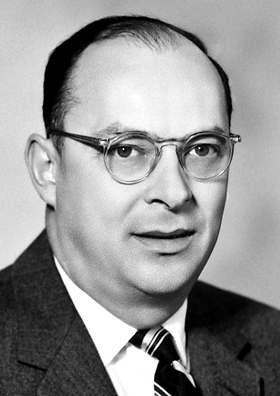
格物
黄授书1915—1977
Su-Shu Huang
Chinese-American astrophysicist (1915–1977)
黄授书 (1915年4月26日—1977年9月15日),男,江苏常熟人,美籍华裔天体物理学家。黄毕业于芝加哥大学。职业生涯早期致力于双电子系统中连续吸收系数的研究,后转向了恒星大气层、辐射转换、和联星与多星系统。在随后的几年,开始研究太阳系外行星的生命及其存在条件,于1959年在太平洋天文学会的一次会议中创造了适居带这个名词,指称在恒星周围能够让行星表面的水维持液态的区域。
摘自维基百科「黃授書」,CC BY-SA 4.0
- 出生
- 1915 年 4 月 16 日,常熟市
- 逝世
- 1977 年 9 月 15 日,北京市
- 国籍
- 美国、中华人民共和国
- 学科
- 物理学、天文学
- 职业
- 天体物理学家、天文学家
- 母语 / 工作语言
- 英语
- 母校
- 芝加哥大学、浙江大学
- 工作单位
- 加州大学伯克利分校、美国天主教大学、清华大学、西北大学
研究领域
师承
博士导师1
来自 Wikidata 的「博士导师」「师从」「博士生」「学生」记录,可能不全。
所获奖项(1)
- 1951古根海姆学者奖
学会与院士
百科正文
生平
黄授书祖籍江苏省常熟县。1937年本科毕业于浙江大学,1943年至1947年就读于清华大学,获得天文学硕士学位。1947年公派美国留学,师从地外行星探索先驱奥托·斯特鲁维。1949年取得芝加哥大学天文学博士学位。后在研究机构教授了两年天文学的课程,并任职于加州大学伯克利分校。1959年,获得了马里兰州戈达德太空飞行中心职位。1960年至1961年兼职于普林斯顿高等研究院。1963年至1964年任美国天主教大学天体物理学教授。1964年成为西北大学的物理和天文教授。
晚年
1974年和1977年两度回到中国。1977年9月15日因心肌梗塞逝世于北京。
学术贡献
早年从事双电子系统的研究,稍后研究恒星大气层、辐射层和联星或多星系统的动力学。后来转向恒星物理,研究支持外星生命的星体,并创造出“适居带”一词。最终,研究行星适居性,并在1960年的论文中论述适居行星的尺度。
黄授书探索外星生命的文章也刊登在最受欢迎的期刊,如《美国科学家》和《科学美国人》。
纪念
1979年,紫金山天文台将新发现的主带小行星命名为(3014) 黄授书(Huangsushu)。
2007年,中国天文学会设立黄授书奖,鼓励并表彰在天文学研究中取得突出成果的年轻天文学家,奖项从2007年起开始颁发,每两年一次,每次不超过两项。
以上内容摘自维基百科「黃授書」,按 CC BY-SA 4.0 使用,去掉了参考文献、外部链接等尾部小节,公式改写成了纯文本。全文、配图和出处见原文。
英文维基百科补充中文条目比较短,下面是英文条目「Su-Shu Huang」的原文
Su-Shu Huang (黃授書, April 16, 1915 – September 15, 1977) was a Chinese-born American astrophysicist. A graduate of the University of Chicago, Huang began his career with the study of the continuous absorption coefficients of two-electron systems, but eventually his research focus turned to the study of stellar atmospheres, radiative transfer, and binary and multiple star systems. In subsequent years, Huang began to cover the topic of life on extrasolar planets and the prerequisites thereof, coining the term "habitable zone" to refer to the region around a star where planets could support liquid water at their surfaces at a 1959 conference of the Astronomical Society of the Pacific.
Education and career
A native of China, Huang earned his master's degree at Tsing Hua University, lecturing in astronomy at that institution from 1943 to 1947 before immigrating to the United States, earning a doctorate in astronomy from the University of Chicago in 1949. After teaching astronomy at that institution for the two following years, Huang became an astronomer at the University of California, Berkeley, a position he stayed in before moving to the Goddard Space Flight Center in Maryland in 1959. Concurrent with his Goddard position, Huang was a member of Institute for Advanced Study at Princeton from 1960 to 1961, then a professor of astrophysics at the Catholic University of America from 1963 to 1964. In 1964, Huang became professor of physics and astronomy at Northwestern University, though he stayed at Goddard until 1965.
In his early years he studied two-electron systems, Huang later studied stellar atmospheres, radiative zones, and the dynamics of stars in binary or multiple star systems. Huang's research into the physics of stars later led him to delineate the types of stars that could support extraterrestrial life, leading to his coining of the term "habitable zone" and eventually his study of planetary habitability in a 1960 paper on the sizes of habitable planets. Huang's explorations into extraterrestrial life were also published in popular works, such as American Scientist and Scientific American.
Later life and legacy
Late in his life, Huang made two trips to China, in 1974 and 1977. He died of a heart attack in Beijing during the latter trip, on September 15. Two years after his death, the then newly discovered main-belt asteroid 3014 Huangsushu was named in his honor.
以上内容摘自英文维基百科「Su-Shu Huang」,按 CC BY-SA 4.0 使用,去掉了参考文献、外部链接等尾部小节,公式改写成了纯文本。全文、配图和出处见原文。
同一学科、同时代的科学家

同一学科的科学家
更多 ›