格物
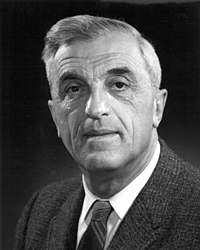
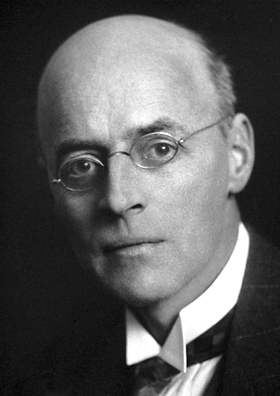
图:Stanford University / Courtesy Stanford News Service · CC BY 3.0 · Wikimedia Commons
费利克斯·布洛赫1905—1983
Felix Bloch
物理学家, 美国
费利克斯·布洛赫,瑞士物理学家,1952年诺贝尔物理学奖获得者。1954-1955年,他担任欧洲核子研究中心第一任总干事。
摘自维基百科「费利克斯·布洛赫」,CC BY-SA 4.0
- 出生
- 1905 年 10 月 23 日,苏黎世
- 逝世
- 1983 年 9 月 10 日,苏黎世
- 国籍
- 美国、瑞士
- 学科
- 物理学、博物与综合
- 职业
- 物理学家、大学教师、核物理学家
- 母语 / 工作语言
- 法语、英语、德语
- 母校
- 苏黎世联邦理工学院、莱比锡大学
- 工作单位
- 曼哈顿计划(?—1943)、斯坦福大学、莱顿大学(1971—1972)、苏黎世联邦理工学院
研究领域
主要贡献
代表成就
以他 / 她命名
师承
博士生2
来自 Wikidata 的「博士导师」「师从」「博士生」「学生」记录,可能不全。
所获奖项(5)
- 1952诺贝尔物理学奖
- 1959doctor honoris causa from the University of Grenoble
- —Pour le Mérite for Sciences and Arts order
- —美国物理学会会士
- —古根海姆学者奖
学会与院士
百科正文
英文维基百科补充中文条目比较短,下面是英文条目「Felix Bloch」的原文
Felix Bloch (23 October 1905 – 10 September 1983) was a Swiss–American theoretical physicist who shared the 1952 Nobel Prize in Physics with Edward Mills Purcell "for their development of new methods for nuclear magnetic precision measurements and discoveries in connection therewith."
He was the first Stanford University Nobel laureate.
Bloch made fundamental theoretical contributions to the understanding of ferromagnetism and electron behavior in crystal lattices. He is also considered one of the developers of nuclear magnetic resonance.
Education
Felix Bloch was born on 23 October 1905 in Zurich, Switzerland, to Jewish parents, Gustav Bloch and Agnes Mayer. Gustav was financially unable to attend university and worked as a wholesale grain dealer in Zurich. Gustav moved to Zurich from Moravia in 1890 to become a Swiss citizen. Their first child was a girl born in 1902, while Felix was born three years later.
Bloch entered public elementary school at the age of six and is said to have been teased, in part because he "spoke Swiss German with a somewhat different accent than most members of the class". He received support from his older sister during much of this time, but she died at the age of 12, devastating Felix, who is said to have lived a "depressed and isolated life" in the following years. Bloch learned to play the piano by the age of 8 and was drawn to arithmetic for its "clarity and beauty". Bloch graduated from elementary school at twelve and enrolled in the Cantonal Gymnasium in Zurich for secondary school in 1918. He was placed on a six-year curriculum here to prepare him for university. He continued his curriculum through 1924, even through his study of engineering and physics in other schools, though it was limited to mathematics and languages after the first three years.
After these first three years at the Gymnasium, at the age of 15, Bloch began to study at the ETH Zurich. Although he initially studied engineering, he soon changed to physics. During this time, he attended lectures and seminars given by Peter Debye and Hermann Weyl at the ETH Zurich and Erwin Schrödinger at the neighboring University of Zurich. A fellow student in these seminars was John von Neumann.
Career and research
Bloch remained in European academia, working on superconductivity with Wolfgang Pauli in Zurich; with Hans Kramers and Adriaan Fokker in the Netherlands; with Heisenberg on ferromagnetism, where he developed a description of boundaries between magnetic domains, now known as Bloch walls, and theoretically proposed a concept of spin waves, excitations of magnetic structure; with Niels Bohr in Copenhagen, where he worked on a theoretical description of the stopping of charged particles traveling through matter; and with Enrico Fermi in Rome.
In 1932, Bloch returned to Leipzig to assume a position as Privatdozent (lecturer). In 1933, immediately after Adolf Hitler came to power, Bloch left Germany out of fear of anti-Jewish persecution, returning to Zurich before traveling to Paris to lecture at the Institut Henri Poincaré.
In 1934, the chairman of the Physics Department of Stanford University invited Bloch to join the faculty. Bloch accepted the offer and emigrated to the United States. In the fall of 1938, Bloch began working with the 37 inch cyclotron at the University of California, Berkeley, to determine the magnetic moment of the neutron. Bloch went on to become the first professor of theoretical physics at Stanford. He became a naturalized U.S. citizen in 1939.
During World War II, Bloch briefly worked on the atomic bomb project at Los Alamos. Disliking the military atmosphere of the laboratory and uninterested in the theoretical work there, Bloch left to join the radar project at Harvard University.
After the war, Bloch concentrated on investigations into nuclear induction and nuclear magnetic resonance, which are the underlying principles of MRI.
Family
On 14 March 1940, Bloch married Lore Clara Misch (1911–1996), a fellow physicist working on X-ray crystallography, whom he had met at an American Physical Society meeting. They had four children, twins George Jacob Bloch and Daniel Arthur Bloch (born 15 January 1941), son Frank Samuel Bloch (born 16 January 1945), and daughter Ruth Hedy Bloch (born 15 September 1949).
Bloch died on 10 September 1983 in Zurich at the age of 77. In 2025, Bloch's family donated his Nobel Prize medal to CERN.
以上节选摘自英文维基百科「Felix Bloch」,按 CC BY-SA 4.0 使用,去掉了参考文献、外部链接等尾部小节,公式改写成了纯文本。篇幅所限,较长的小节只摘了开头一部分,有的小节没有收;全文、配图和出处见原文。
同年获同一奖项
同一学科、同时代的科学家

同一学科的科学家
更多 ›