格物
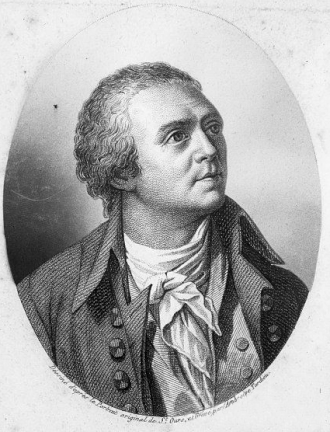
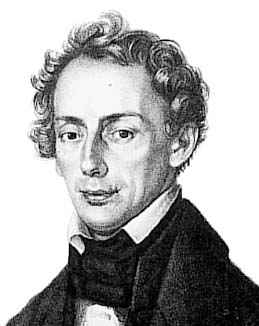
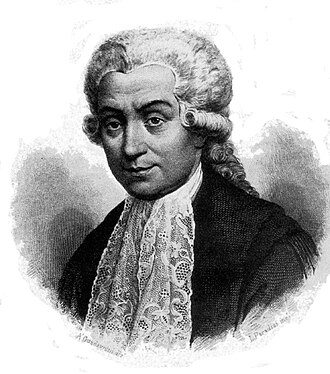
图:Ambroise Tardieu · Public domain · Wikimedia Commons
- 出生
- 1740 年 2 月 17 日,Conches
- 逝世
- 1799 年 1 月 22 日,日内瓦
- 国籍
- 法国、日内瓦共和国
- 学科
- 物理学、生物学、地球科学、博物与综合
- 职业
- 物理学家、气象学家、植物学家、登山者
- 母语 / 工作语言
- 法语、拉丁语
- 母校
- 日内瓦大学
- 工作单位
- 日内瓦大学(1762—)
主要贡献
本站收录的发现与发明
师承
博士生1
来自 Wikidata 的「博士导师」「师从」「博士生」「学生」记录,可能不全。
所获奖项(1)
- —英国皇家学会外籍会员
学会与院士
百科正文
生平
他出生于瑞士日内瓦附近的孔什(Conches)。大学毕业后,出于对高原山区的着迷而来到阿尔卑斯山脉最高峰勃朗峰附近的霞慕尼。受到其父亲和舅舅的影响,他开始投身于植物学研究。
1760年,他为了研究高山植物,出重金悬赏登顶阿尔卑斯山脉最高峰勃朗峰或提供攀登路线的人,但是一直无人问津。直到1786年,一位叫米歇尔-加布里埃尔·帕卡尔的医生和当地采石工人雅克·巴尔马一起登上了勃朗峰。次年8月,由巴尔马做向导,他亲自率领一支20多人的登山队登顶勃朗峰,证实了一年前的首攀。这一事件被视为现代登山运动诞生的标志,1786年也被认为是登山运动的诞生之年。
以上内容摘自维基百科「奥拉斯-贝内迪克特·德索叙尔」,按 CC BY-SA 4.0 使用,去掉了参考文献、外部链接等尾部小节,公式改写成了纯文本。全文、配图和出处见原文。
英文维基百科补充中文条目比较短,下面是英文条目「Horace Bénédict de Saussure」的原文
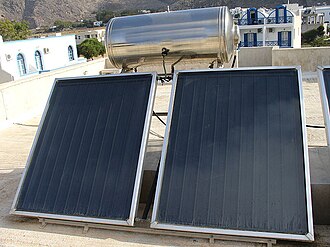
Horace Bénédict de Saussure (French: [ɔʁas benedikt də sosyʁ]; 17 February 1740 – 22 January 1799) was a Genevan geologist, meteorologist, physicist, mountaineer and Alpine explorer (specifically the Mont Blanc massif), often called the founder of alpinism and modern meteorology, and considered to be the first person to build a successful solar oven.
Early life and education
Horace Bénédict de Saussure was born 17 February 1740, in Conches, near Geneva, in the Republic of Geneva. Saussure's family were Genevan patricians. His father, Nicolas de Saussure, was an agriculturist, agronomist and author. Because his mother was "sickly", Saussure was brought up by his mother's sister and her husband the Genevan naturalist Charles Bonnet, who sparked Horace-Bénédict's early interest in botany. After attending the "Collège" of his hometown, he completed his studies at the Geneva Academy in 1759 with a dissertation on heat (Dissertatio physica de igne).
Career
In 1760, Saussure made the first of numerous trips to Chamonix valley, to collect plant specimens for the noted Swiss anatomist, physiologist and botanist Albrecht von Haller. In 1760, Saussure offered a reward to the first man to reach the summit of Mont Blanc. Inspired by his uncle, Charles Bonnet, the young Saussure researched the physiology of plants which he published as Observations sur l'écorce des feuilles et des pétales in 1762.
The same year, at 22, he was elected professor of philosophy at the "Academy of Geneva", where he lectured on physics one year, and on logic and metaphysics the next. He taught there until 1786, occasionally also lecturing on geography, geology, chemistry, and even astronomy.
Saussure's early interest in botanical studies and glaciers soon led him to undertake other journeys across the Alps. In 1767, he completed his first tour of Mont Blanc, a trip that did much to reveal the topography of the snowy portions of the Alps of Savoy. He also carried out experiments on heat and cold, on the weight of the atmosphere and on electricity and magnetism. For this, he devised what became one of the first electrometers. From 1772 to 1773 trips led him to Italy, where he studied Mount Etna and other volcanoes (1772–73), and to the extinct volcanoes of the Auvergne, in France.
Although a patrician, Saussure held liberal views, which induced him to present in 1774 a plan for the development of scientific education in the Geneva College, which would be open to all citizens, but this attempt failed. He was more successful in advocating the creation of the "Société des Arts" (1776), inspired by the London Society for the Improvement of Arts.
Awards
In 1784, Saussure was elected a foreign member of the Royal Swedish Academy of Sciences; in 1788, a foreign member of the Royal Society of London; in 1791, an associate foreign member of l'Académie des sciences de Paris.
Personal life and death
Saussure was married to Albertine Amelie Boissier and had three children: Albertine Necker de Saussure who was a pioneer in the education of women, Nicolas-Théodore de Saussure who became a noted specialist in plant chemistry and an early pioneer in photosynthesis research and Alphonse Jean François de Saussure.
Saussure's health began to fail in 1791, at the same time that he suffered financial losses. Saussure died in Geneva 22 January 1799.
His great-grandson Ferdinand de Saussure (1857 – 1913) was an important linguist and semiotician.
Recognition
The genus of plants Saussurea, some adapted to growing in extreme high-alpine climates, is named after him and his plant-physiologist son Nicolas-Théodore de Saussure.
The Alpine Botanical Garden Saussurea, located at Pavillon du Mont Fréty, first station for the Skyway Monte Bianco cable car, in Courmayeur, Aosta Valley, is named after him.
His work as a mineralogist was also recognized in that Saussurite is named after him.
The lunar crater Saussure is named after him.
Saussure was honoured by being depicted on the 20 Swiss franc banknote of the sixth issue of Swiss National Bank notes (1979 to 1995, when replaced by the eighth issue; the notes were recalled in 2000 and became valueless on 1 May 2020).
Trivia
In his On the Fourfold Root of the Principle of Sufficient Reason, while discussing how reason affects our perception of distance, Arthur Schopenhauer includes an anecdote that Saussure, "when on the Mont Blanc,... saw so enormous a moon rise, that, not recognizing what it was, he fainted with terror".
以上节选摘自英文维基百科「Horace Bénédict de Saussure」,按 CC BY-SA 4.0 使用,去掉了参考文献、外部链接等尾部小节,公式改写成了纯文本。篇幅所限,较长的小节只摘了开头一部分,有的小节没有收;全文、配图和出处见原文。
同一学科、同时代的科学家


同一学科的科学家
更多 ›